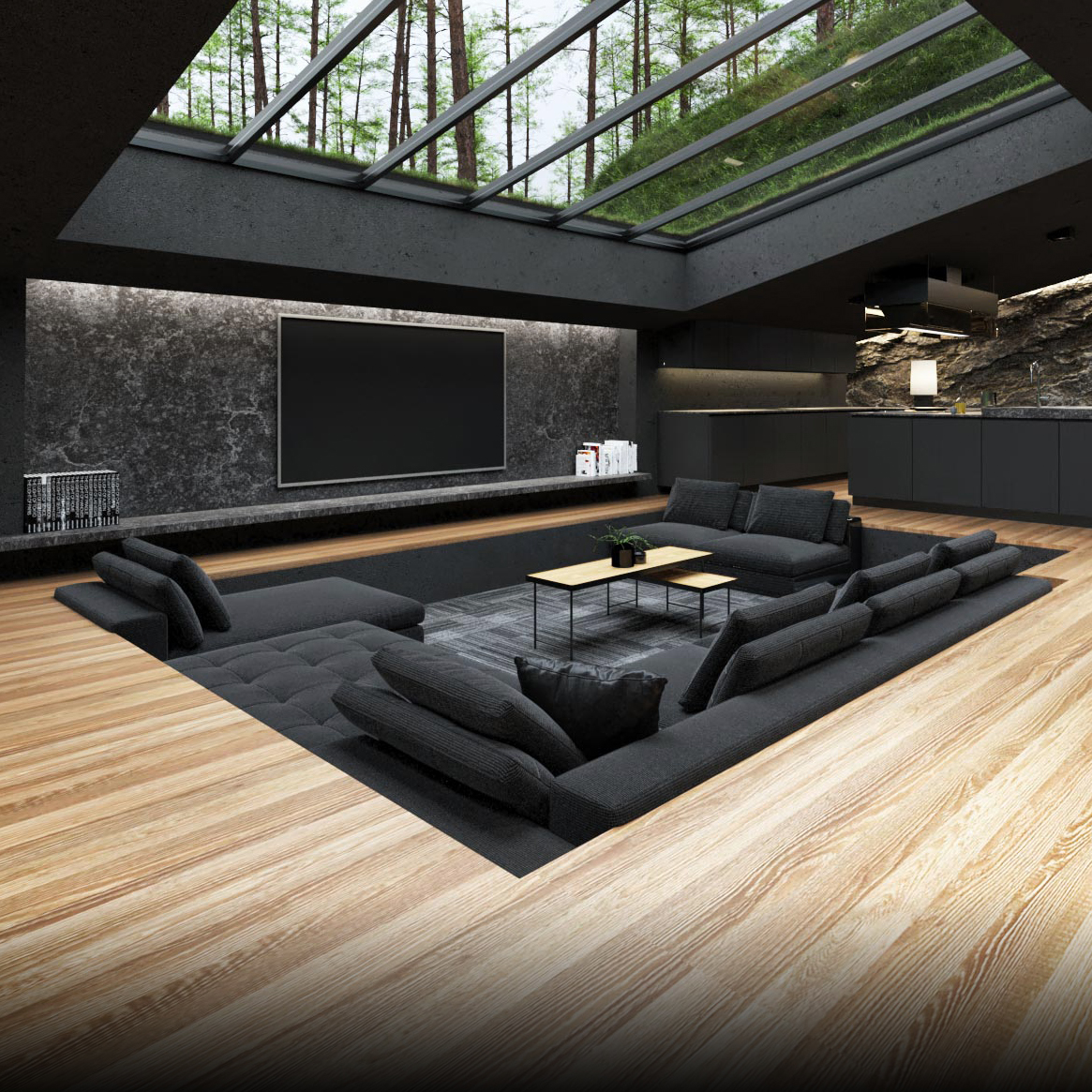
Black Villa, a striking architectural work by Iranian architect Reza Mohtashimi, stands as a contemplative exploration of space, material, and human emotion.
Rather than asserting itself through grandeur or ornamentation, the project speaks in a restrained, deliberate language—one that prioritizes atmosphere and lived experience over spectacle. Black Villa is less a conventional residence and more an architectural meditation, where light, shadow, and texture become the primary building materials.
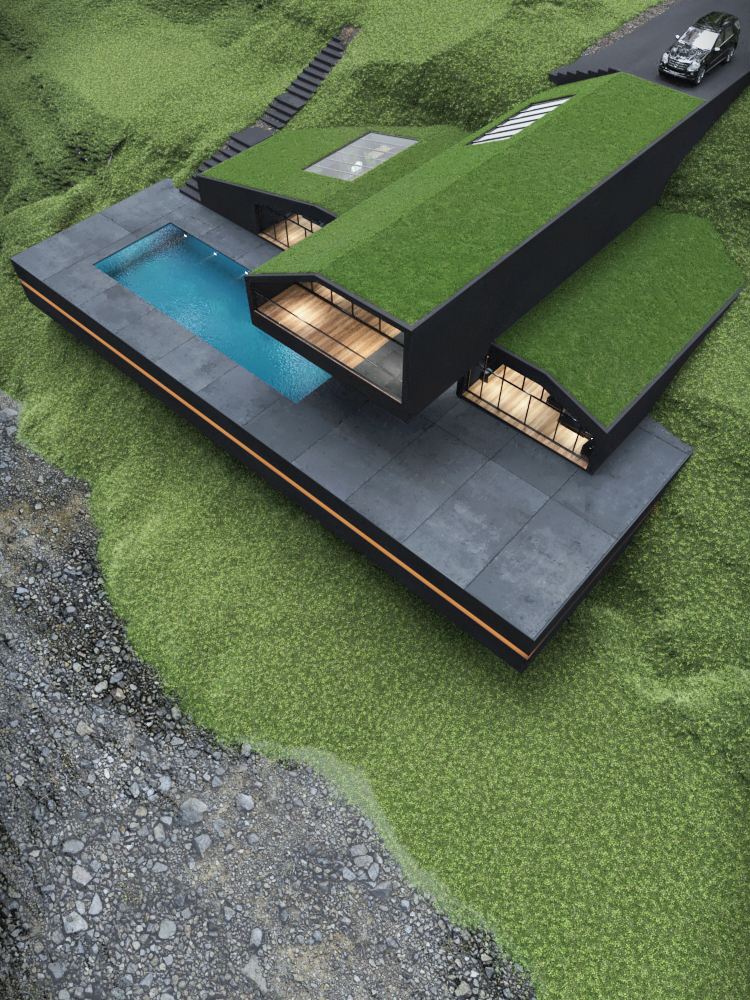
At first encounter, Black Villa presents a monolithic and introspective exterior.
The dark-toned façade, from which the project derives its name, establishes a strong visual boundary between the private interior world and its surrounding context. This sense of enclosure is intentional. Mohtashimi uses darkness not as an absence, but as a presence—an architectural tool that evokes calm, privacy, and introspection. The exterior resists immediate readability, inviting curiosity while maintaining a quiet dignity.
Upon entering the villa, the experience shifts dramatically. The interior reveals a carefully choreographed sequence of spaces, where light is introduced with precision and restraint. Rather than flooding rooms with brightness, Mohtashimi allows natural light to filter in selectively, creating moments of contrast and revelation. Shadows stretch across walls and floors, changing throughout the day and giving the architecture a temporal, almost cinematic quality. In this way, Black Villa becomes a living structure, animated by the movement of light.
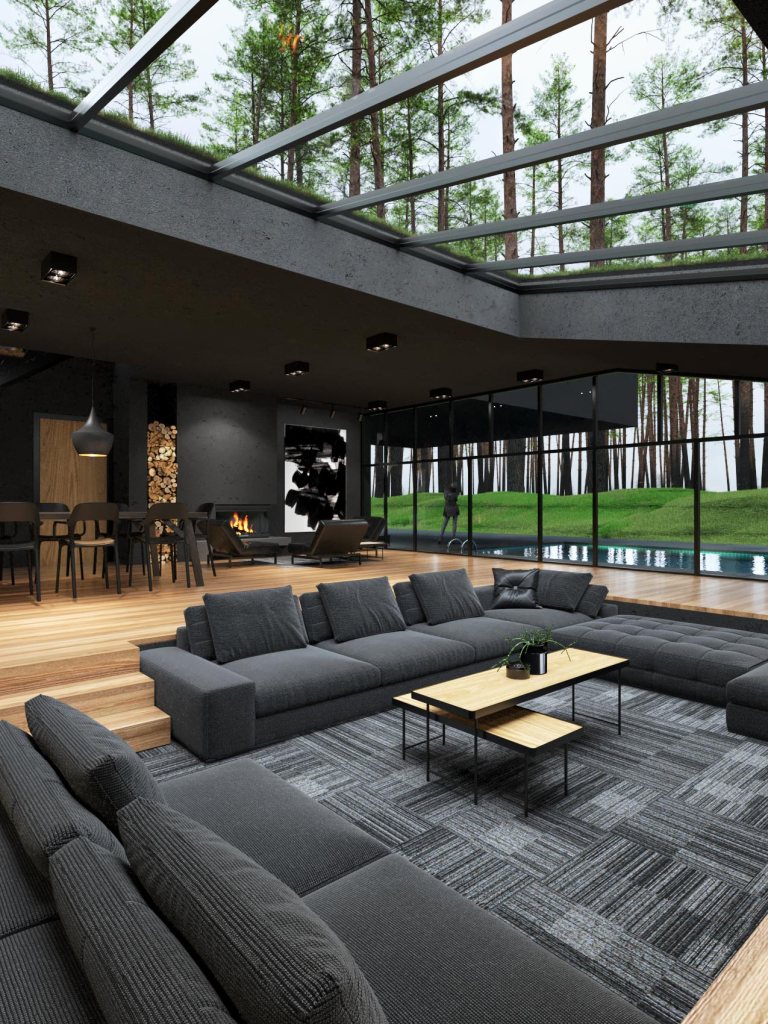
Materiality plays a central role in shaping the villa’s emotional resonance.
Dark surfaces—often concrete, stone, or matte-finished elements—are balanced with subtle textures that invite touch and attention. The palette is intentionally limited, reinforcing the project’s minimalist ethos while allowing small details to gain significance. Every joint, surface transition, and spatial proportion appears carefully considered, contributing to a sense of coherence and calm.
Spatial organization within Black Villa reflects Mohtashimi’s sensitivity to human behavior and psychological comfort. Public and private zones are clearly delineated, yet connected through fluid circulation paths that encourage slow movement and reflection. Transitional spaces—corridors, thresholds, and semi-open areas—are treated as experiences in their own right, not merely functional connectors. This approach underscores the architect’s belief that architecture should support emotional well-being, not just physical shelter.


One of the most compelling aspects of Black Villa is its relationship with silence.
In an era where architecture often strives for visual impact and instant recognition, Mohtashimi’s design chooses restraint. The villa does not demand attention; it earns it gradually. Its quietness is not emptiness, but depth—a space where inhabitants can retreat from external noise and reconnect with themselves. This quality gives Black Villa a timeless character, resisting trends and instead focusing on enduring human needs.
Culturally, Black Villa can be read as a contemporary interpretation of introspective architectural traditions found in Iranian design, where inward-facing spaces, controlled light, and privacy have long been valued. While unmistakably modern in form and execution, the project subtly echoes these historical sensibilities, bridging past and present without imitation.


Ultimately, Black Villa by Reza Mohtashimi is an architectural statement rooted in emotion rather than excess. It challenges conventional notions of luxury by redefining it as spatial clarity, sensory balance, and psychological comfort. Through its disciplined use of darkness, light, and form, the villa offers an experience that is both deeply personal and universally resonant—an example of how architecture can be powerful precisely because it chooses to speak softly.
Architect Reza Mohtashami made some serious waves for his latest creation. Black Villa – a contemporary family home to be built in New York.
The Black Villa is planned to be built in Harriman State Park, the second largest park in Rockland and Orange counties, located 50 km north of New York City. The place is a true haven for hikers with over 300 km of hiking trails.
The Black Villa proposes intriguing interior features, with a large open living space and striking sky light that takes up most of the ceiling.

