Glenn Martens Recasts the Artisanal Codes at Paris Fashion Week
The significance of haute couture has evolved over the years. It is essential to understand that haute couture is not merely about creating lavish garments but about telling a story through fabric and design. In a world increasingly driven by fast fashion, haute couture stands as a testament to craftsmanship and artistic expression. Each piece is often one-of-a-kind, meticulously crafted to reflect the designer’s vision and the cultural context from which it originates.

Exploring the Visionary World of Maison Margiela
Maison Margiela has embraced this evolution, showcasing the intersection of artistry and storytelling through its collections.
Maison Margiela’s ethos challenges the fashion status quo, encouraging consumers to reflect on their purchasing habits.
This collection further cements Maison Margiela’s position as a pioneer of modern couture.
Maison Margiela’s use of unconventional materials invites discourse on sustainability in the fashion industry.
Maison Margiela’s commitment to deconstruction and recontextualisation can be seen as a commentary on consumerism and the fashion industry’s relentless pace. By repurposing materials and employing techniques that challenge traditional notions of beauty, Martens’ collection invites audiences to reconsider their relationship with clothing and luxury. This approach not only enhances the narrative of the collection but also aligns with a growing desire for sustainability in fashion.
Maison Margiela’s designs stand as a testament to the label’s commitment to innovation.
Each gown embodies the visionary artistry that Maison Margiela is renowned for.
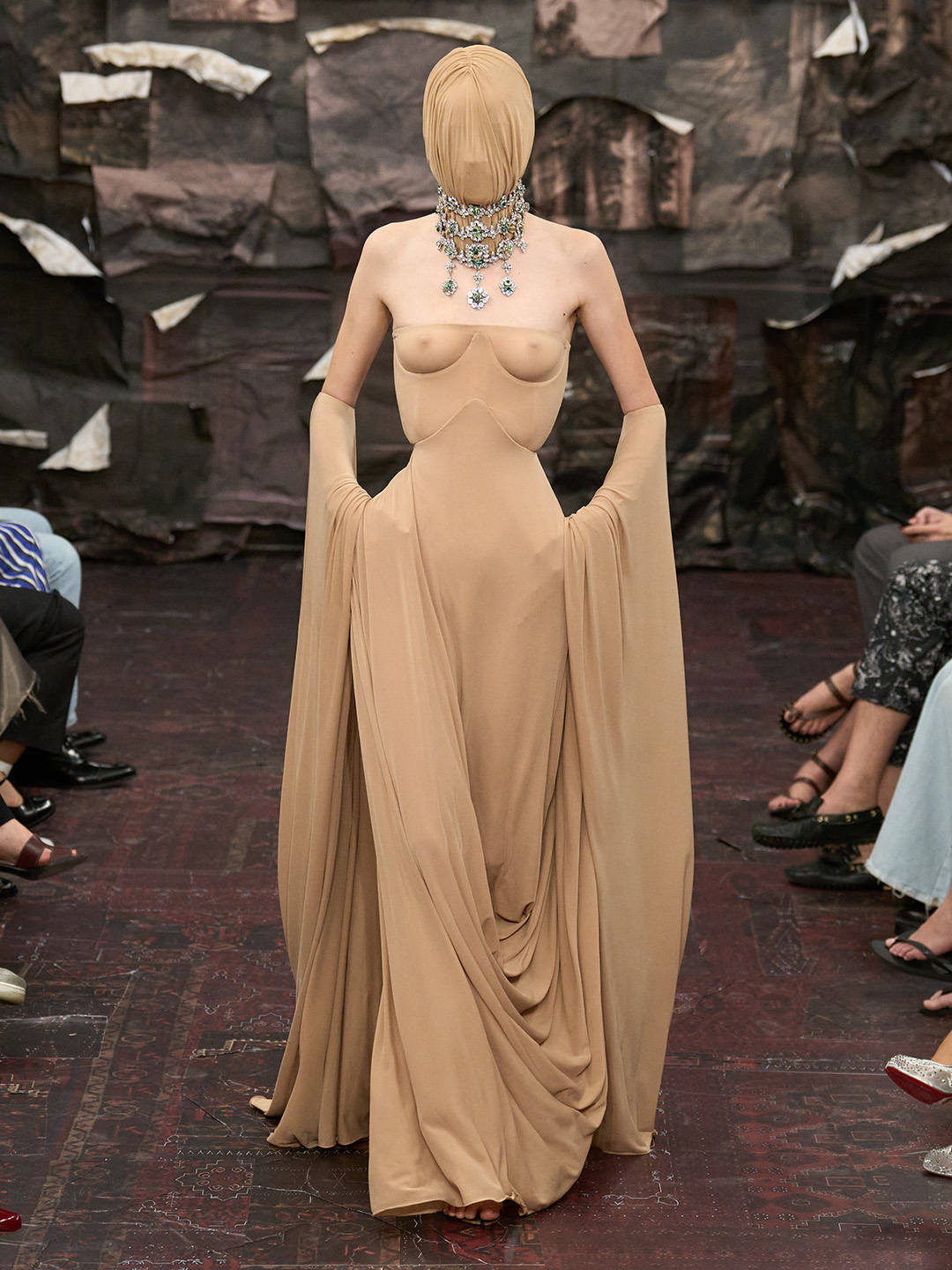
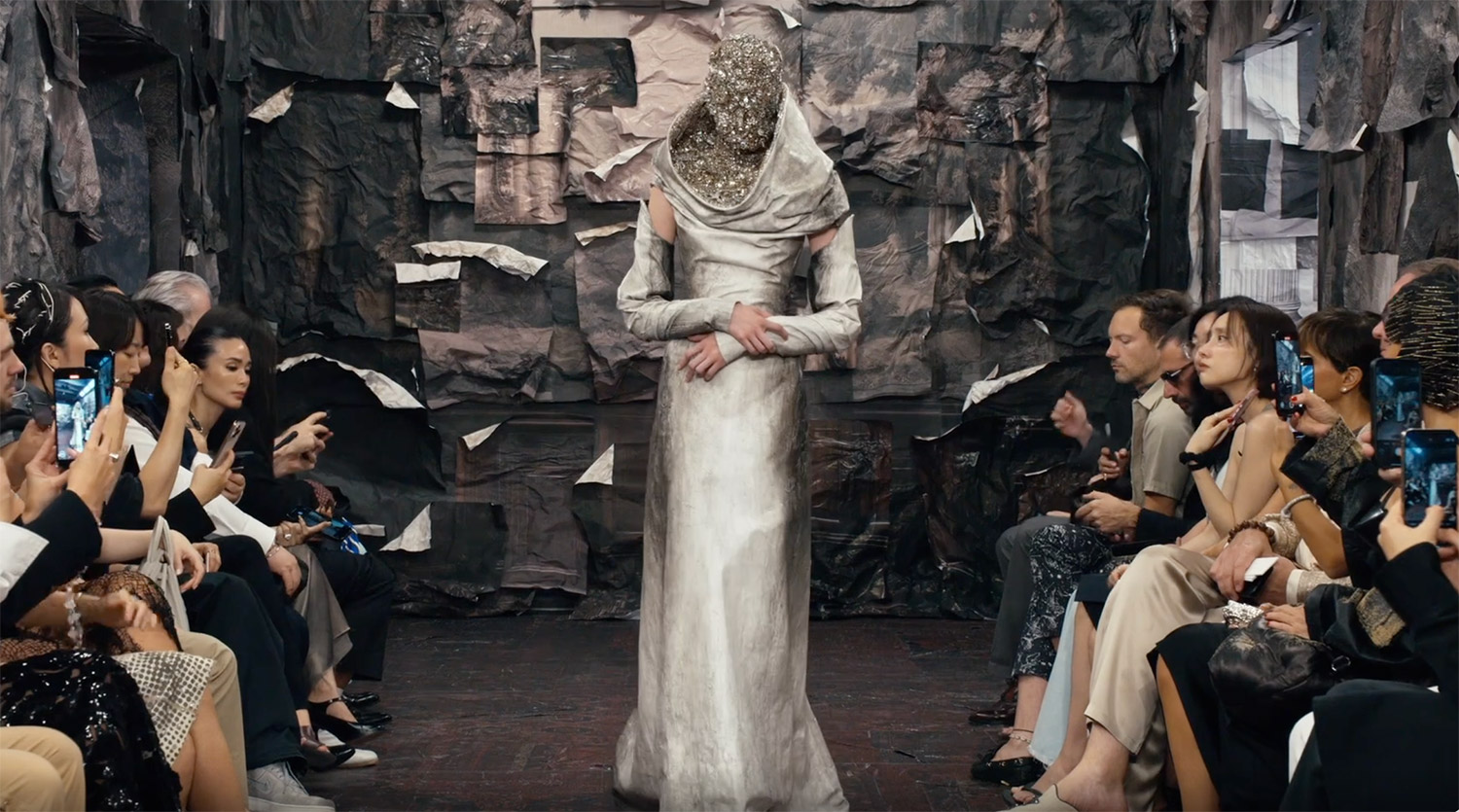
Maison Margiela returned to Paris Haute Couture Week with a potent new chapter: Glenn Martens’ debut Artisanal Collection. The show was staged in peeling, papered chambers. These chambers felt unearthed from a Flemish reliquary. It fused Margiela’s house grammar: deconstruction, re-purposing, anonymity. With Martens’ moody Northern European romanticism. The result was a riveting statement about craft, character, and time: couture as palimpsest.
This fusion of history and modernity defines the Maison Margiela aesthetic.
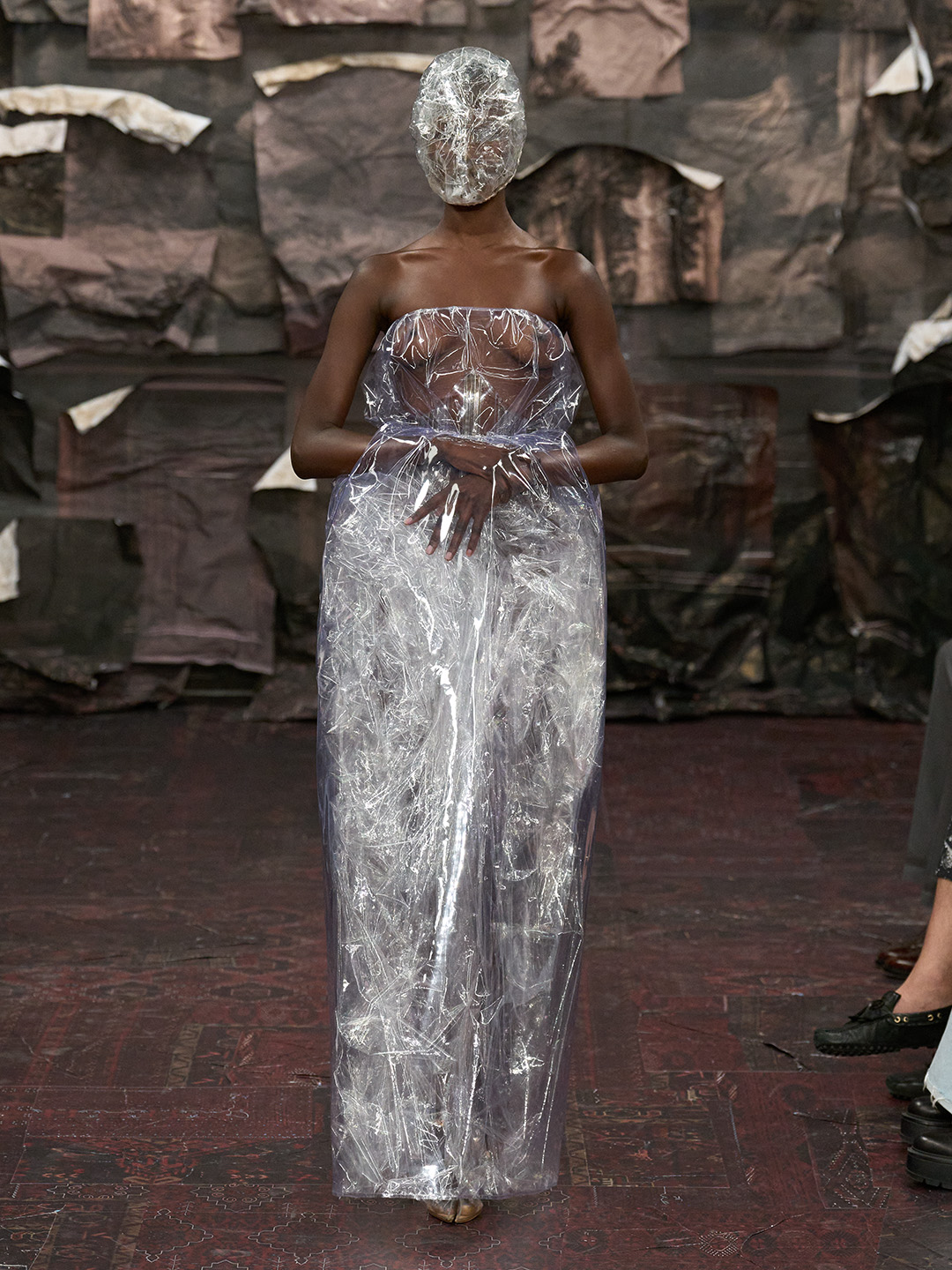
Martens’ use of plastic elements is particularly evocative. In a world where environmental concerns are at the forefront, the juxtaposition of beauty with functionality speaks volumes. The masked figures, shrouded in these plastic motifs, evoke a sense of mystery, prompting observers to reflect on the duality of protection and exposure. This balance can be likened to the layers of identity we all wear in society.
The exploration of Gothic and Low Countries imagery has deep roots in art history. For instance, the 17th-century leather wallpapers Martens studied can be traced back to a period where craftsmanship was revered. By incorporating these historical elements into modern silhouettes, Martens creates a dialogue between past and present, allowing contemporary audiences to connect with history through fashion. This technique not only enriches the visual experience but also educates viewers about the cultural significance behind each design.
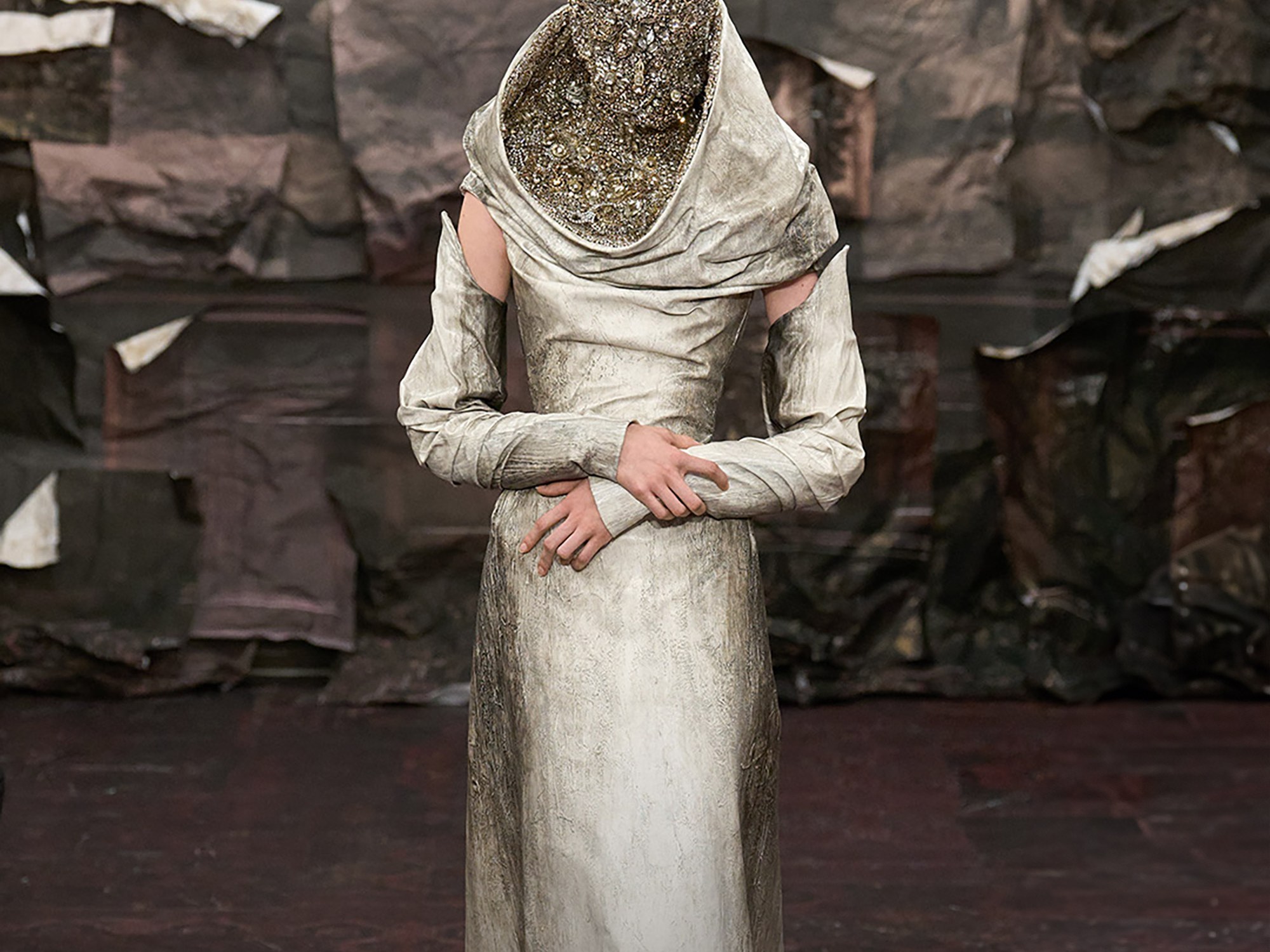
The opening looks featured clear, sculpted sheaths. They read as blown-glass carapaces. Then came the procession of masked figures. Together, these elements set a cerebral tone for Martens. The plastic motif enclosed stiffly painted gowns. It featured equal parts “dry-cleaning bag” wit and vacuum-seal armor. There was a deliberate tension between protection and exposure. It nodded to Margiela’s archival provocations while asserting a modern, almost forensic interest in surface.
Maison Margiela continues to push the boundaries of traditional couture.
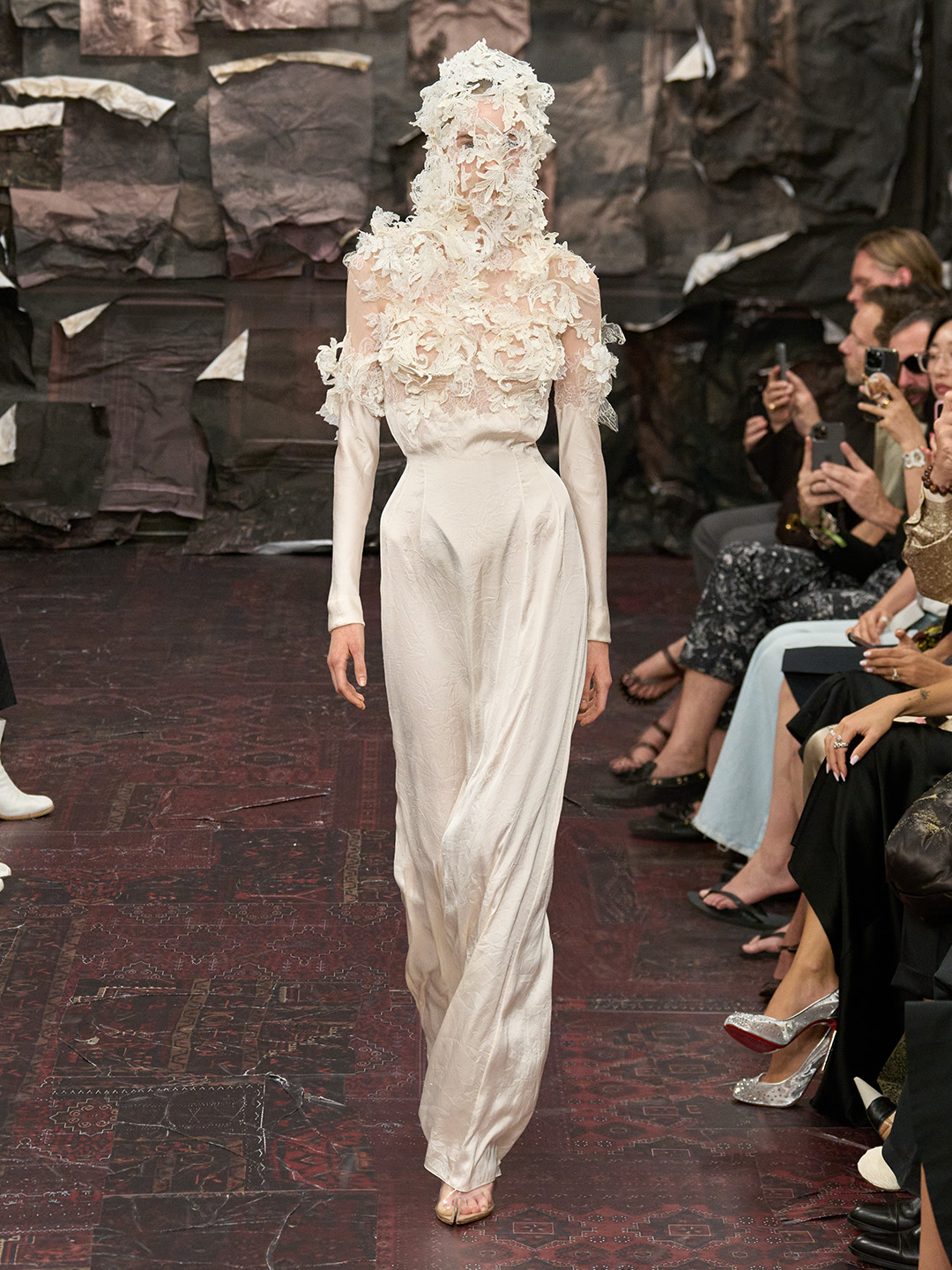
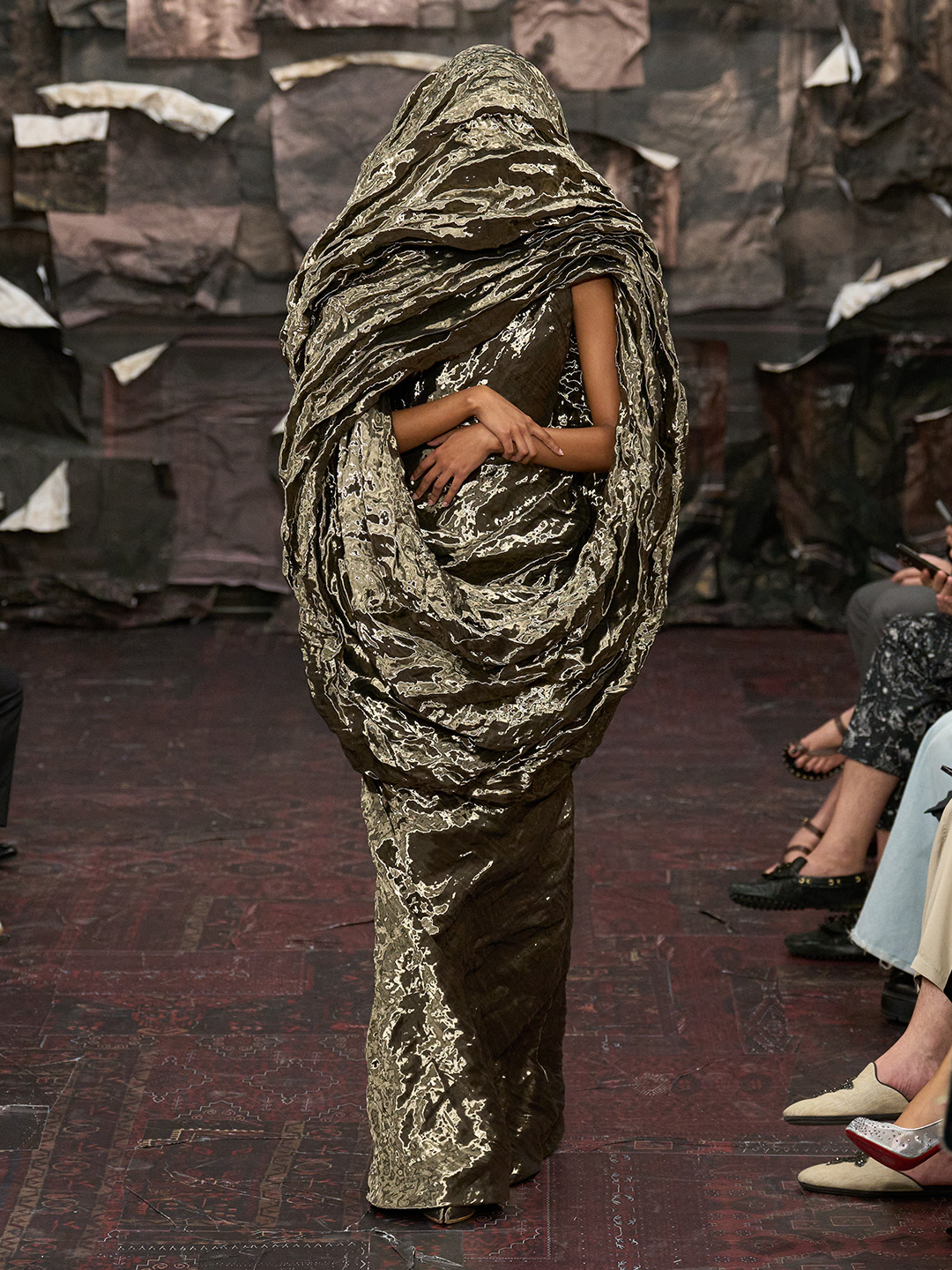
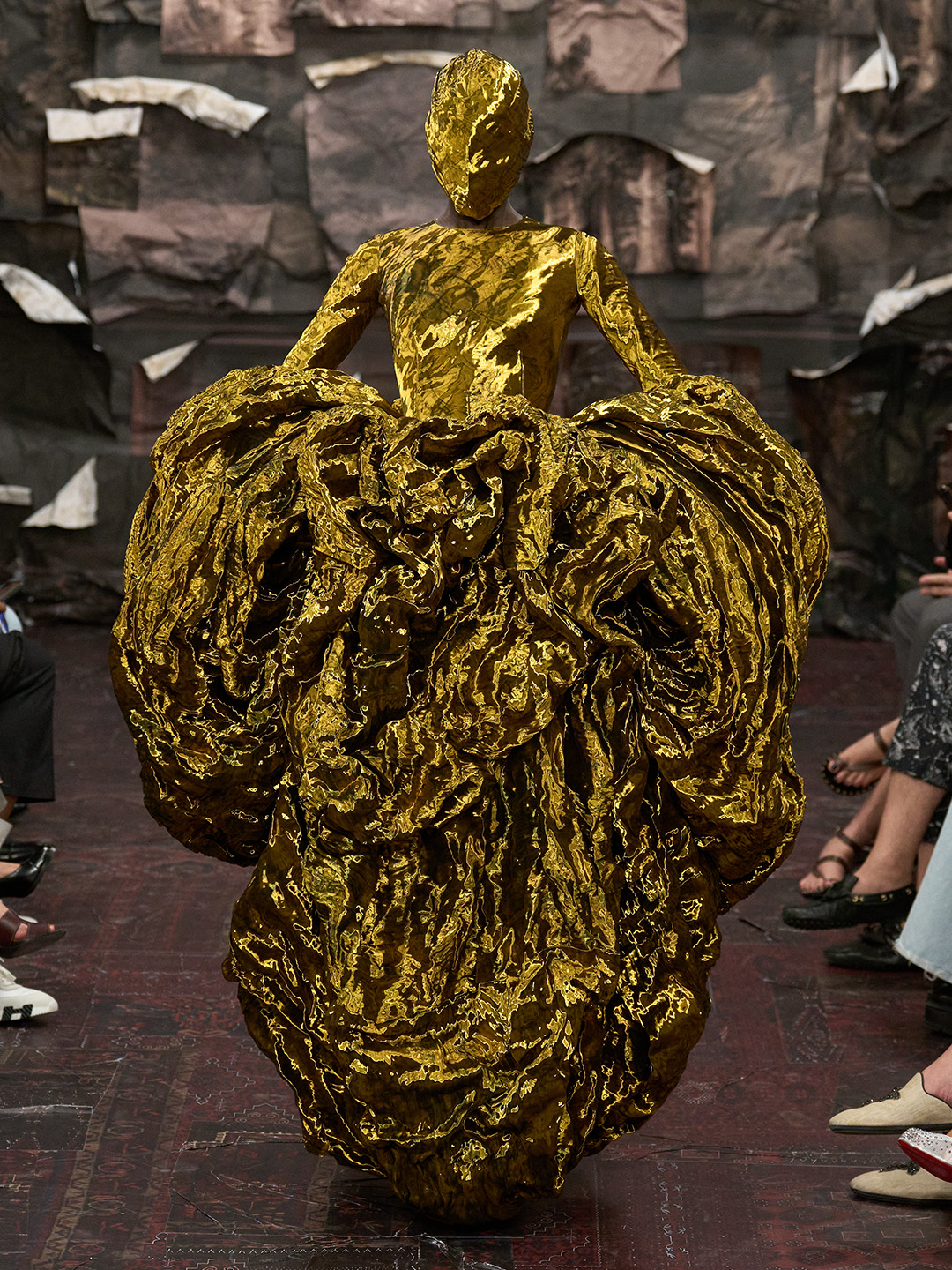
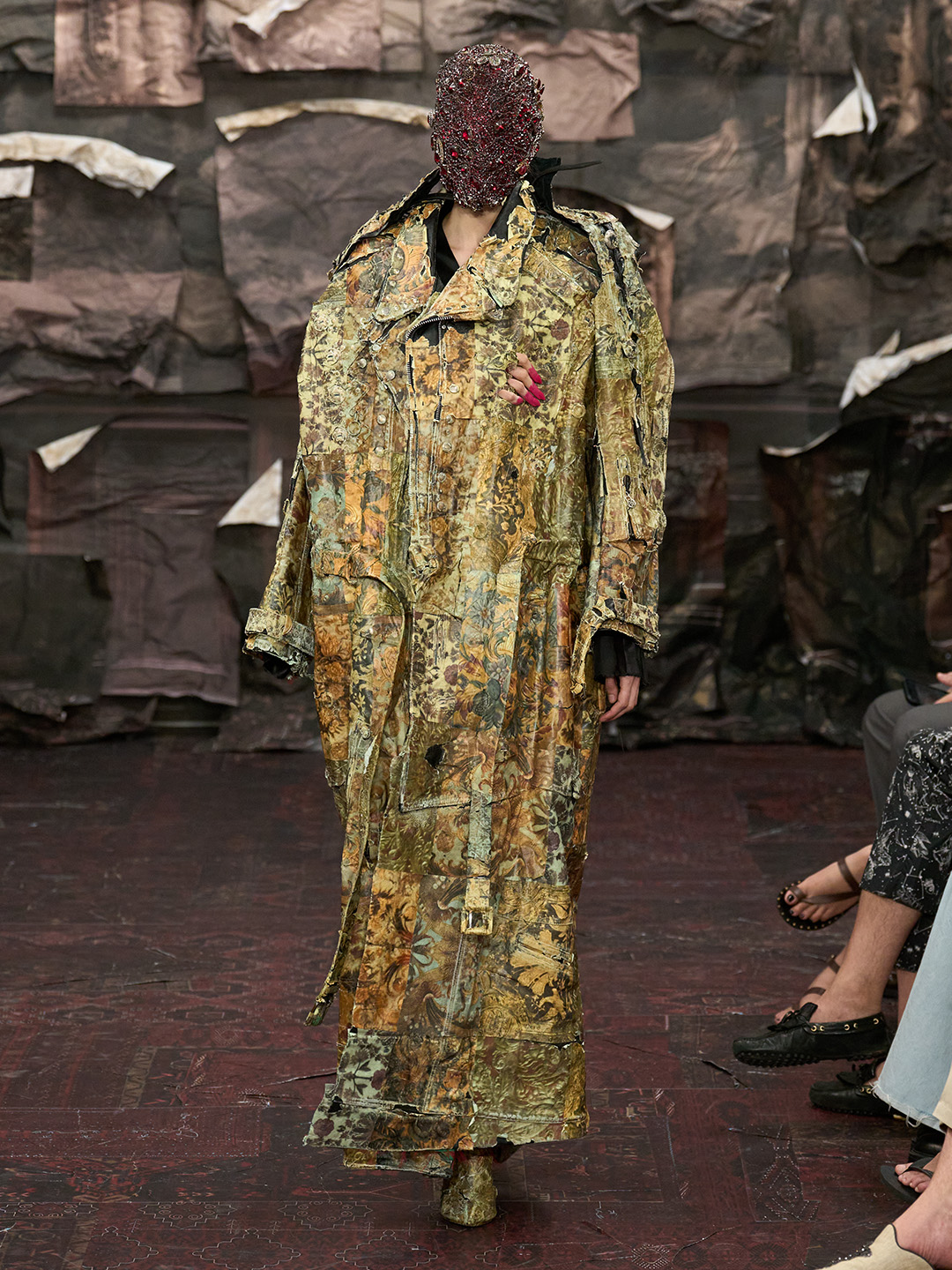
Key to Martens’ narrative was an excavation of Gothic and Low Countries imagery. He examined embossed 17th-century leather wallpapers extensively. He also studied Dutch still lifes, decayed draperies, and church statuary. He used these elements to build silhouettes that felt both sanctified and subversive. Metallized velvet fell in heavy, reliquary swags; lace appeared as fluttering cutouts, peeling from sheer dresses like frescoes shedding pigment. This was couture as archaeology, where what has been worn and weathered becomes newly worthy.


This interplay of design and narrative is a hallmark of Maison Margiela’s work.
Maison Margiela’s unique approach to fashion invites a deeper understanding of its collections.


The ethereal quality of the spectral jersey gowns is enhanced by the choice of fabric. Jersey, known for its stretch and adaptability, allows for dynamic movement, embodying the fluidity of the body. This choice reflects Martens’ understanding of how fabric interacts with form, creating garments that are not only visually striking but also practical and wearable. This union of art and functionality is a hallmark of truly exceptional couture.
As such, Maison Margiela continues to inspire both designers and fashion lovers alike.
In essence, Maison Margiela embodies the spirit of contemporary haute couture.
Ultimately, Maison Margiela showcases the transformative power of fashion.


This connection to cultural heritage further enriches Maison Margiela’s narrative.
Silhouette was where Martens’ couture instinct glinted. Three spectral jersey gowns, caped and body-veiling, drifted past with sepulchral grace. Beneath, unusual corsetry jutted the hips. It lifted a busk at the front. This was an unmistakable bow to the theatrical engineering of Martens’ predecessor, John Galliano. This design was filtered through a cooler, Belgian sensibility. It was a canny bridge between chapters, proof that continuity can be daring.
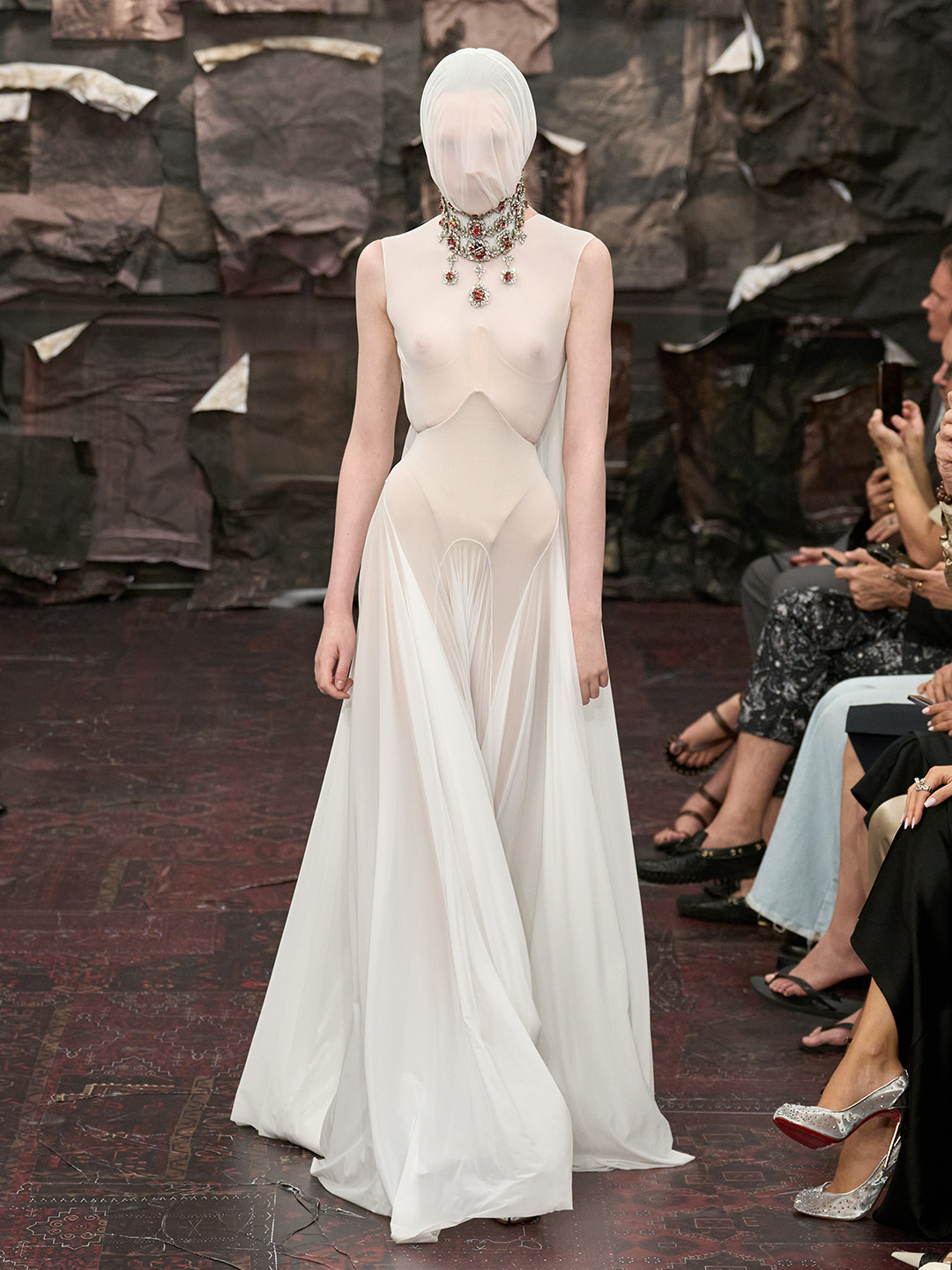
Each piece is a reflection of Maison Margiela’s enduring legacy in the fashion world.
In conclusion, Maison Margiela’s impact on contemporary fashion cannot be overstated.
Moreover, the geographical context provided by Margiela’s notes offers a deeper layer of appreciation for the work. Understanding the inspirations drawn from Flemish and Dutch architecture allows fashion enthusiasts to see beyond mere aesthetics. It encourages them to appreciate fashion as a multi-dimensional art form that intersects with history, culture, and social commentary.


For those who admire the craftsmanship in haute couture, Martens’ collection offers a treasure trove of options. The metallized velvets outshine typical evening wear, whilst the razor-cut sheer columns elevate conventional red-carpet fashion. These choices exemplify how traditional silhouettes can be reimagined to create something entirely new and exciting. This innovative approach not only appeals to seasoned fashion aficionados but also attracts a new generation of style-conscious consumers.
Ultimately, the culmination of Glenn Martens’ debut Artisanal Collection at Paris Haute Couture Week is not just an exhibition of fashion but a celebration of the artistry and narratives that underpin it. As we reflect on the craftsmanship involved, we are reminded of the stories woven into each garment, echoing the very essence of maison margiela.
The broader implications of Martens’ work extend into discussions about identity and self-expression in fashion. As society increasingly embraces diversity, the fluidity and uniqueness of haute couture collections resonate with individuals seeking to define themselves outside conventional boundaries. Martens’ ability to fuse individuality with historical references plays a pivotal role in shaping a new narrative around luxury fashion.


Context matters. Margiela’s official notes anchored the collection in the architectural statuary of Flanders and the Netherlands. They featured saintly figures and austere facades which translated into statuesque volumes. That geographic precision gave the fantasy its foundation. It distinguished the show from generic Gothicism and tied it to both Martin Margiela’s and Martens’ roots.
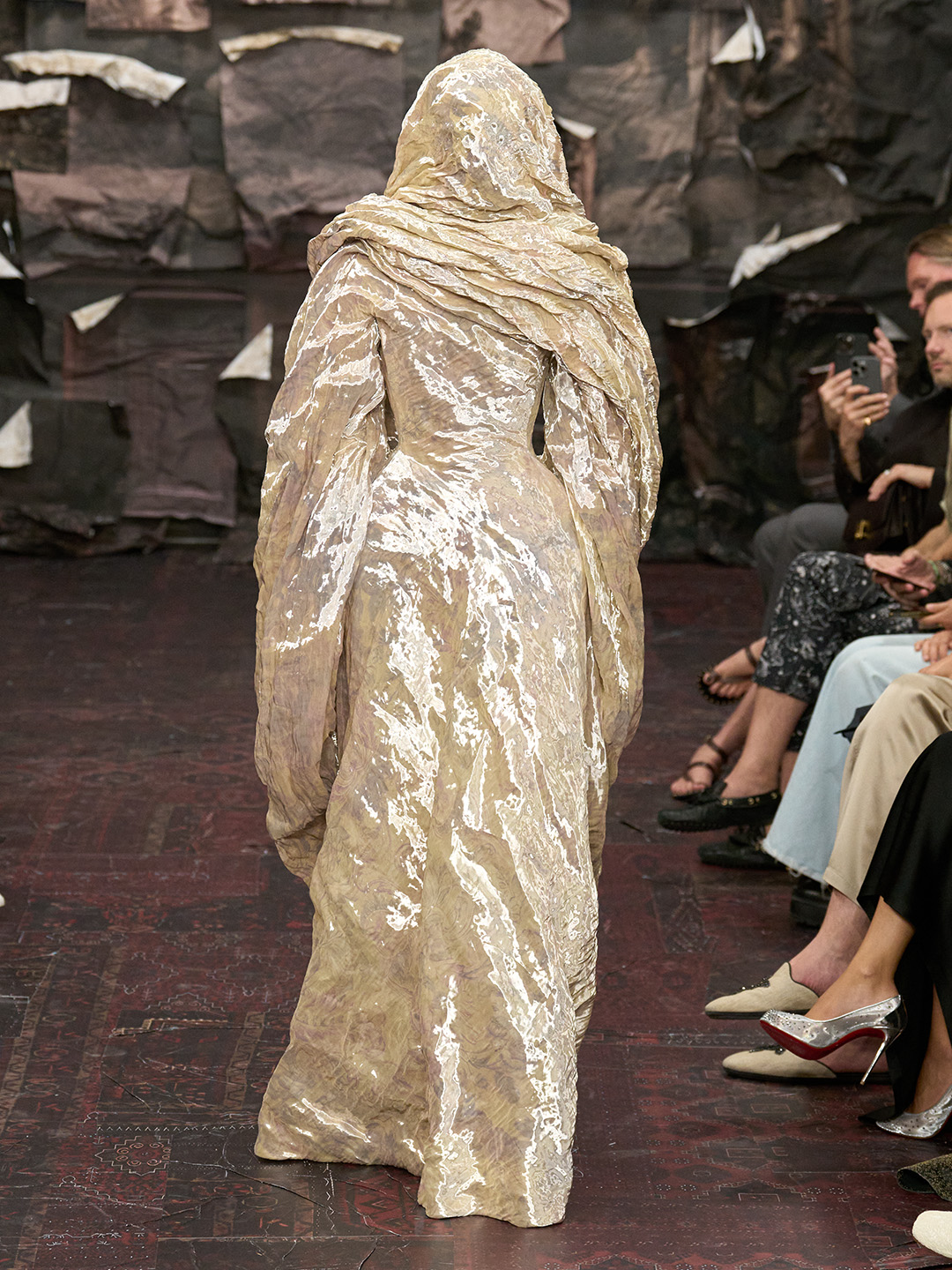
For red-carpet pragmatists, there was plenty to covet. These include those metallized velvets. Other items were the razor-cut sheer columns edged with “peeling” lace. There were also structured coats with fresco textures. Yet the triumph lay in coherence. Martens didn’t just cosplay the archive. He truly metabolized it. He turned house tropes (masks, re-purposing, anonymity) into a language that feels immediate and collectible. Crucially, it also feels like his own.
by Olga Barrale