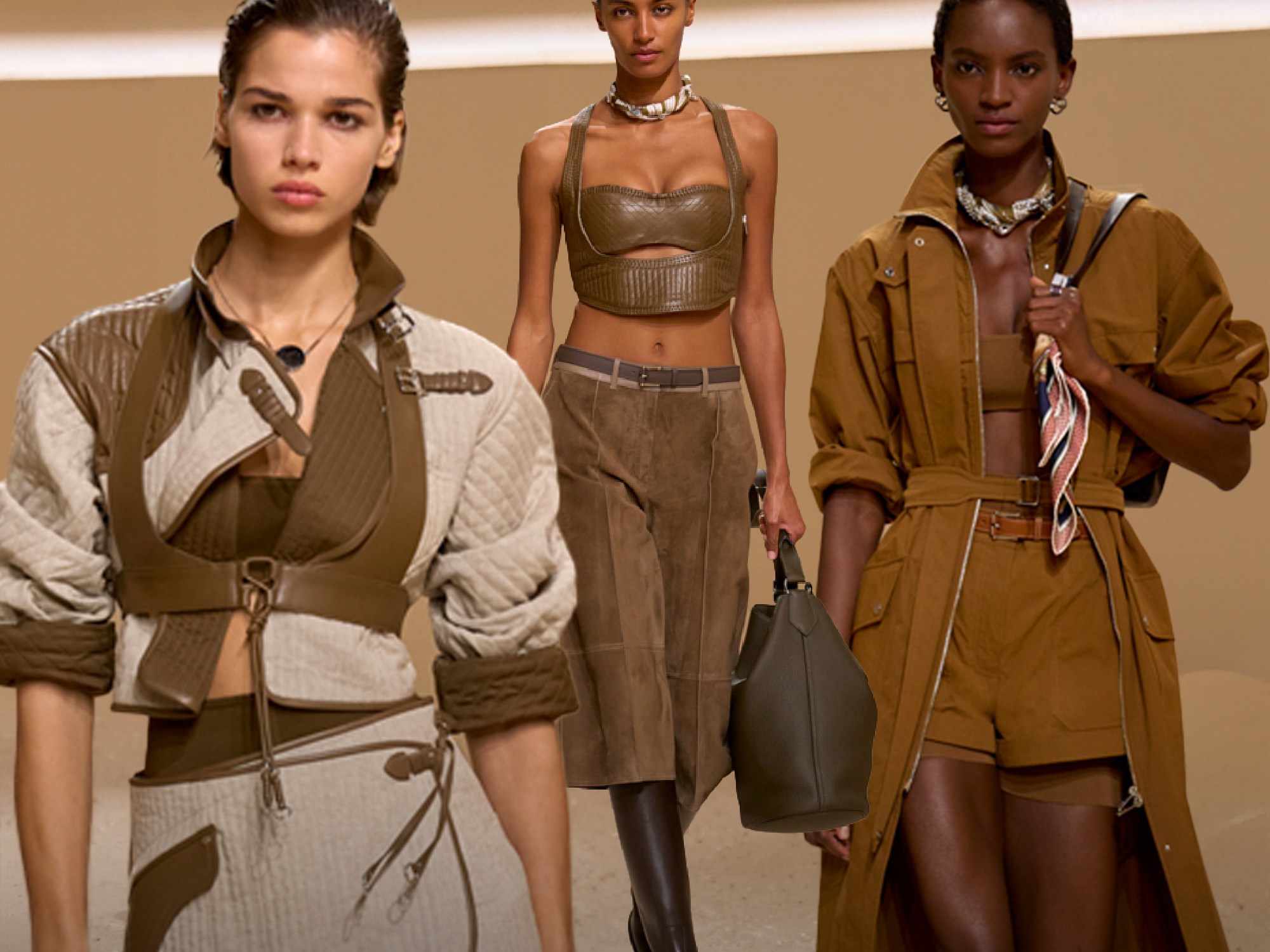
I walked into the Hermès Spring/Summer 2026 show with the same quiet anticipation I always feel before an Hermès collection, an awareness that what I’m about to see will not shout, but will instead unfold gradually, with a kind of confident whisper. But this season, the whisper carried heat. Not just temperature, though the warm tones certainly evoked it, but the sort of emotional heat that comes when restraint meets bold clarity. The palette alone: brown, khaki, mustard, and the sharp flare of controlled red – felt like a desert afternoon filtered through an architectural sketch.
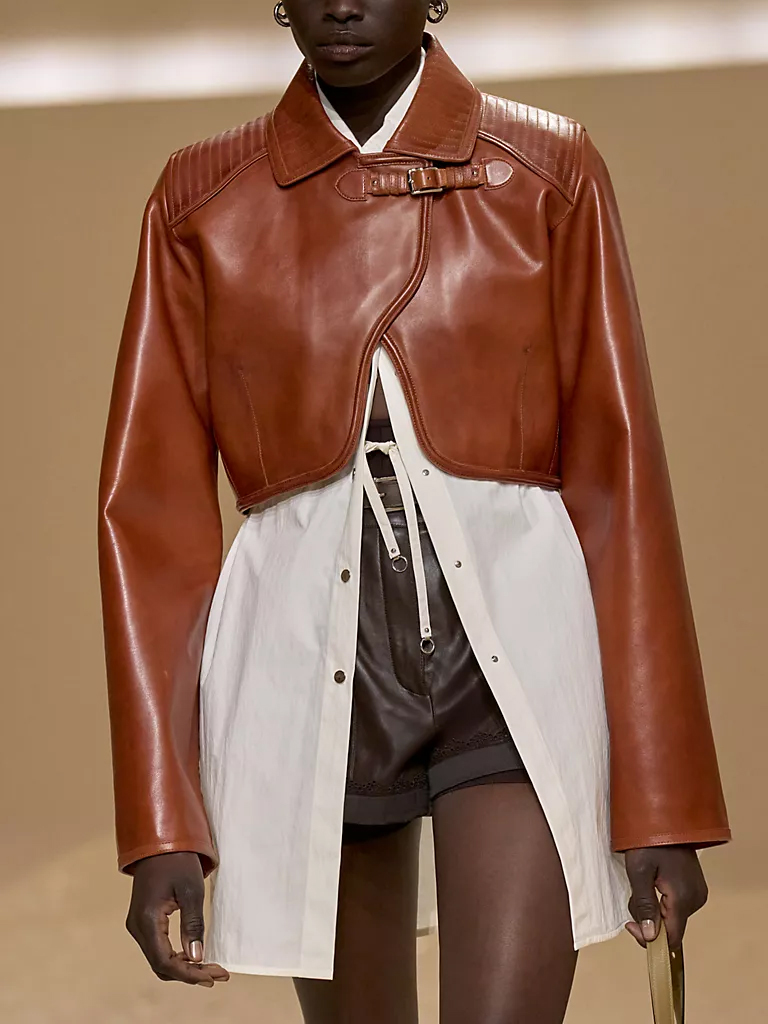
A Hermès Palette: Born From Sunlight and Sand
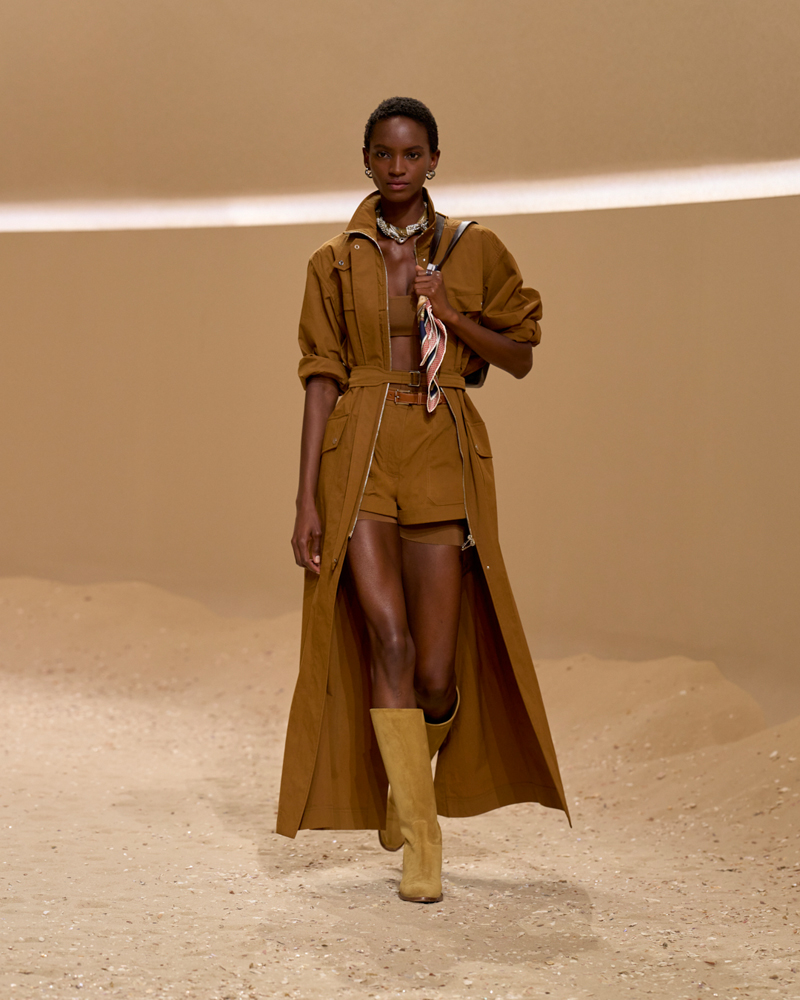
This collection wasn’t about nostalgia. It didn’t look back to the house’s equestrian roots, nor did it rely on archive silhouettes. Instead, it re-imagined heat itself as a design principle, how fabric lifts from the body when temperatures rise, how colors shift under sunlight, how structure can be both protective and sensual. The first look made it clear: a mustard bustier, crisp and sharp like a folded sunbeam, paired with tailored khaki trousers that moved with a fluidity only Hermès seems able to coax from something so meticulously constructed. This season’s bustier reappeared in various incarnations throughout the show, each one a study in architectural tension: curved but firm, sculptural yet wearable, sensual without ever relinquishing the precise dignity that defines the brand.
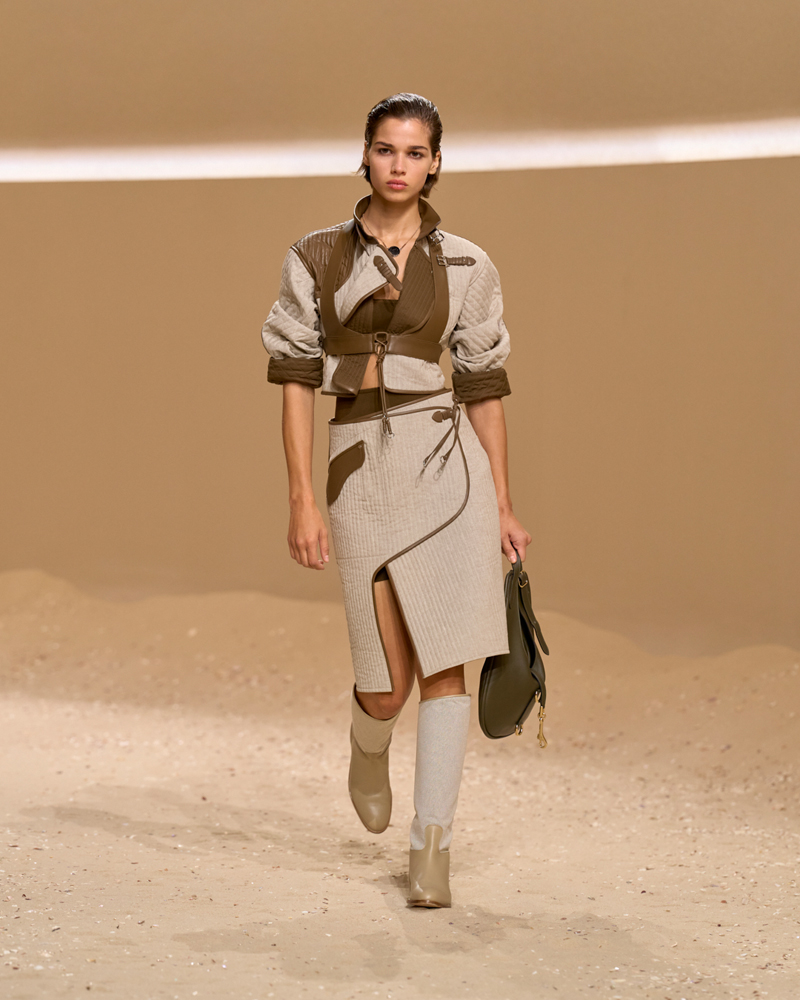
The Bustier as the Season’s Architectural Heart
What struck me most was the architectural logic in the pieces. These weren’t garments designed to merely drape; they were forms that interacted with the body like an extension of bone or muscle. You could see the construction from the outside, clean seams that formed geometric paths, panels that curved with mathematical exactness, garments that seemed to understand movement before the wearer even took a step. There was a jacket built from overlapping khaki planes that reminded me of the shading devices on a Louis Kahn building, and a dress in deep red that folded and unfolded like origami engineered by a couture architect.
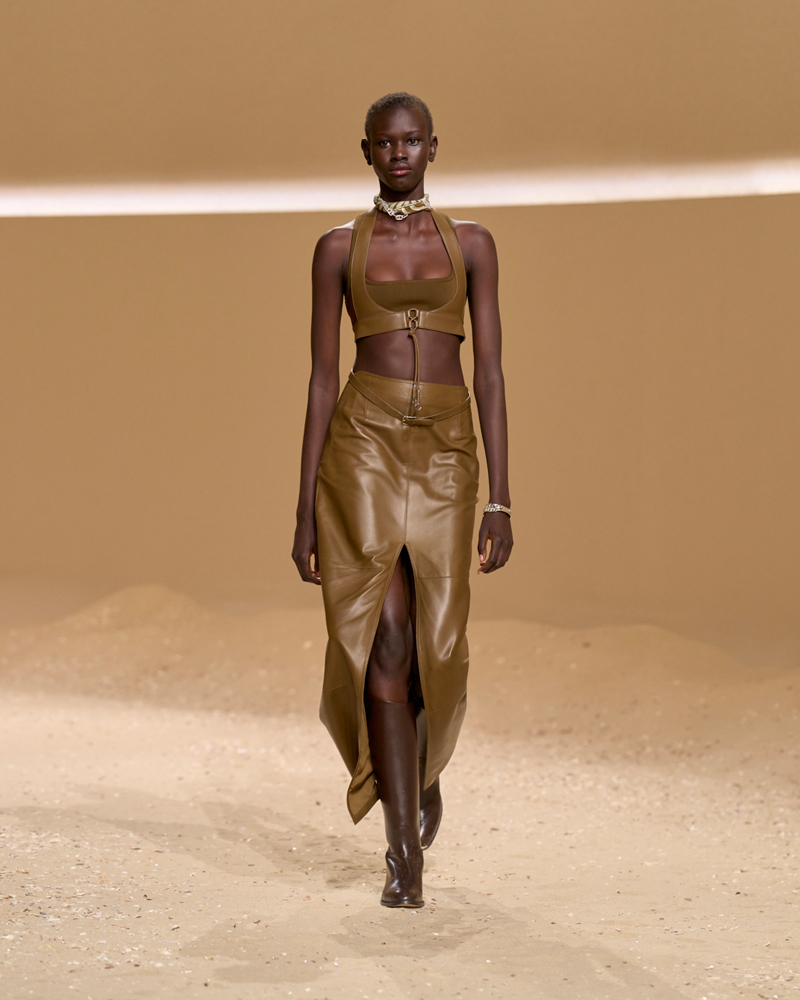
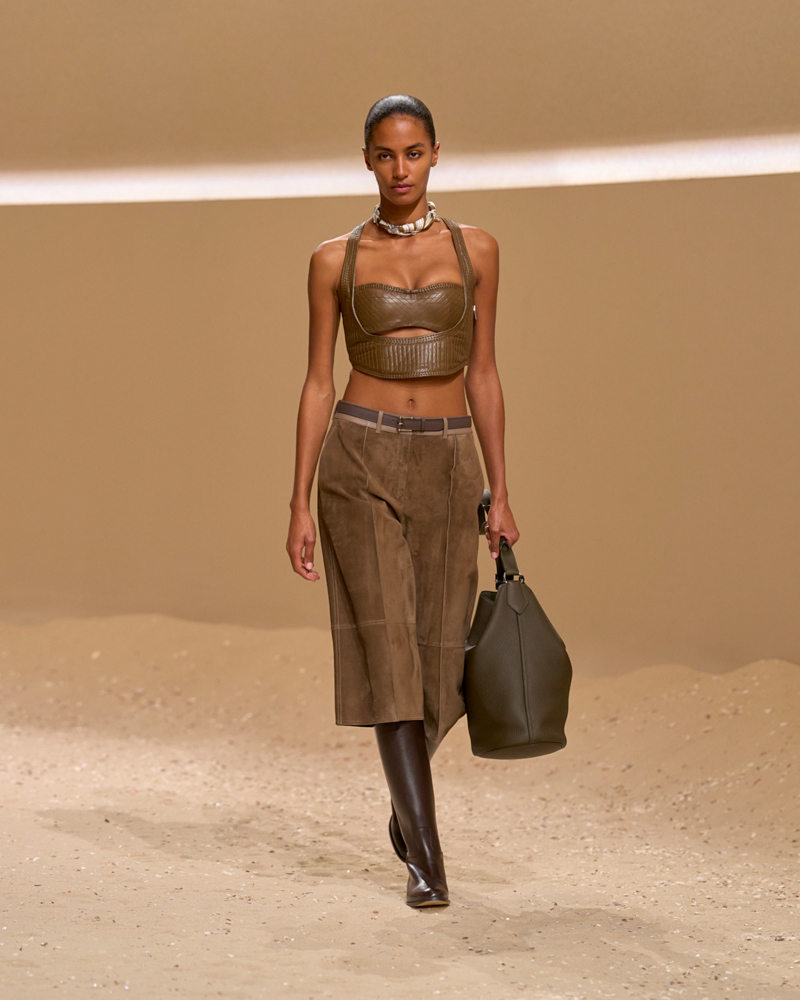
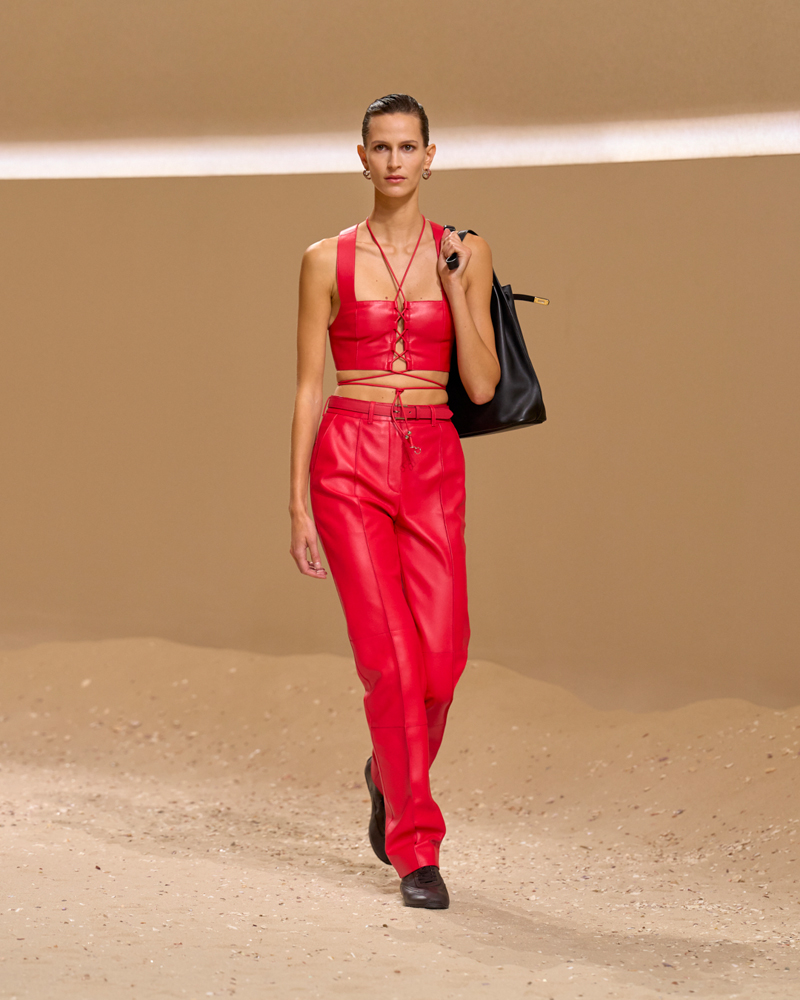
And yet, despite this rigor, the clothes felt warm. Color played a crucial role. Brown wasn’t used as a neutral but as a presence: muddy clay, polished chestnut, crisp bark. Khaki softened the edges of sharper silhouettes, functioning almost like negative space in a painting. Mustard carried the optimism of sunlight, acting as punctuation. But it was the red that made the collection pulse: a red that felt both controlled and alive, like a small flame cupped in the hand. It wasn’t the dramatic, loud red often seen on runways; it was more intimate, almost secretive. It appeared in a pleated skirt that fluttered like a flag in a still wind and in the lining of a structured coat, revealed only when the model turned.
Materials That Breathe Luxury
The textiles themselves were undeniably high-end, even by Hermès standards. There were silks that absorbed light instead of reflecting it, cottons with the density of fine paper, and leathers so soft they moved like fabric. I found myself watching the way a particular brown leather bustier shifted as the model walked it didn’t crease so much as it stretched, supple and responsive, like a second skin that had learned subtlety as a language. Hermès has always excelled at material innovation, but this season seemed to push that devotion further toward a deeply personal kind of luxury: garments meant not just to be worn, but to be lived in.
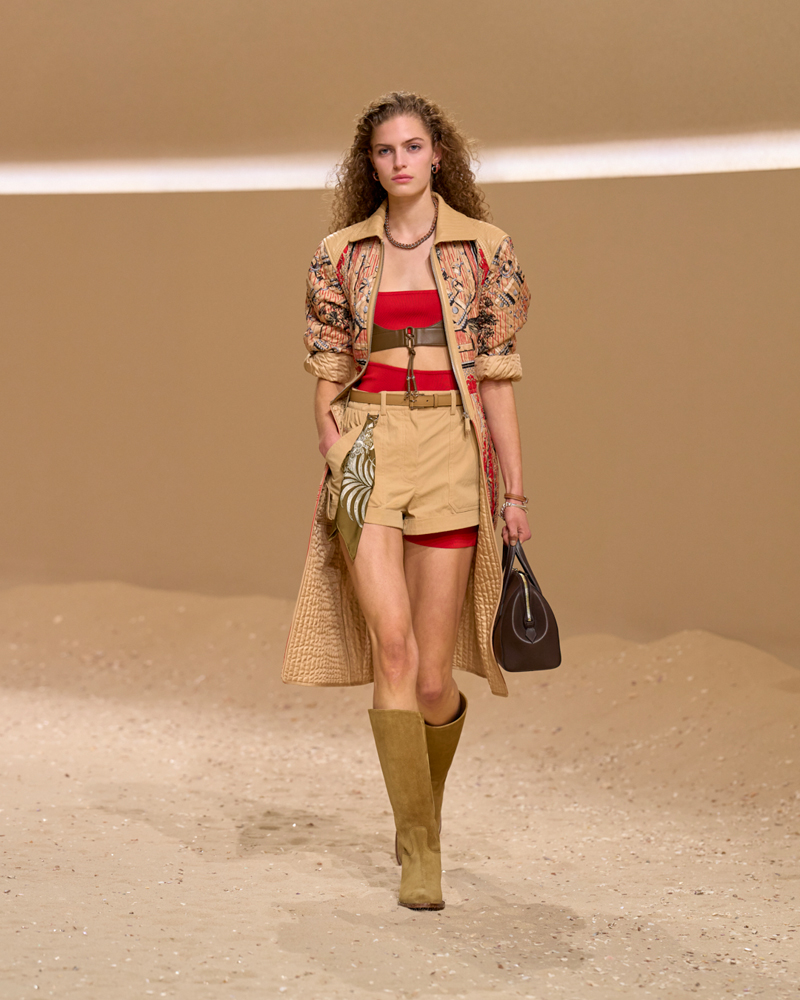
One of the most memorable looks was a khaki architectural coat, cut with an asymmetric lapel that bisected the torso like a drawn line. It had the clean logic of a façade, the kind of design that suggests the wearer is both shielded and revealed. Underneath, a minimalist red bustier peeked out, almost like an interior light glimpsed through an open doorway. The entire look felt like an invitation to consider what structure means when applied not to buildings, but to intimacy.
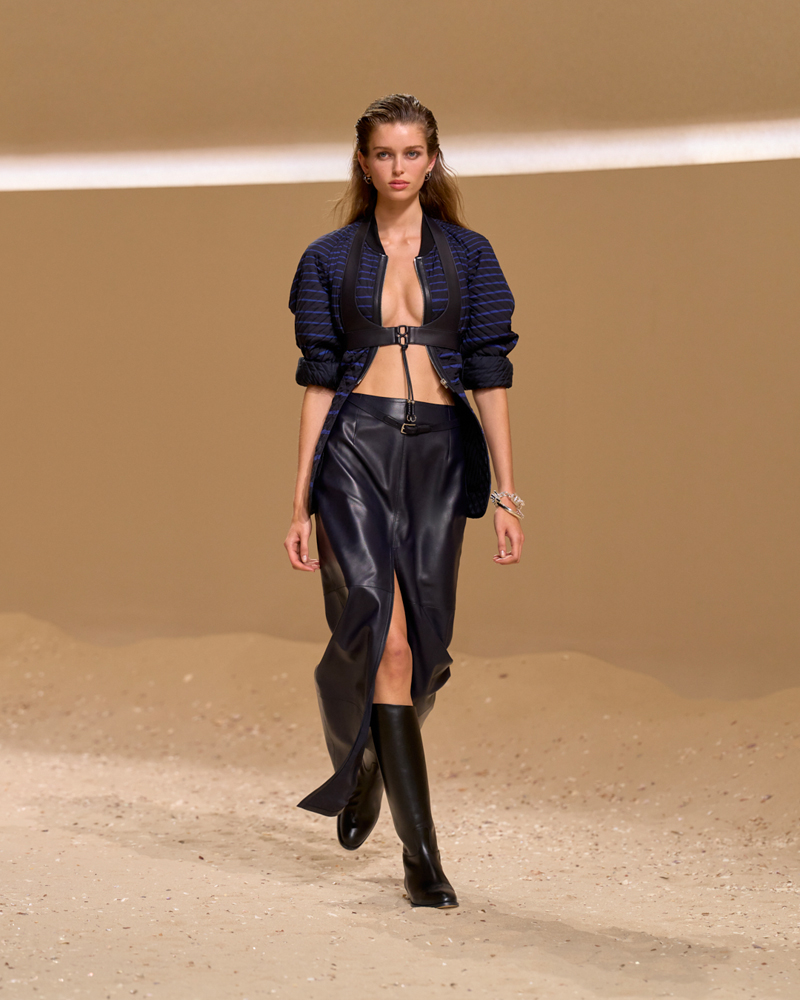
The interplay between heat and coolness, in color, in texture, in silhouette, made the collection feel psychologically layered. It wasn’t the kind of summer wardrobe meant solely for comfort; it was a collection that asked the wearer to feel the season, to understand warmth as part of identity. Even the lighter pieces, billowing mustard skirts, airy brown silk tops, carried an intentional weight, a sense of presence. Nothing was flimsy or disposable. Everything felt deliberately crafted, as if the designers had asked, “How can a garment hold its own against the sun?”
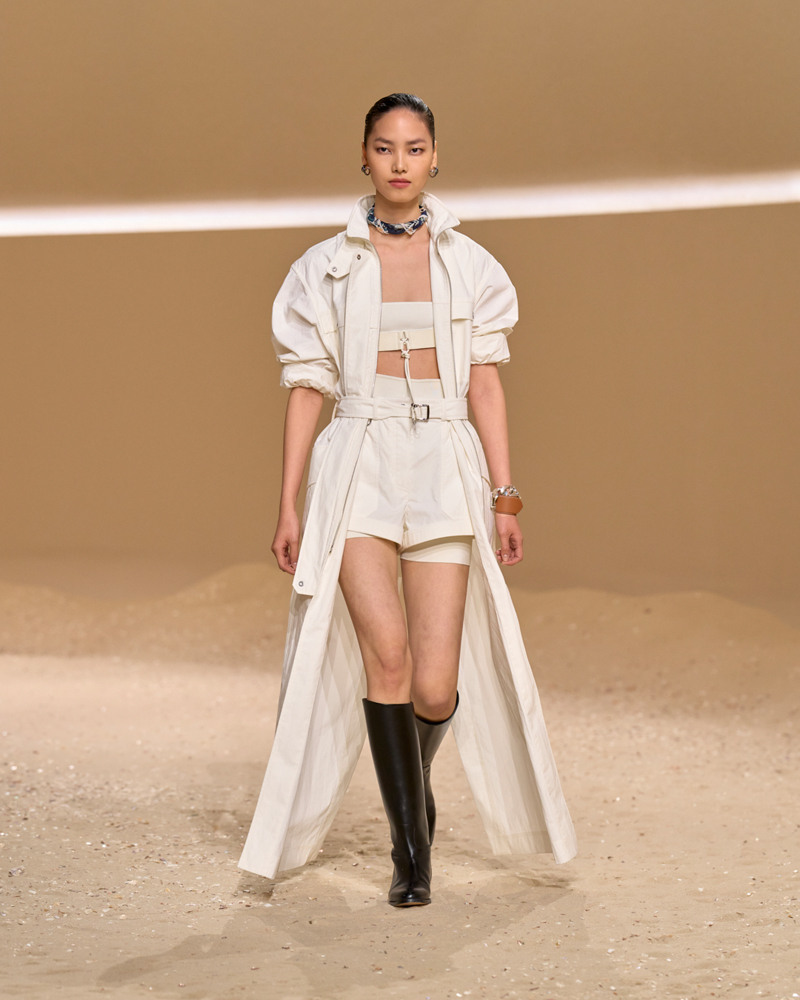
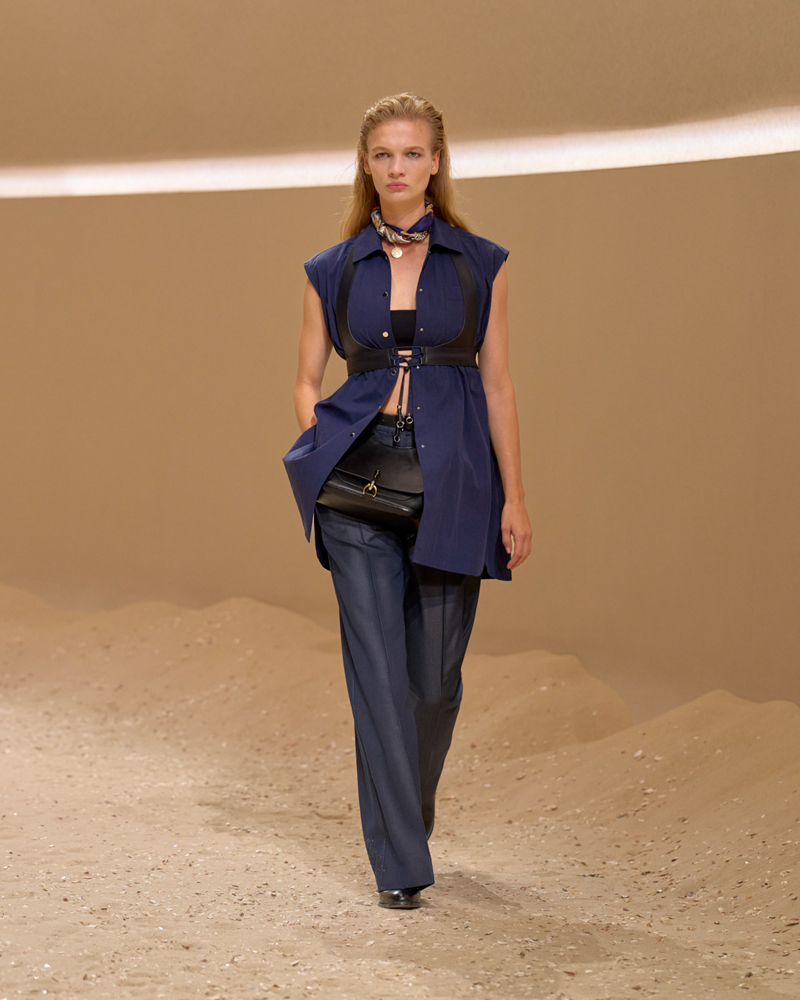
There was also a quiet sensuality embedded in the bustiers, which were the emotional signature of the season. They weren’t provocative; they were architectural: lifting, shaping, and defining space. Some were leather shells, sculpted and glossy. Others were soft cotton, folded like fans. My favorite was a mustard one with a central seam that ran like a spine, giving the piece a human vulnerability that softened its geometry. Seeing it move felt strangely personal, like watching someone take a deep breath.
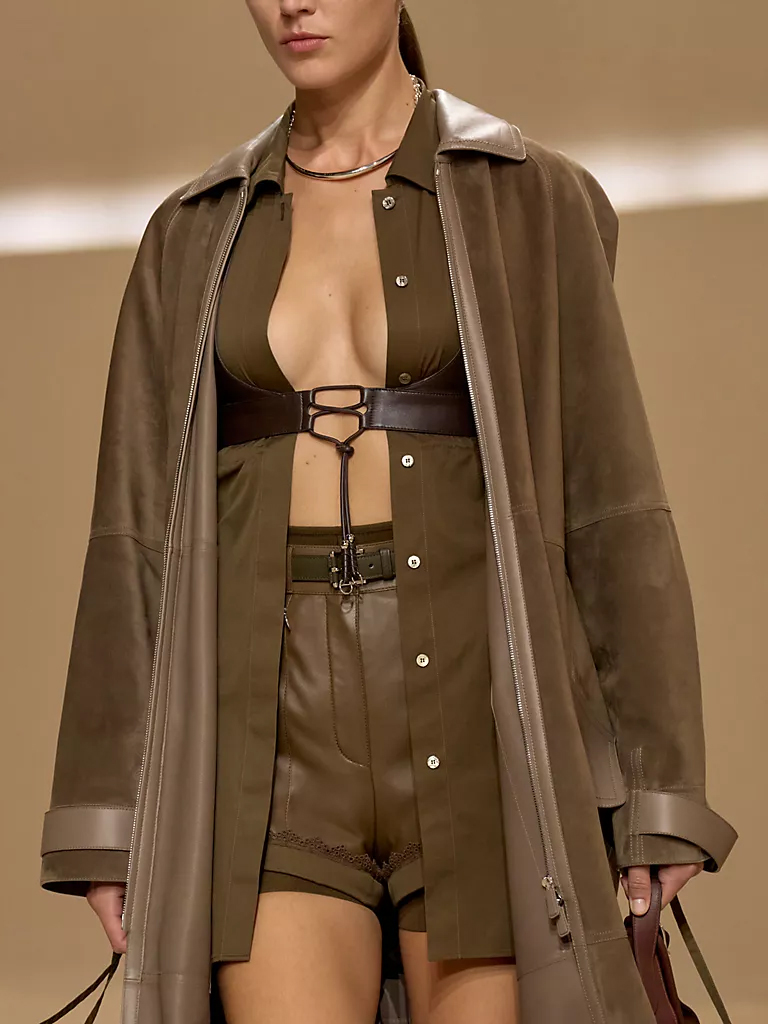
I left the show thinking about heat – not just physical heat, but creative heat. That spark between structure and emotion, between design and desire. Hermès S/S 2026 managed to take an elemental concept and render it into garments with soul. These pieces felt like they were made for people who want clothing that respects them, clothing that holds them not tightly, but thoughtfully.

