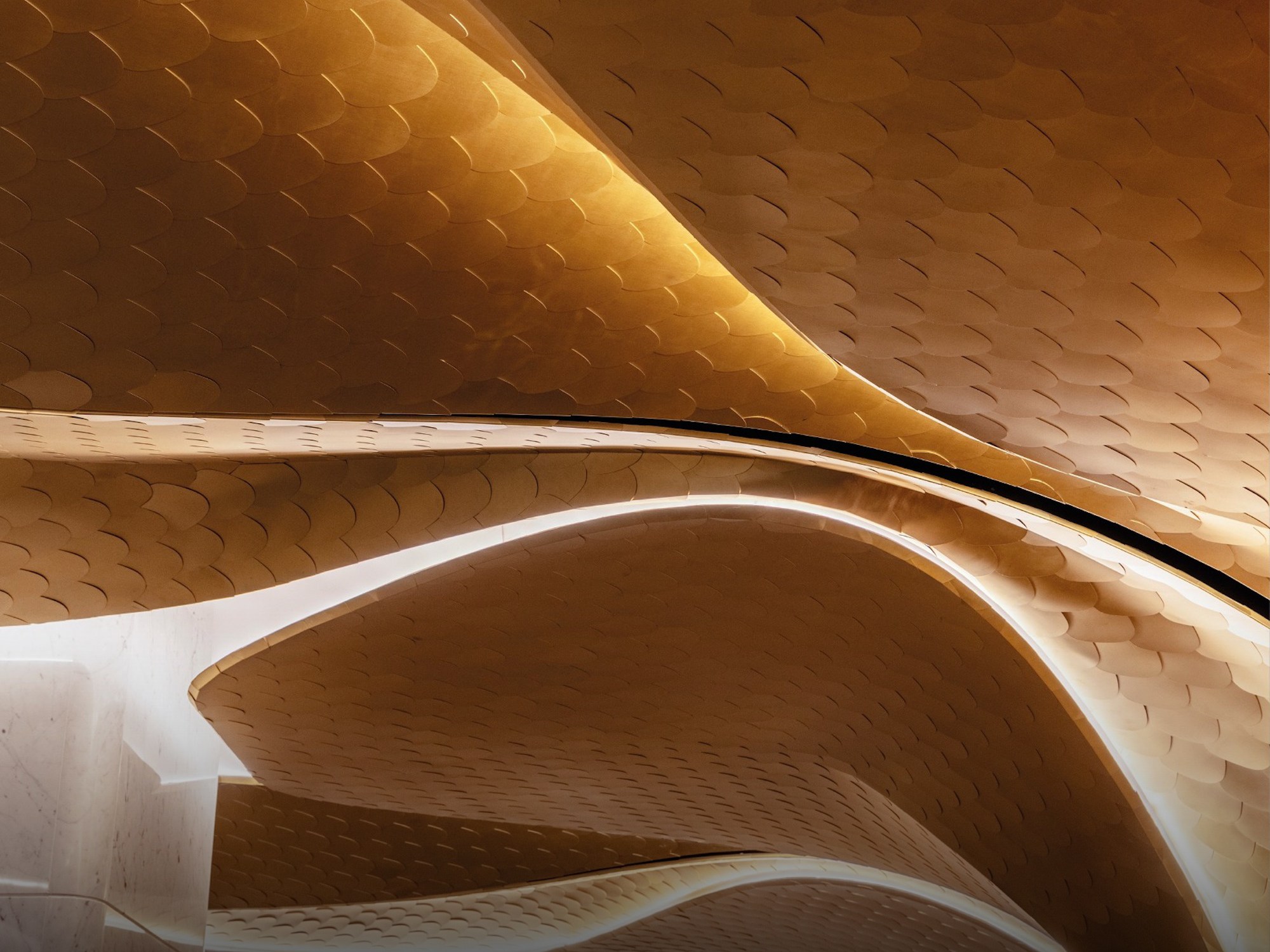
There are hotels in Rome that perform their history. Then there is Romeo Roma, which re-imagines it entirely.
My first encounter with the property did not begin at the front desk or in a courtyard scented by citrus, but at the threshold itself. The 16th century palazzo on Via di Ripetta presents a face so discreet it borders on theatrical. Doormen in red baseball caps guard the entrance with the silent authority one associates more with a private club than a hotel.
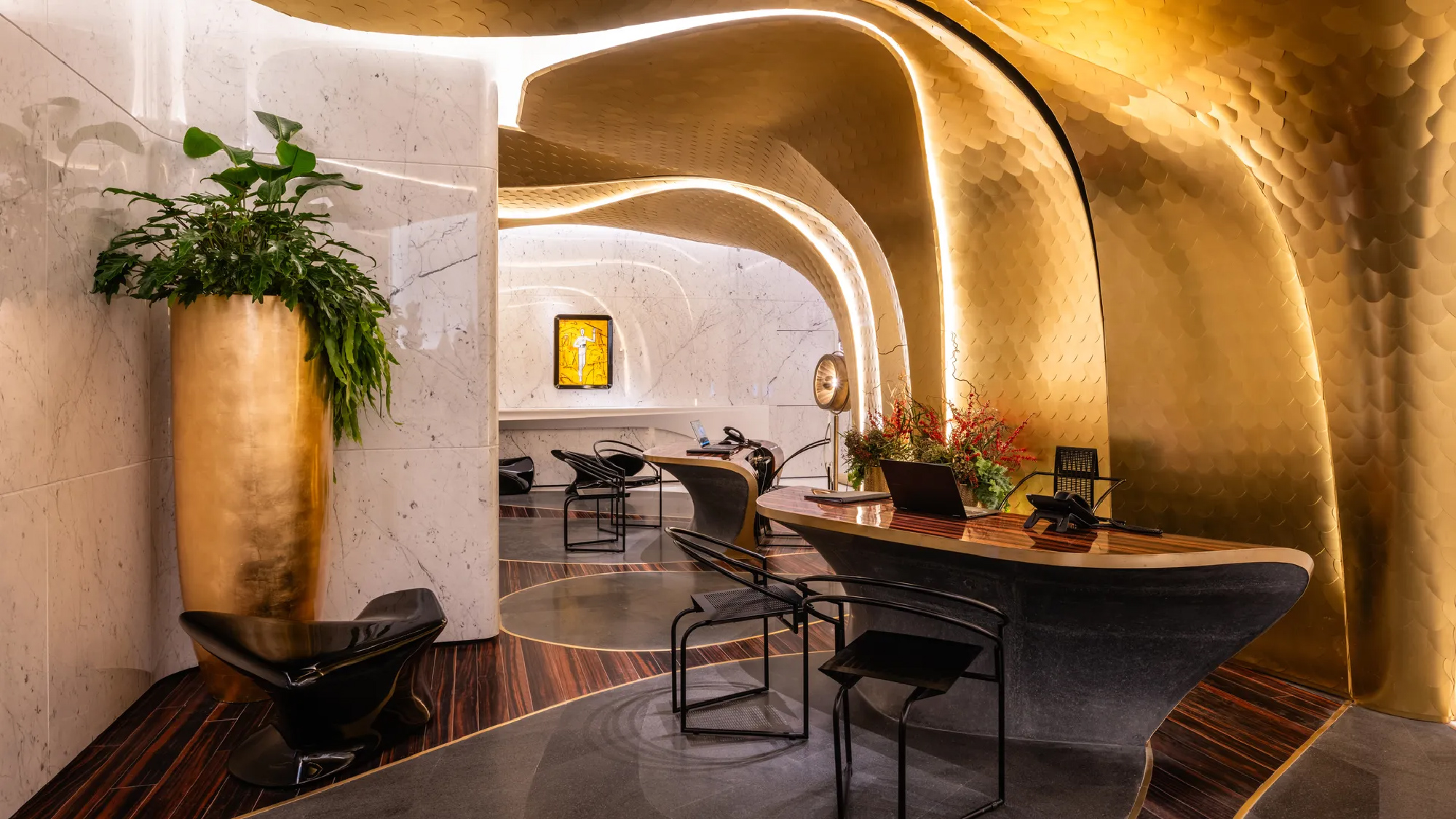
The refusal to let anyone wander in creates a bubble that feels part sanctuary, part provocation. Once inside, the contrast accelerates. The lobby is a swirl of black stone, polished Carrara marble, and an almost unruly waterfall that pours down the walls under fluorescent light. It reminded me of installations by Olafur Eliasson that manipulate perception. Here, within the bones of a Renaissance palazzo, it is a bold opening statement on the interplay between history and futurism that defines Romeo Roma’s design philosophy.
The building’s transformation was a long one. Alfredo Romeo, the group’s CEO, spent twelve years converting Palazzo Capponi into a hotel that respected its layers of history while fearlessly introducing contemporary architecture. Zaha Hadid, chosen to imagine the structural vocabulary of the new Romeo, left behind what would become one of her final projects. Her signature curves and vaulted geometries thread through every hallway and suite, but they do not overshadow the character of the palazzo. Instead, they bend around it.
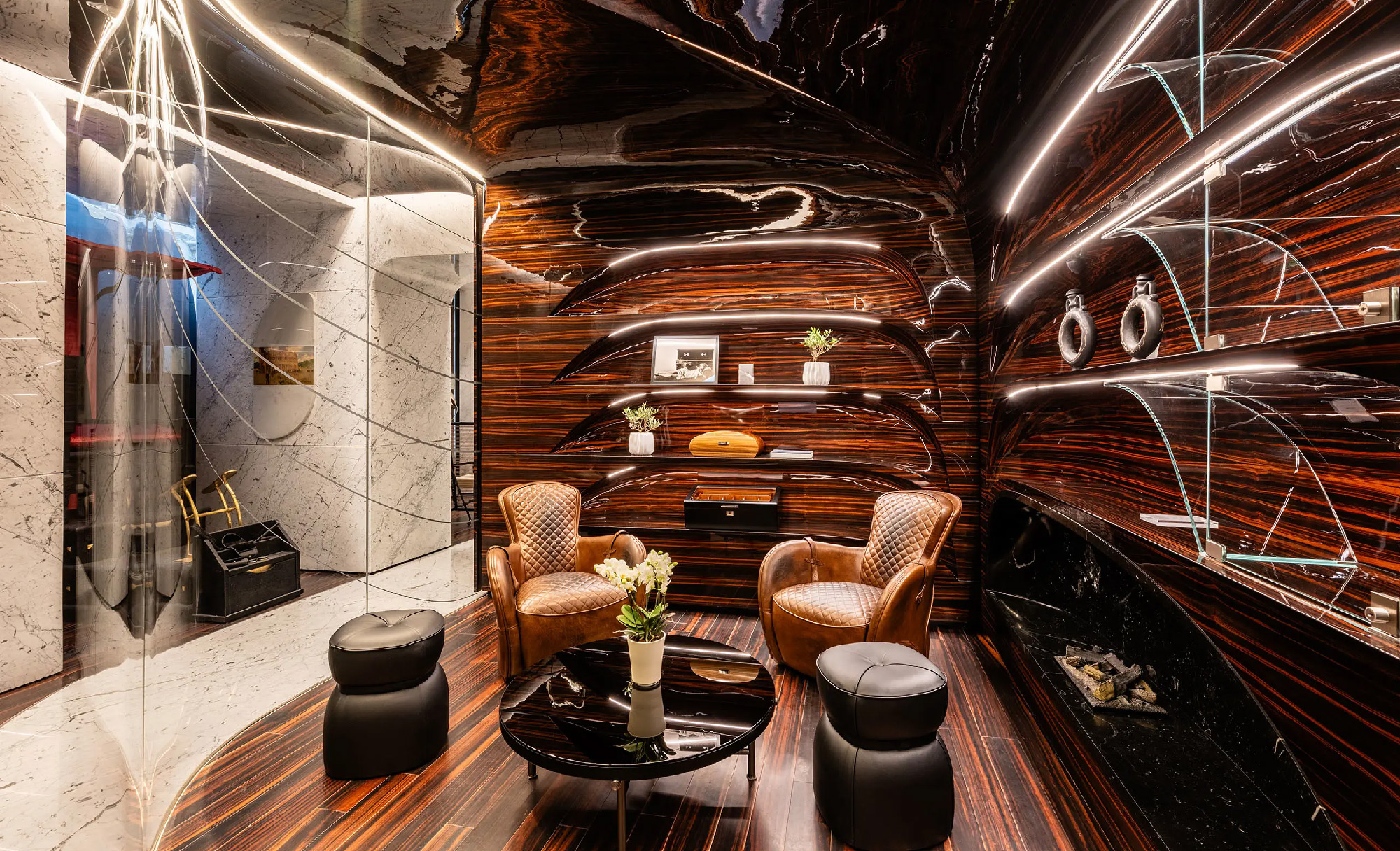
Ebony wood, a material Romeo Roma insisted on, tempers Hadid’s futurism with warmth and a sense of permanence. I found myself thinking of Carlo Scarpa’s renovations in Venice. Scarpa refused to imitate history and instead created tension with it. Romeo Roma, though entirely different in language, occupies a similar conceptual space. The hotel is not an ode to preservation. It is a collision of eras that somehow resolves into harmony.
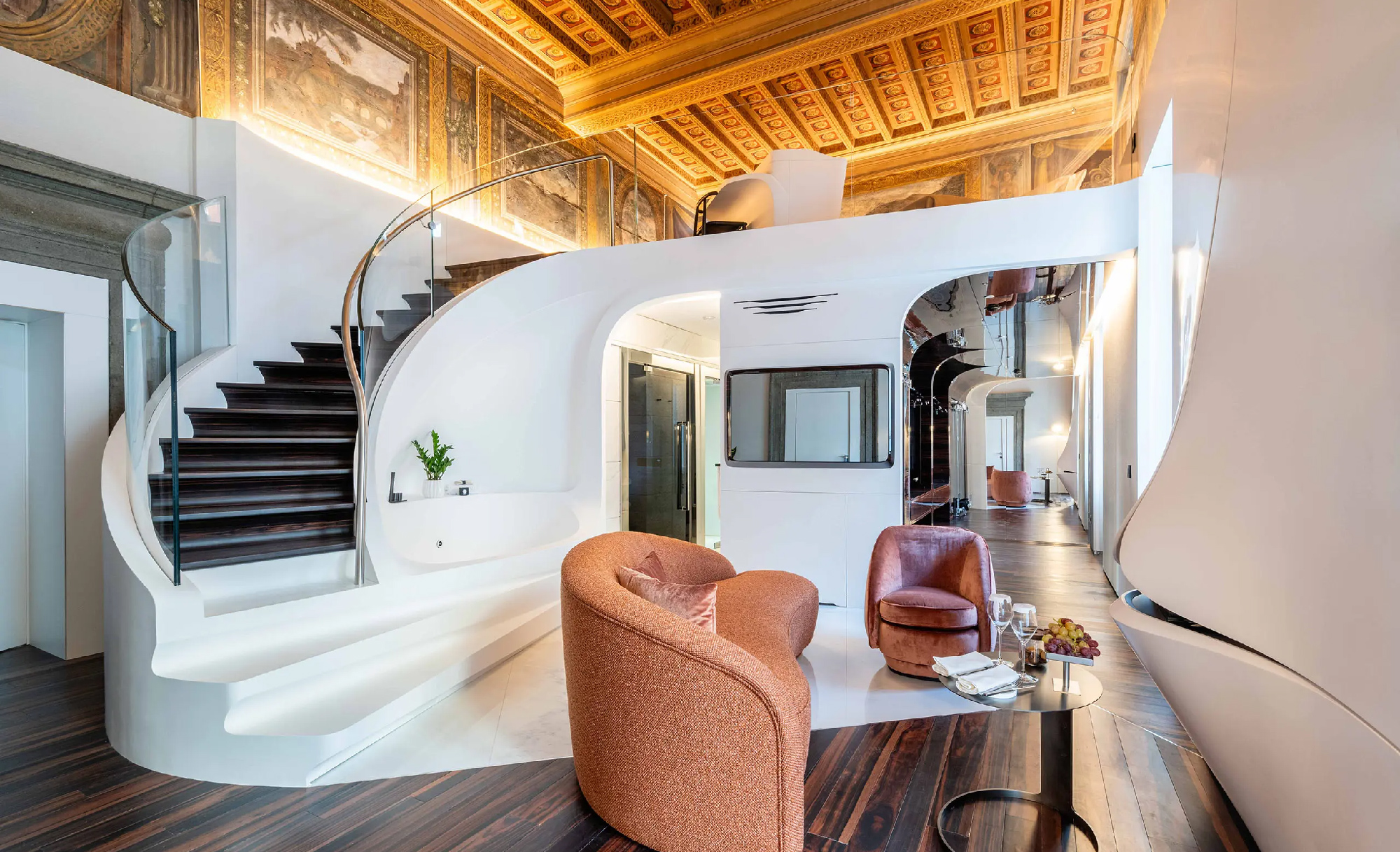
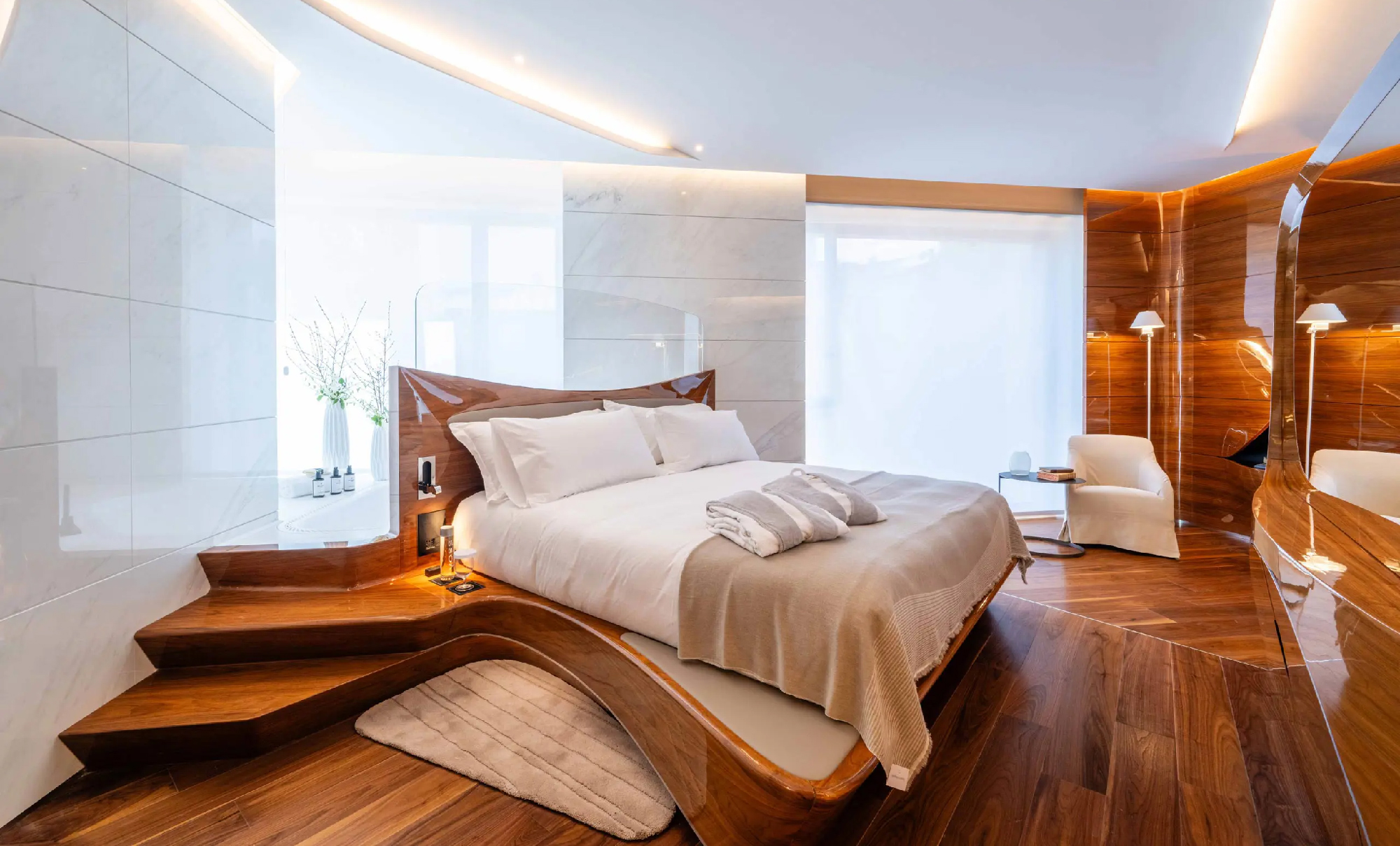
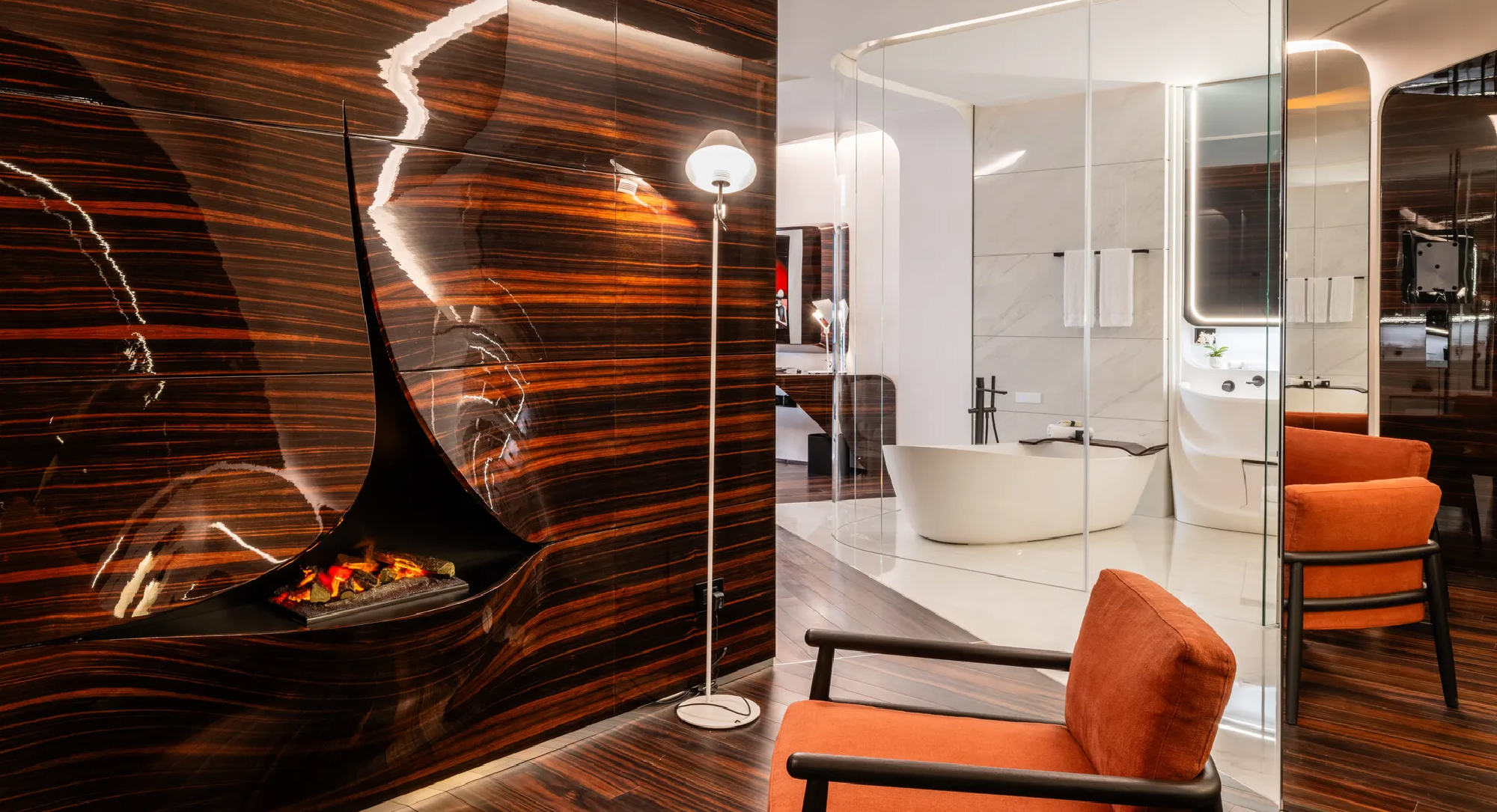
Nowhere is this dialogue more intense than in the rooms. My Romeo Roma suite on the noble floor felt like stepping into two centuries simultaneously. In the bedroom, Hadid’s aerodynamic lines sweep around walnut and ebony panels that give the space a yacht-like intimacy. The surfaces appear to curve into one another, dissolving the usual distinctions between wall, floor, and ceiling. The television vanishes into a mirrored panel. The fireplace melts into the architecture. It is a game of concealment and reveal that recalls the minimalism of John Pawson, though with far more sensual flair.
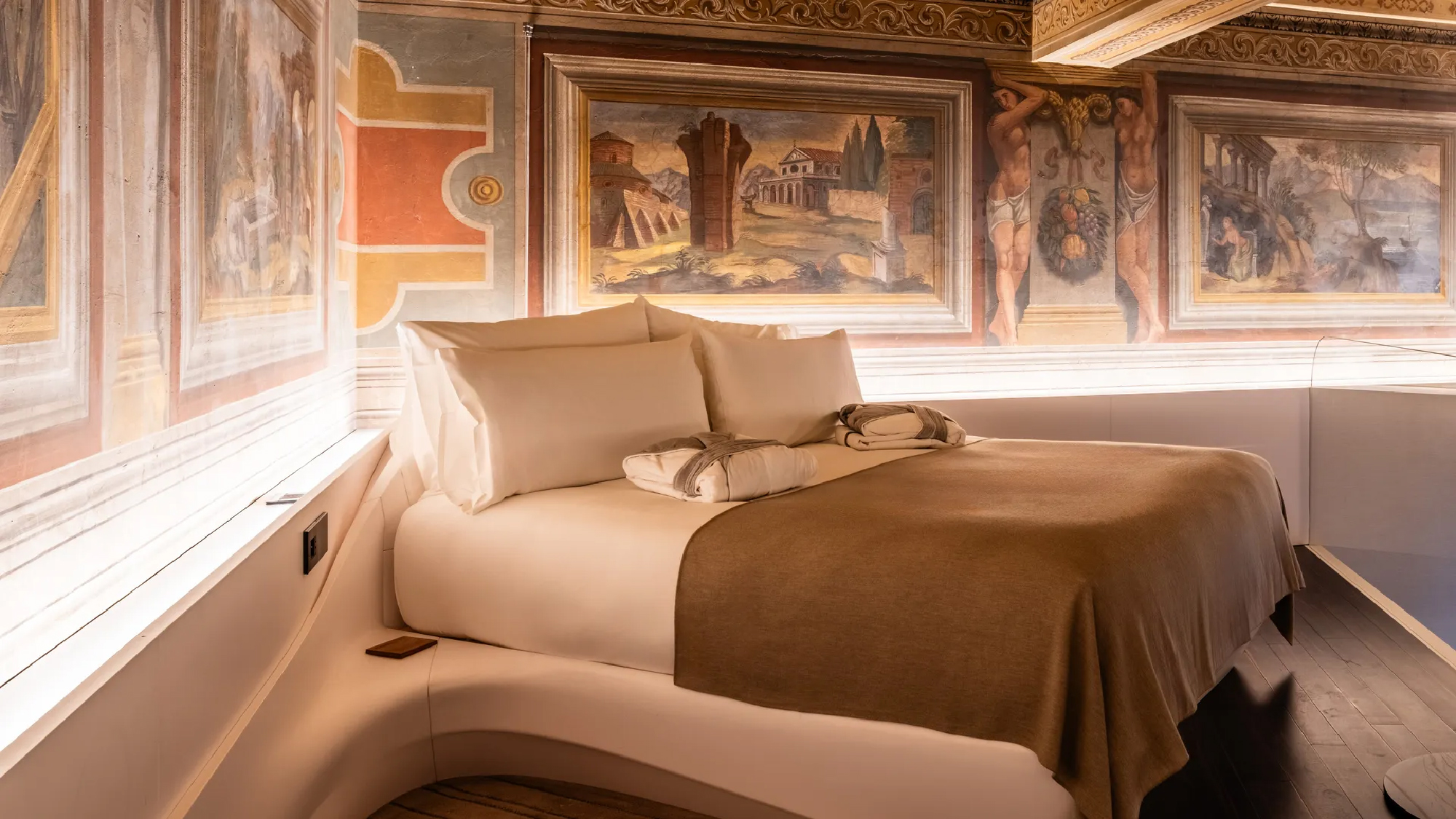
Then, a few steps away, the ceiling blooms into 17th century frescoes. Romeo Roma‘s frescoed walls become a kind of soft counterpoint to the precise futurism of the sleeping area, like two instruments from different eras finding a single rhythm. At moments, the contrast is almost shocking. At others, unexpectedly serene. It is, quite honestly, one of the most structurally ambitious room concepts I have seen in Rome, and possibly anywhere.
Even the public spaces maintain this sense of aesthetic duality. Adjacent to the lobby is Il Ristorante Alain Ducasse Roma. Although I came for the architecture more than the food, the design of the dining room impressed me in subtler ways. Rather than overpower the experience, the room acts as a frame for Ducasse’s compositions, which arrive as restrained studies in line and color.
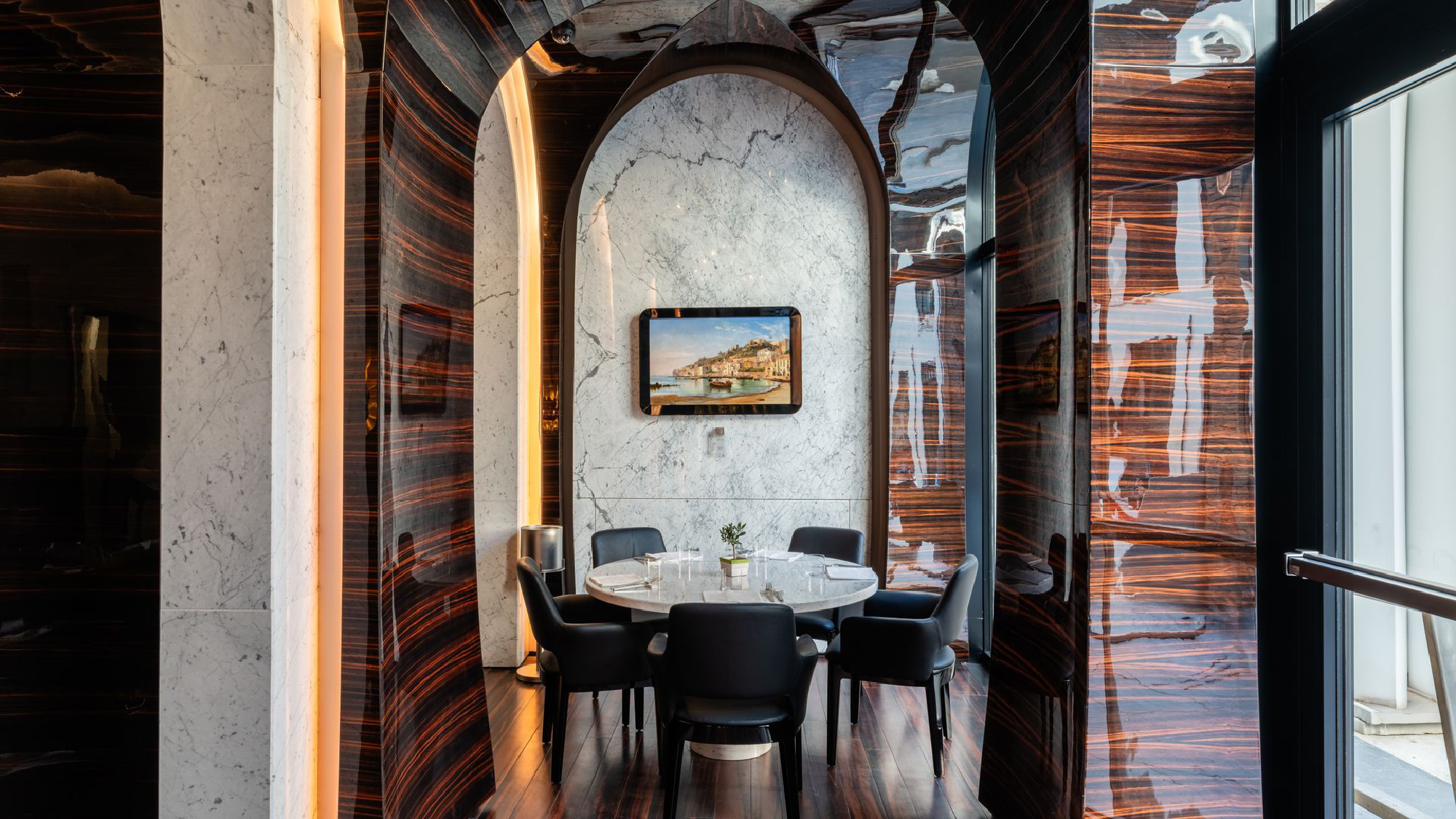
The seafood driven menu reflects the chef’s typical precision and reminds you that design, at its best, extends beyond objects to the choreography of a meal. Breakfast in the same space feels intimate and refreshingly free of buffet clutter. Upstairs, La Terrazza Krug leans into the Roman skyline with a casual elegance that contrasts with the intensity of the rooms. The Romeo Roma bar’s clean lines and polished surfaces create a platform for the real show: the roofs of Rome unfolding in layers of ochre and terracotta. It is one of the few places in the hotel where the architecture steps back and lets the city do the talking.
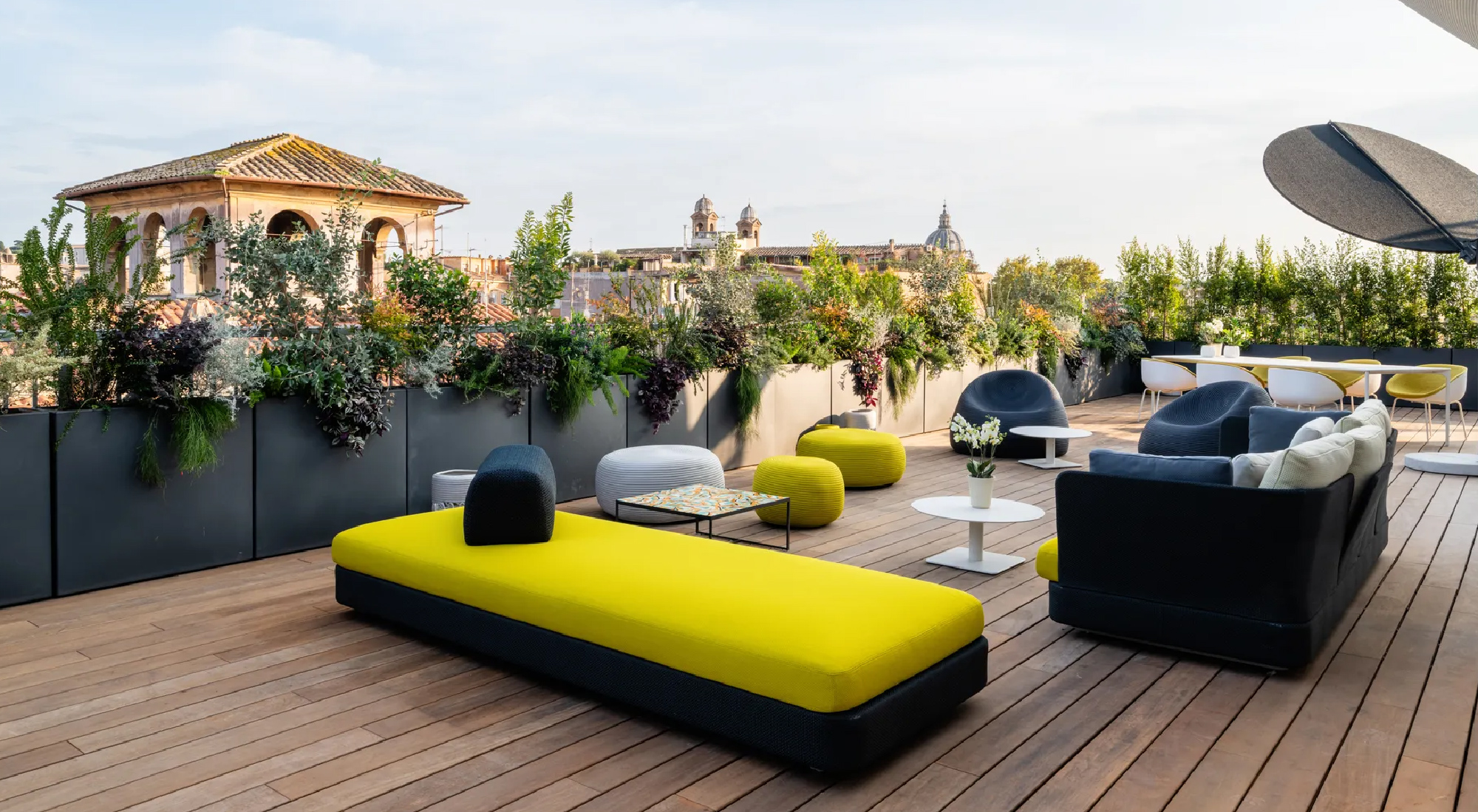
What truly distinguishes Romeo Roma, however, is the way its design interacts with the city around it. Via di Ripetta is already one of Rome’s most seductive streets, a corridor of ateliers, small galleries, and weathered facades that whisper centuries of life. A few steps take you to Piazza del Popolo. Ten minutes more bring you to Piazza di Spagna. And yet the moment you step back into the hotel, it feels like entering a film set directed by someone with a taste for contrast and the discipline to see it through.
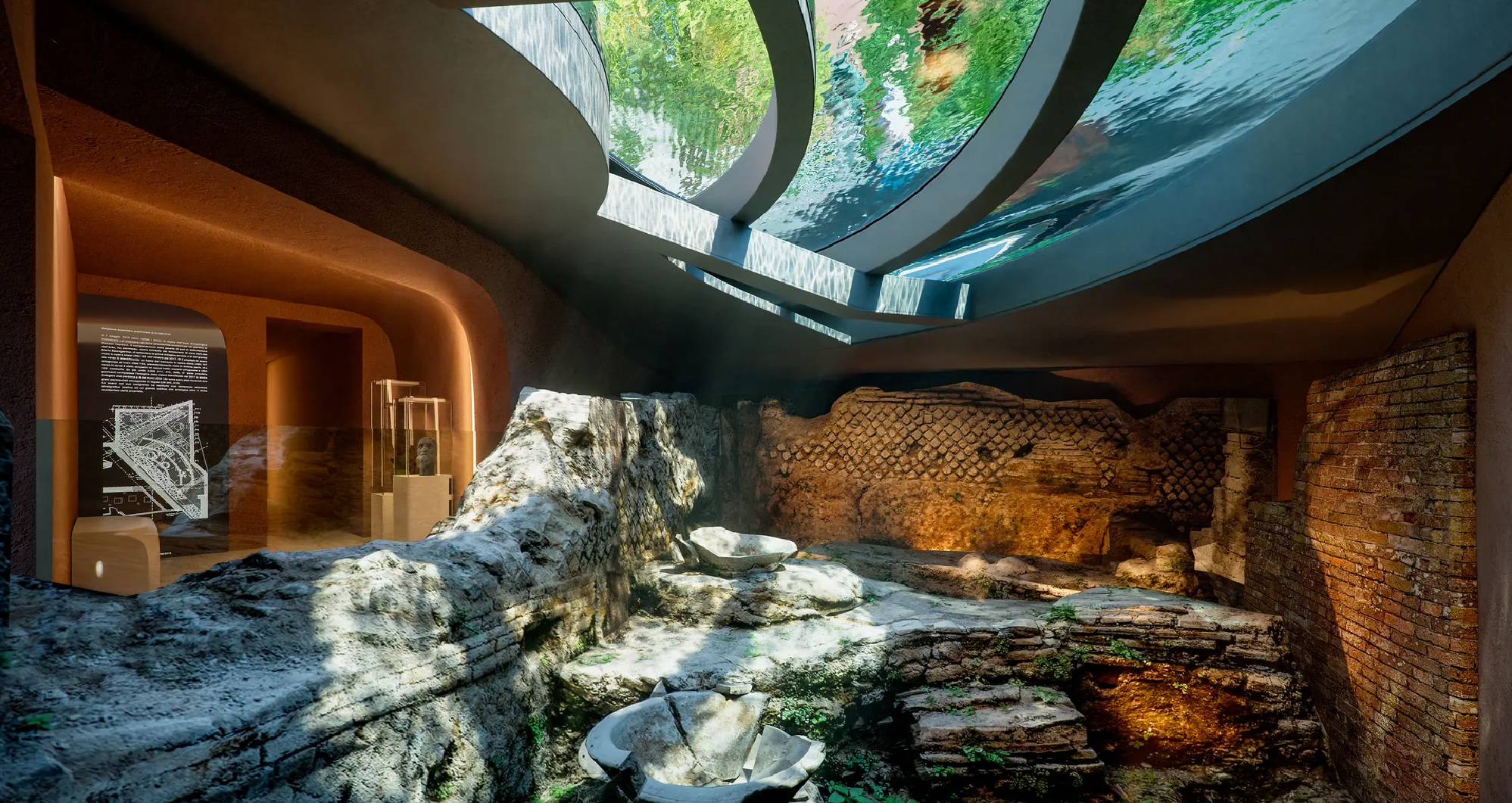
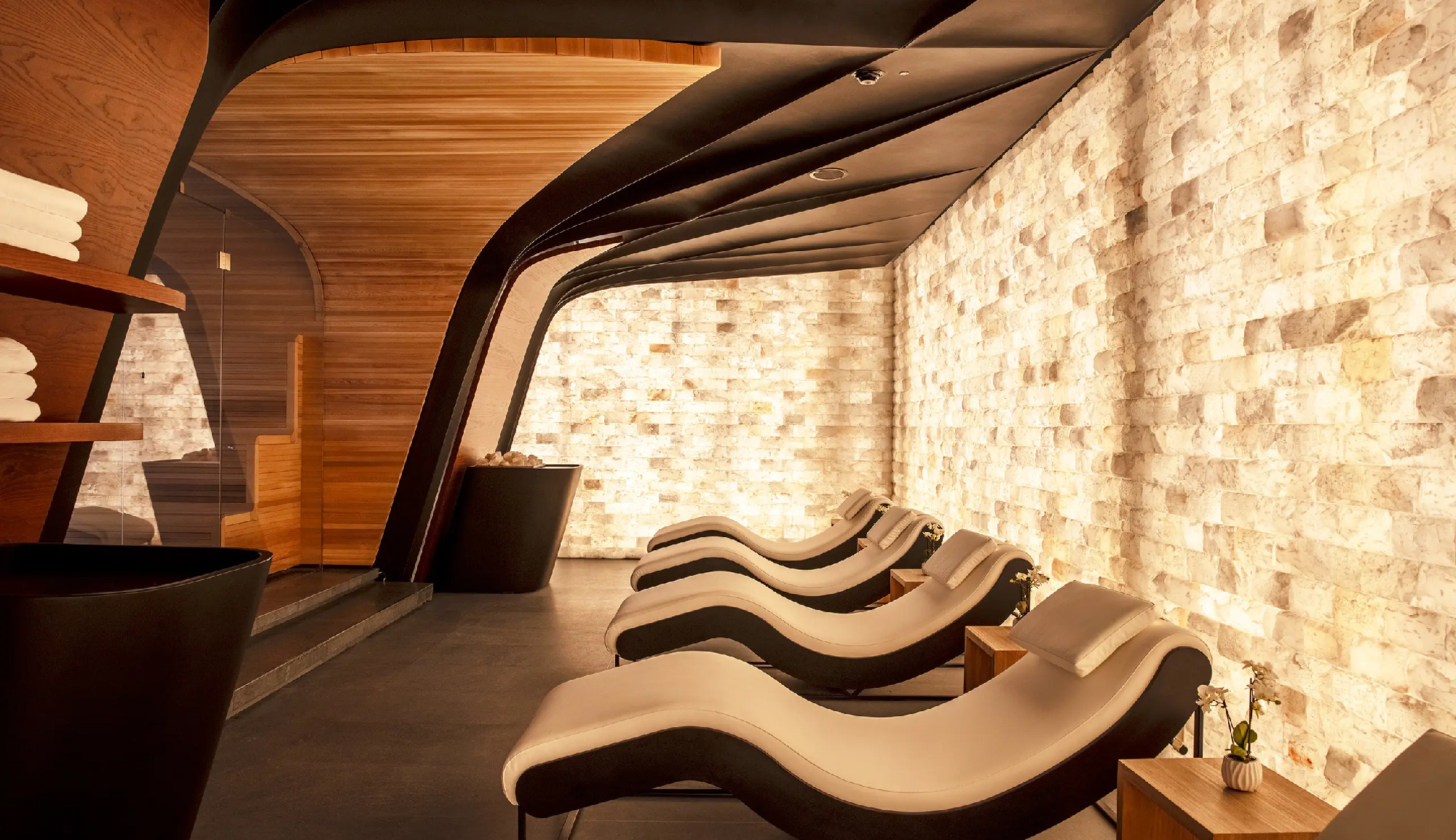
Even the spa, set among Roman ruins, plays with this theme of temporal layering. A hammam beside ancient stone, a gravitational tub facing a salt wall, Sisley treatments delivered in hushed, vaulted rooms. It is not the typical spa serenity. There is a grounding effect, a reminder that luxury built upon history carries a responsibility to acknowledge what came before. The design embraces that responsibility rather than smoothing it away.
After several days at Romeo Roma, what stays with me is not the exclusivity or the glamour, though both are undeniable. It is the confidence of a property that knows its own architectural identity. It is a rare hotel that can stand among Renaissance frescoes and Hadid curves without feeling pulled apart. It might not suit every traveler. Some will find it too assertive, too sculptural, too committed to its vision.
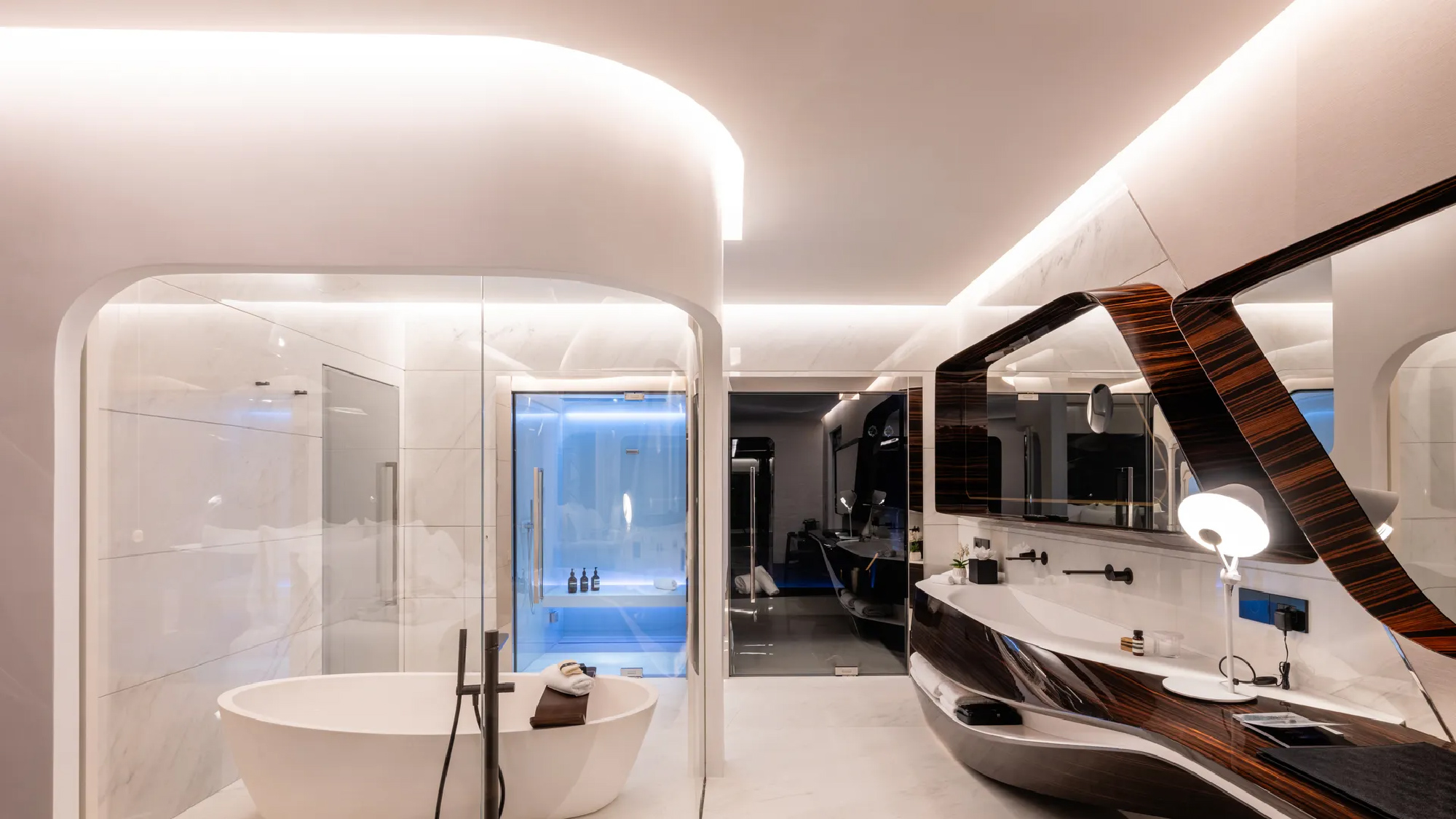
Yet for those who appreciate design that engages both intellect and emotion, Romeo Roma is more than a place to sleep. It is a confrontation with beauty in two radically different registers. And it is a reminder that Rome, for all its ancient grandeur, still has the capacity to surprise those who think they know it well.
by Olga Barrale

