Mugler by Freitas: A Shift in Sensibility
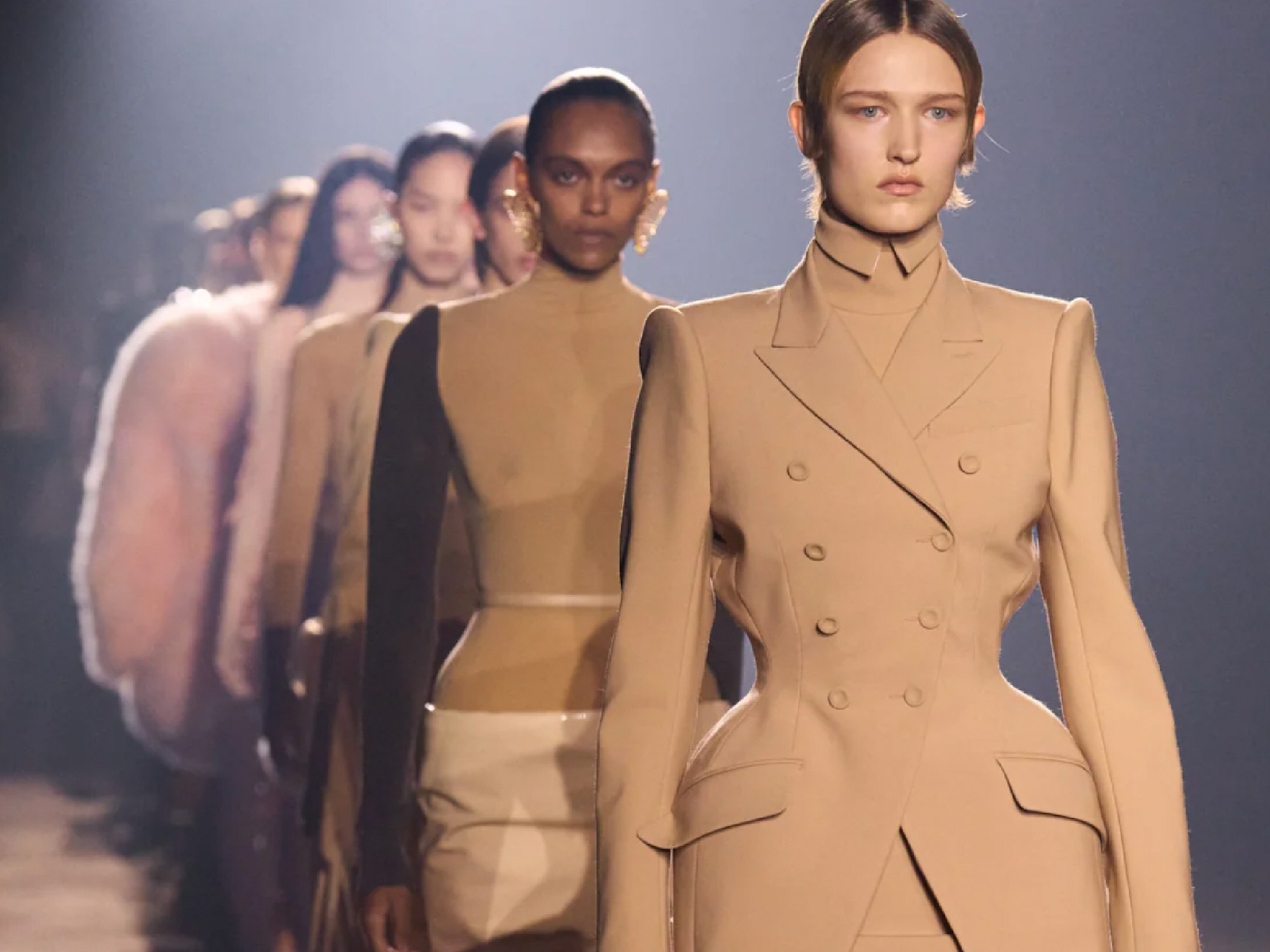
Miguel Castro Freitas’ debut for Mugler introduces a precise recalibration of the house’s identity. Rather than leaning into overt spectacle, he pursues a measured refinement, a strategic reduction that draws attention to form rather than flourish. The collection feels like a quiet but intentional pause, allowing the house’s historical vocabulary to be reconsidered under a contemporary, almost architectural lens.
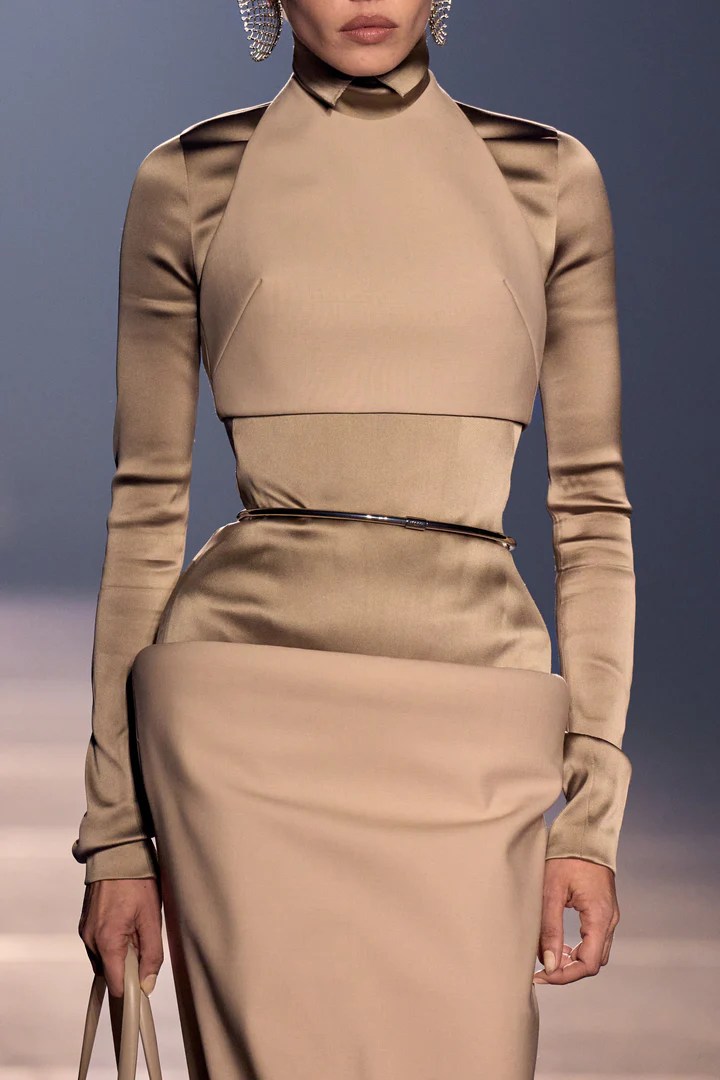
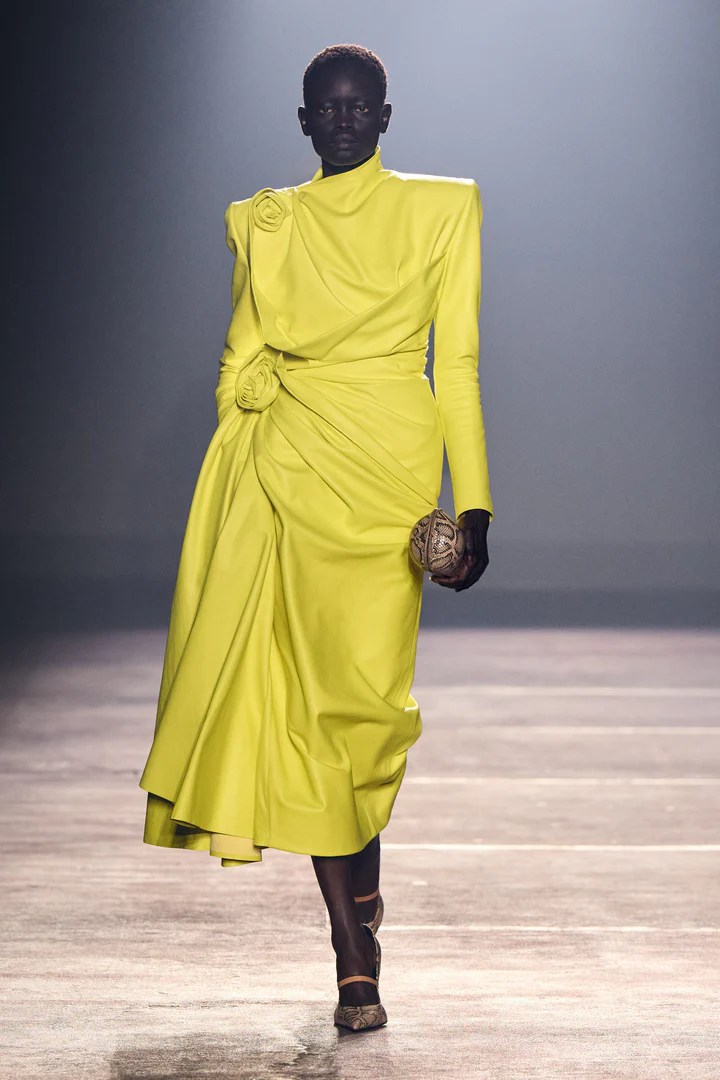
The palette operates as both anchor and inflection point. Soft neutrals are punctuated by sharper tones of acid yellow, lime and mirrored silver. These color choices create a conversation between subtlety and brightness, restraint and risk. The overall narrative is not about shock but about harmony, the kind found when contrasts meet with deliberation rather than force. It suggests a designer who understands legacy yet chooses not to be contained by it.
The Body as Structure
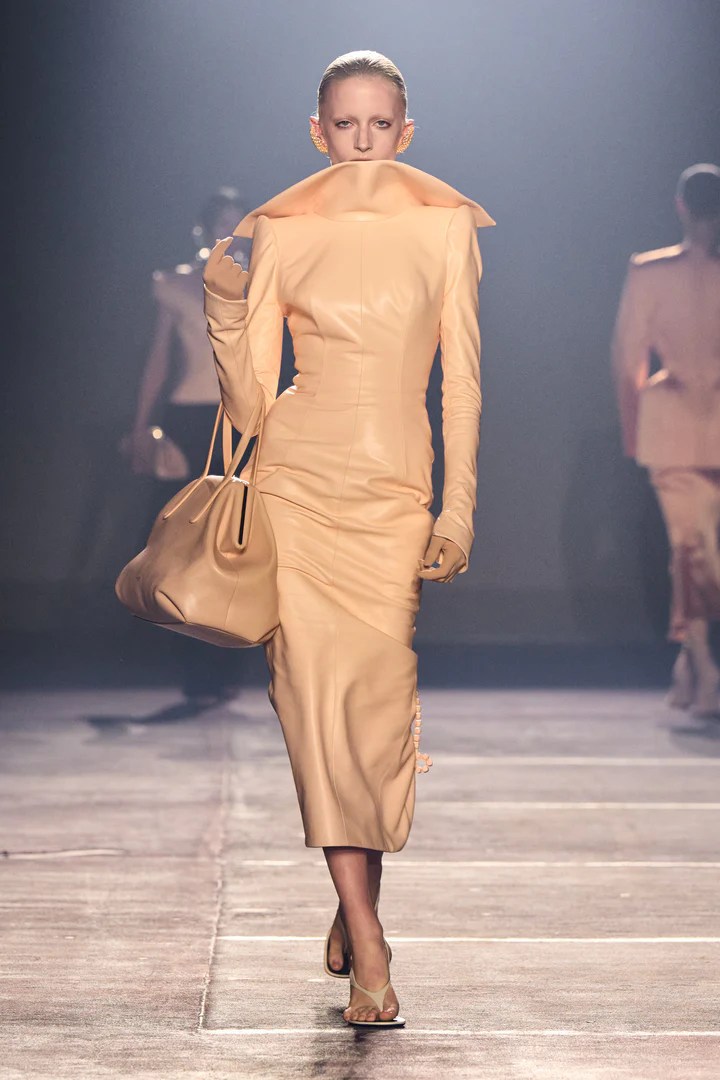
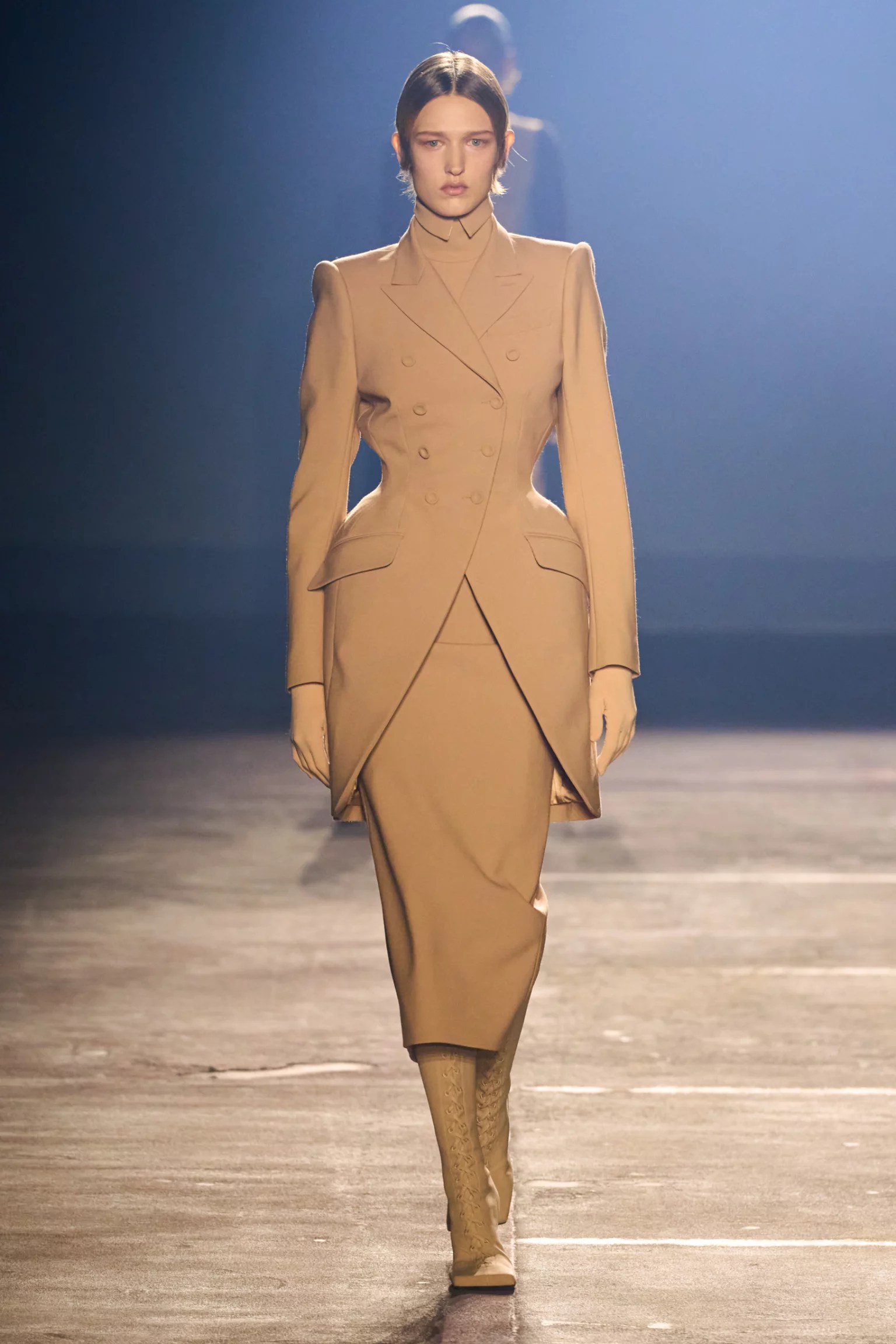
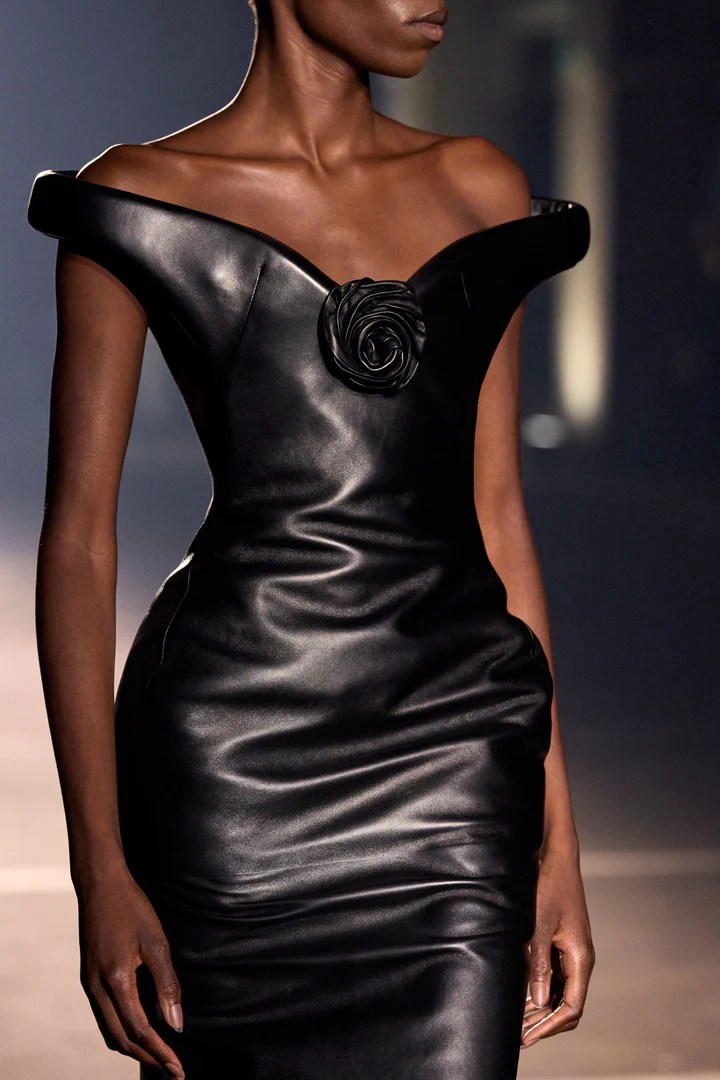
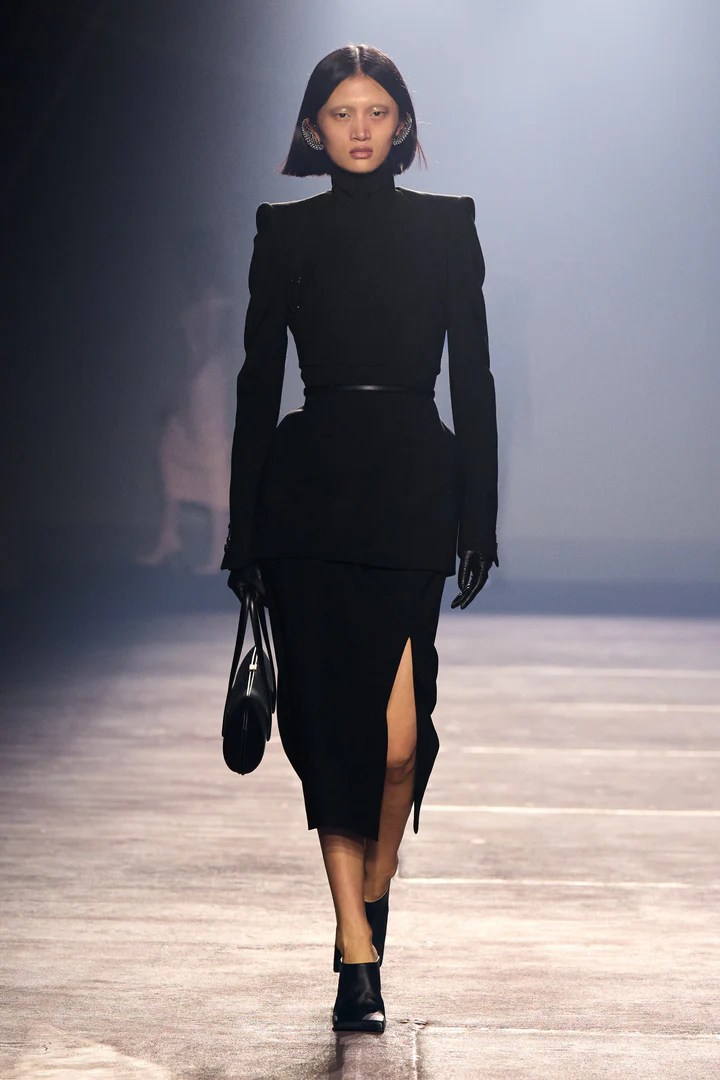
What emerges most clearly is the emphasis on the body as structure. Castro Freitas approaches tailoring as a form of spatial problem solving, introducing angles and curves that suggest movement even in stillness. Jackets contour with a gentle severity, skirts break open in diagonals and trousers hover between fluid and sculpted. The result is a dialogue between stability and release.
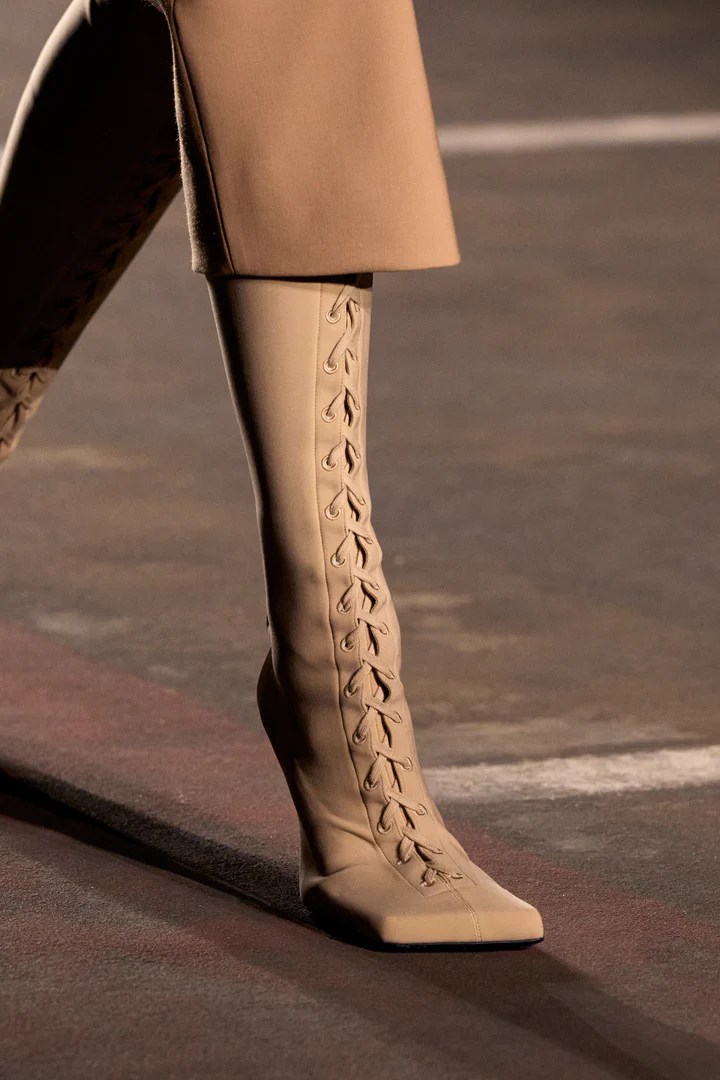
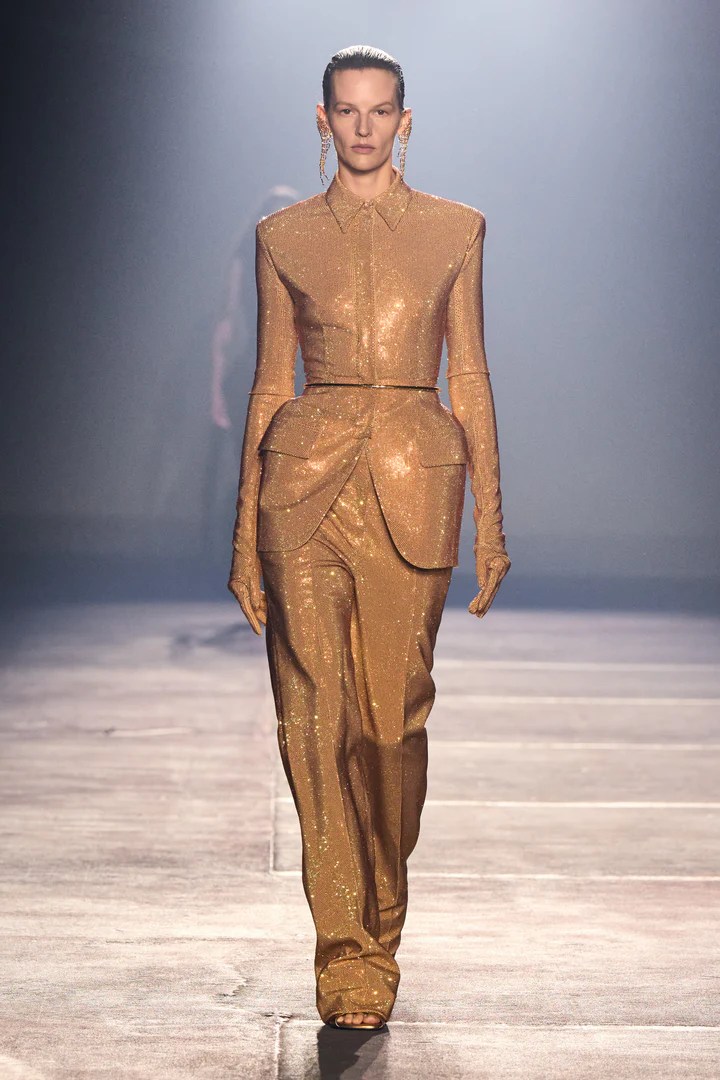
Transparency is handled with unusual sophistication. Sheer fabrics appear not as exposure but as layering, using translucency to shift perception rather than reveal skin. Chiffon skirts that trace the outline of the leg behave more like atmosphere than cloth. Metallic threadwork, scattered across nude fabrics, creates a kind of wearable luminescence. It is a sensuality filtered through geometry, more about the suggestion of form than the declaration of it.
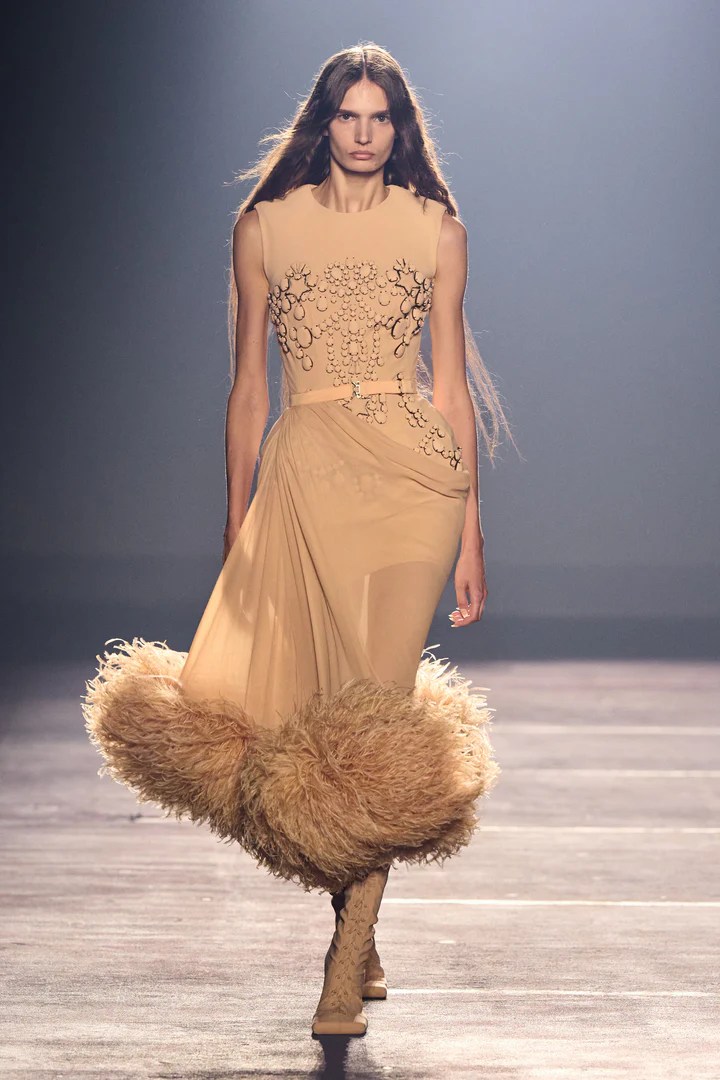
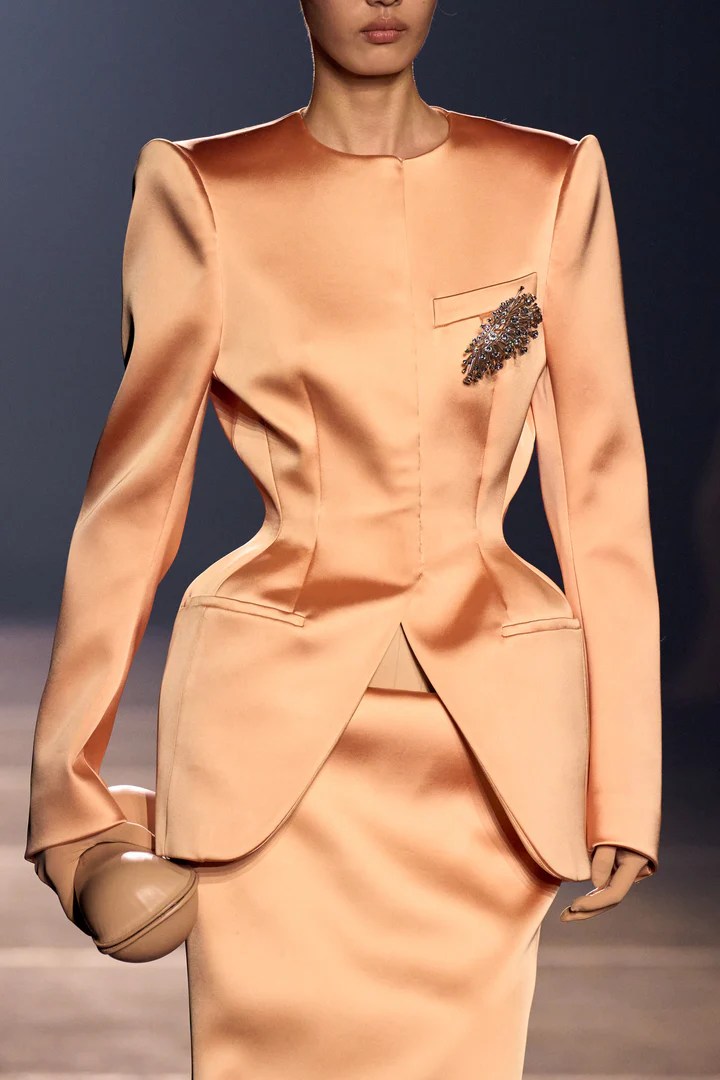
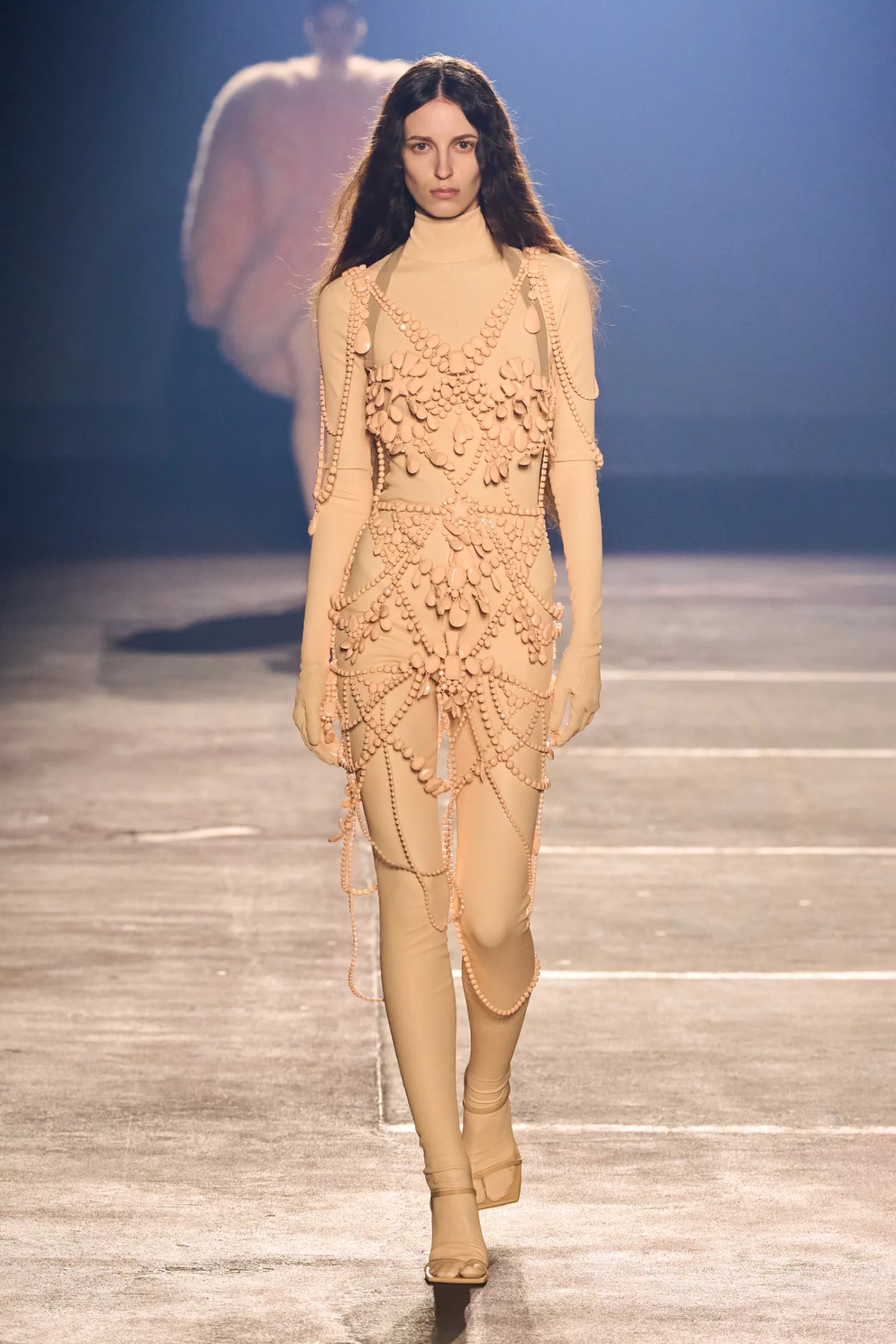
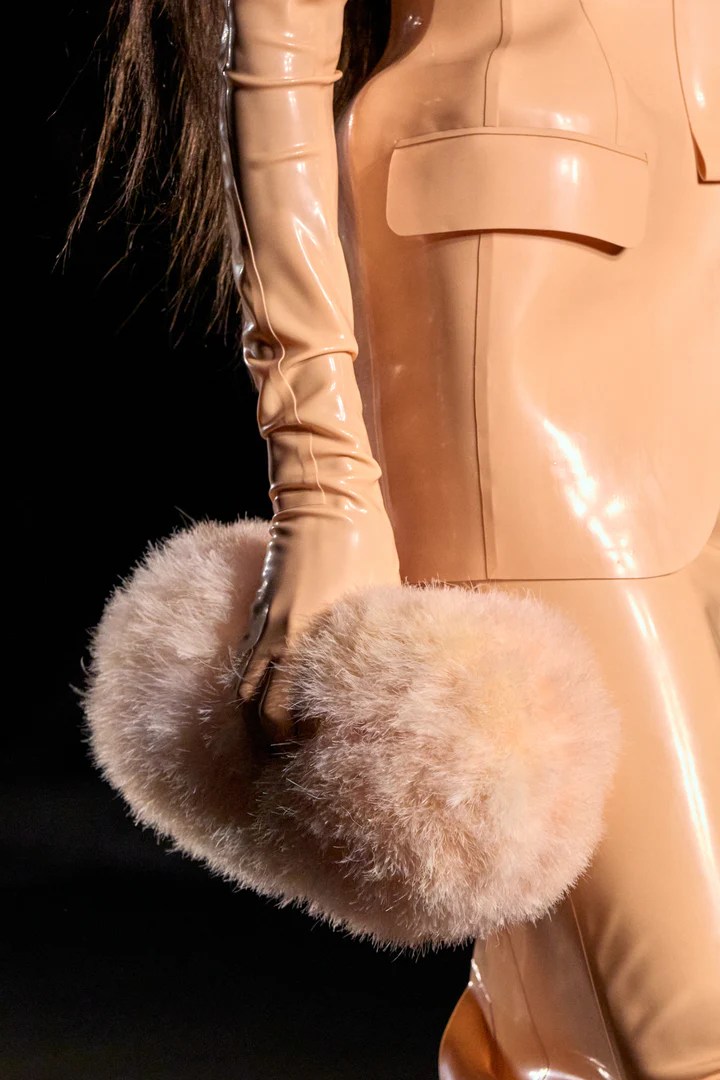
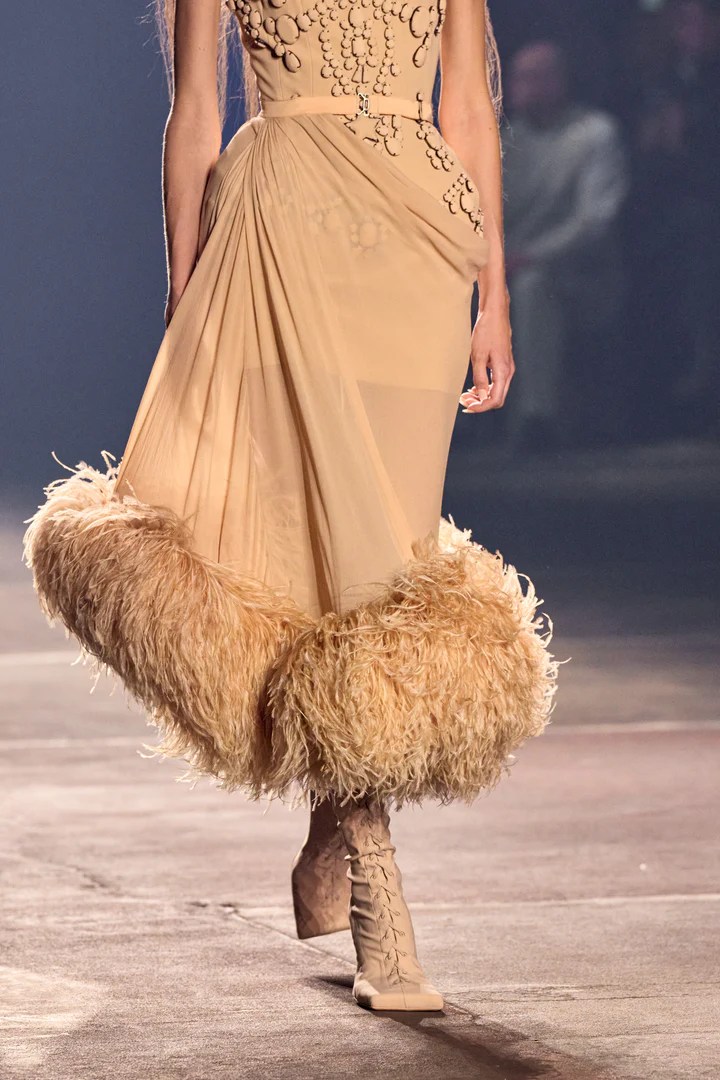
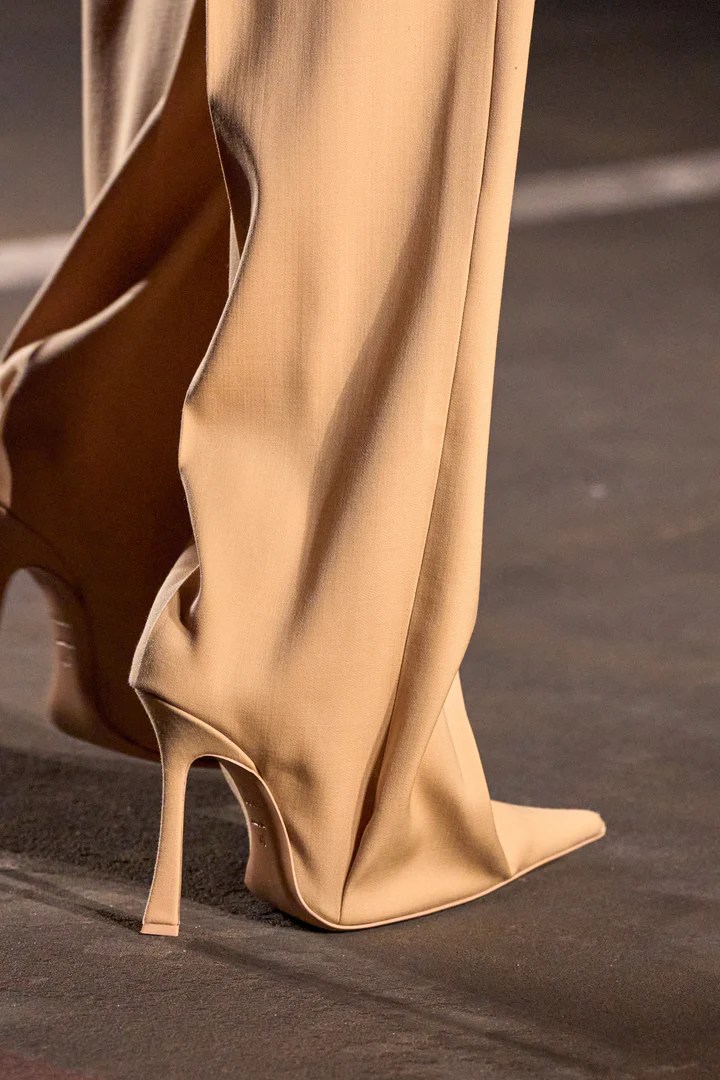
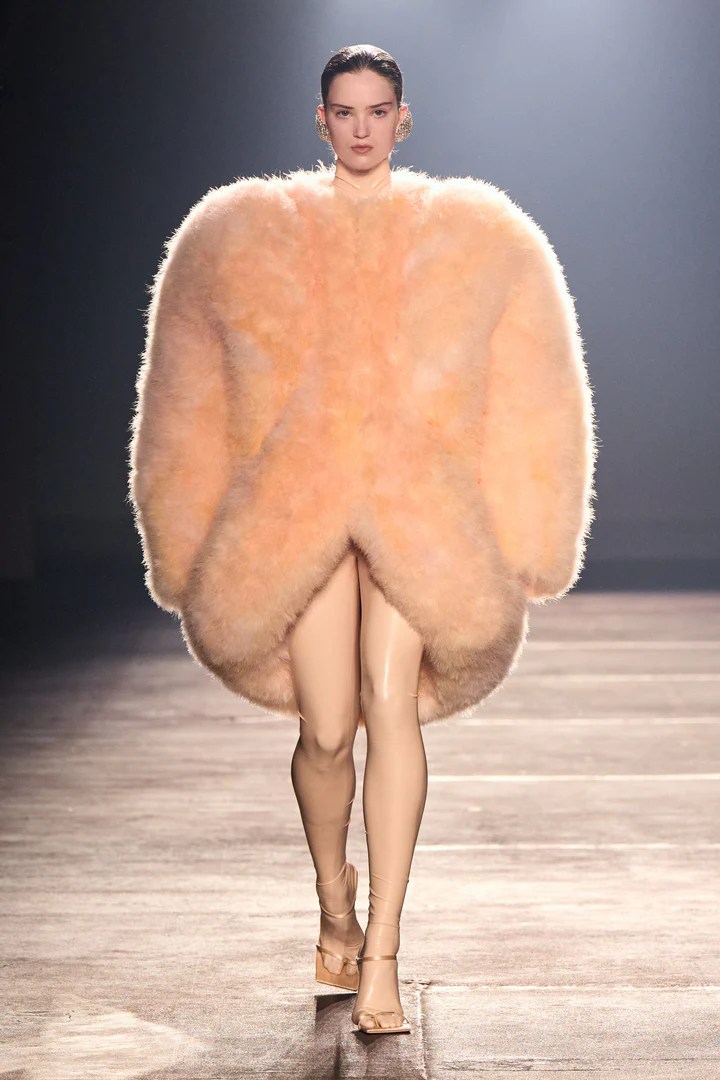
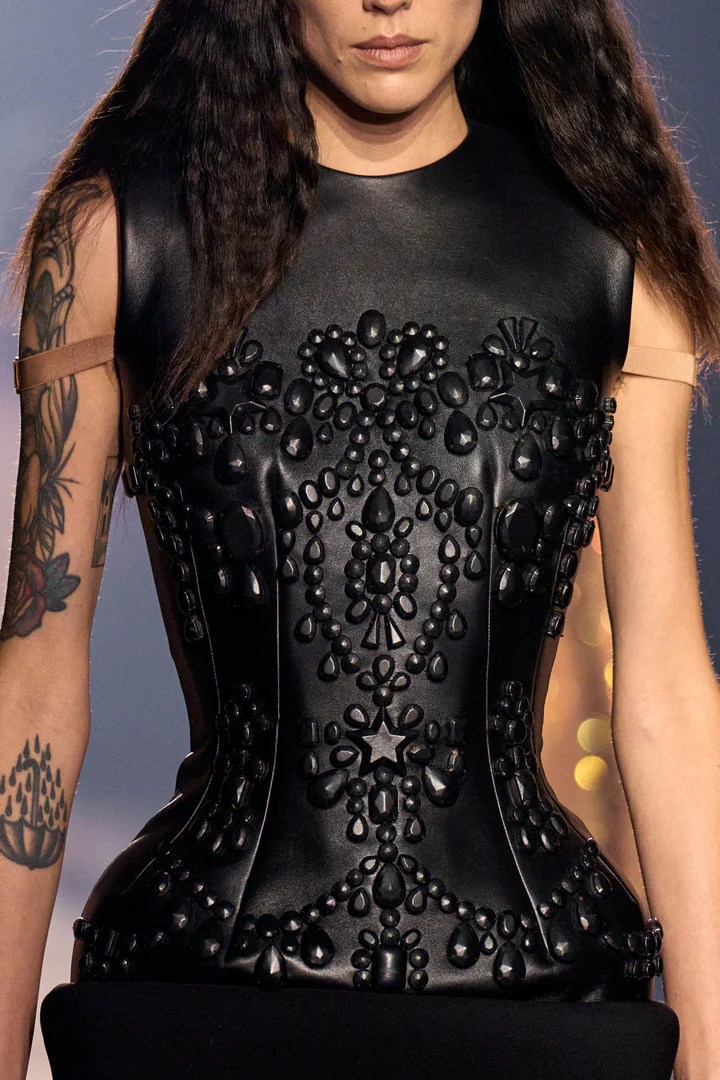
Materials play a decisive role. Leather is smoothed into aerodynamic surfaces, jersey is carved rather than draped, and fur is used with restraint to highlight directionality. These choices reflect an interest in tactility and engineering, an attention to how garments move as well as how they are built. Mugler’s historical hyper-sculptural language is present but reinterpreted with a lighter, more contemporary touch.
Sculpture in Motion
There is an unmistakable cinematic dimension to the collection, though it resists overt references. Instead of evoking a particular era, Castro Freitas channels a sense of atmospheric drama. Movement becomes a design tool. Panels flare open as models walk, sleeves billow with subtle elasticity and fabrics catch the light in ways that shift the garment’s character moment to moment.
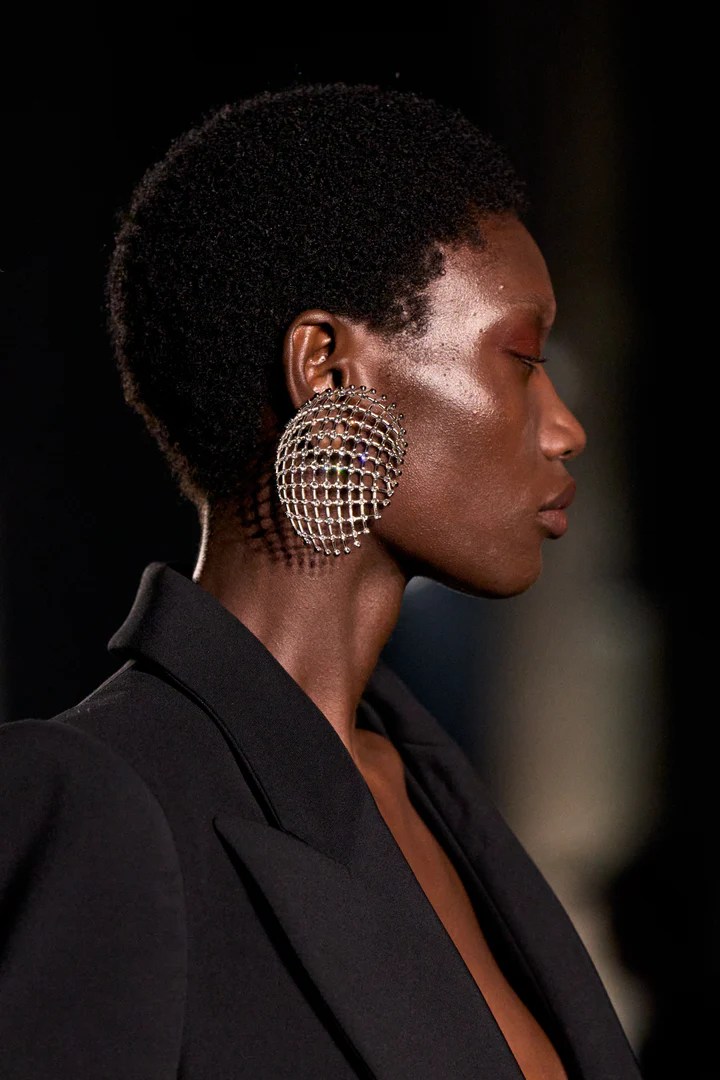
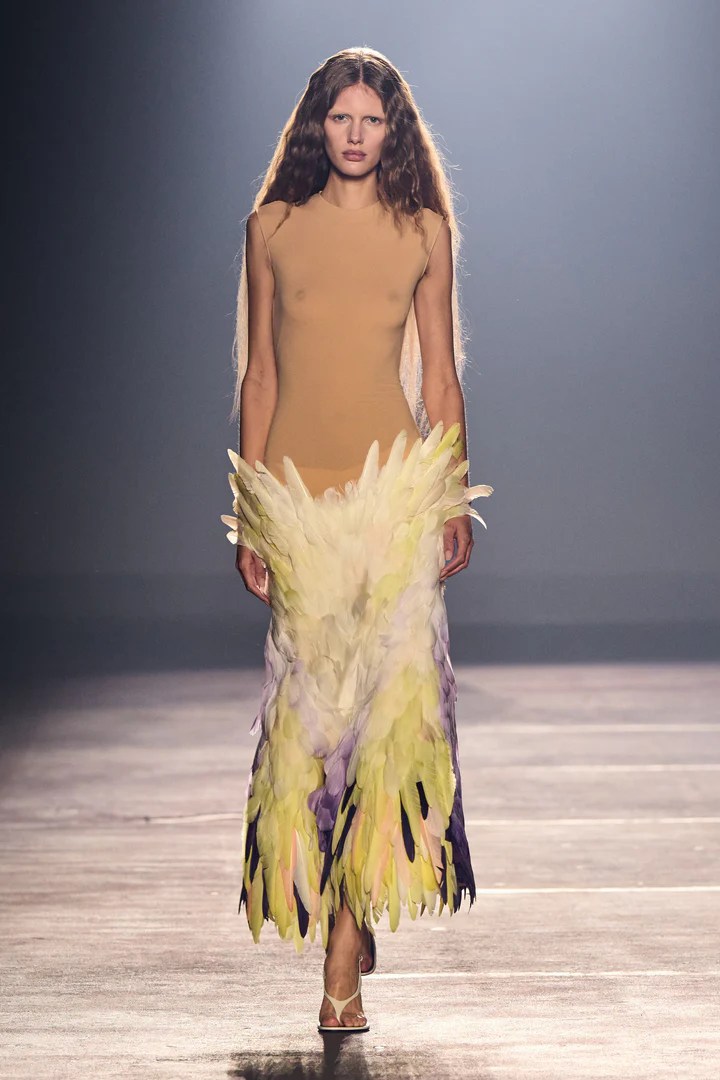
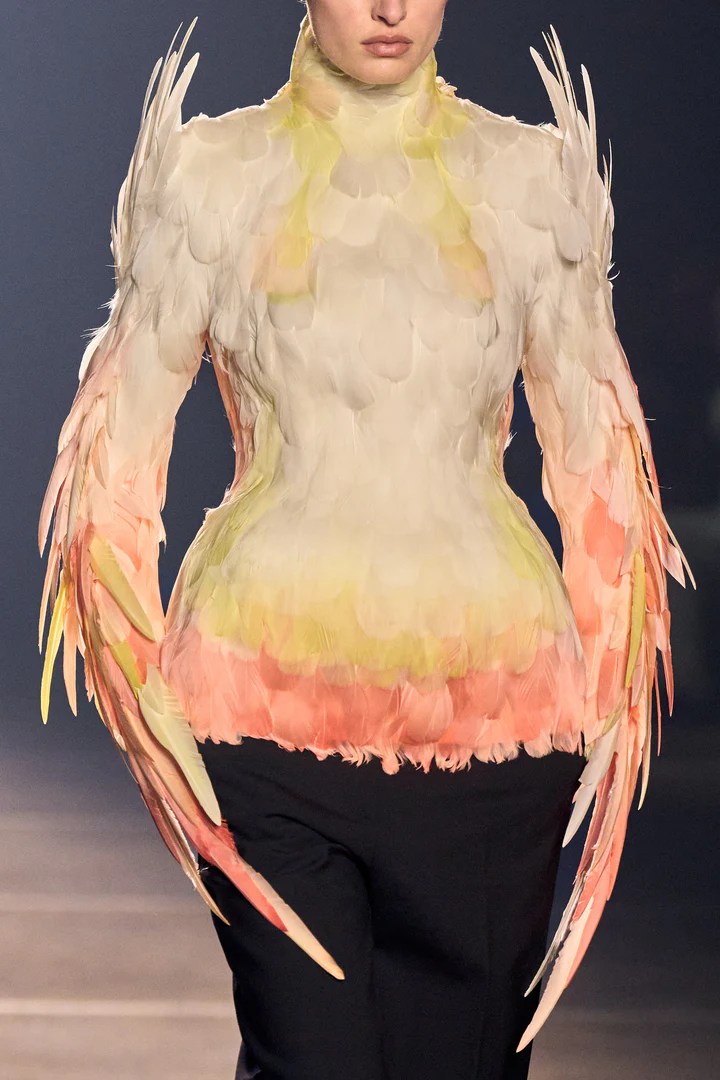
Feathers, often associated with theatrical excess, are reimagined as structural elements. They trace the edges of jackets like exoskeletons or emerge from shoulder seams with aerodynamic intent. Metallic fabrics behave like surfaces of water or steel, reflecting and refracting as bodies turn. This interplay of material and motion gives the collection a kinetic quality. It is an approach that suggests Mugler’s theatrics can evolve into something more nuanced without losing their emotional resonance.
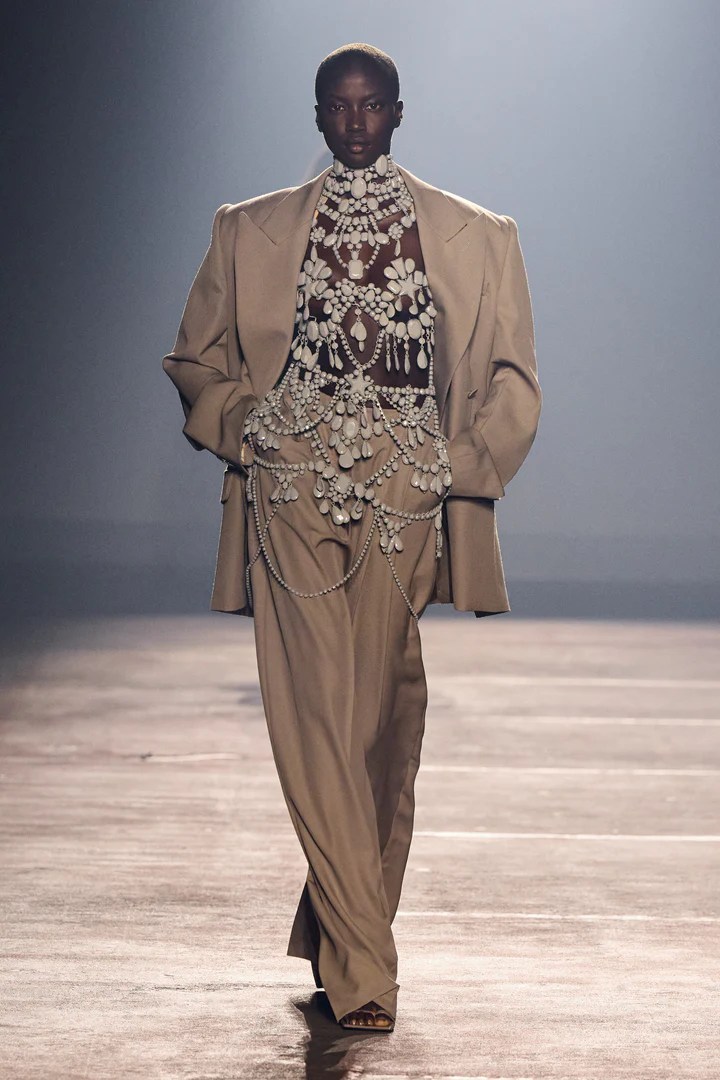
Knitwear delivers another layer of interest. Some pieces wrap the torso with anatomical precision, almost like musculature rendered in thread. Others open into sculptural shapes around the neckline or waist, suggesting expansion rather than compression. These garments feel both intimate and architectural, an ethos that aligns neatly with Castro Freitas’ broader direction.
Elegance Refined Through Contrast
What defines the collection is contrast. Hard meets soft, matte meets reflective, fluidity meets structure. The garments seem to exist in a state of suspended tension, a hallmark of Mugler’s historic DNA but handled with new restraint. Even the utilitarian elements feel elevated. Zippers become graphic lines, seams behave as contours, and the joining of materials feels intentionally exposed.
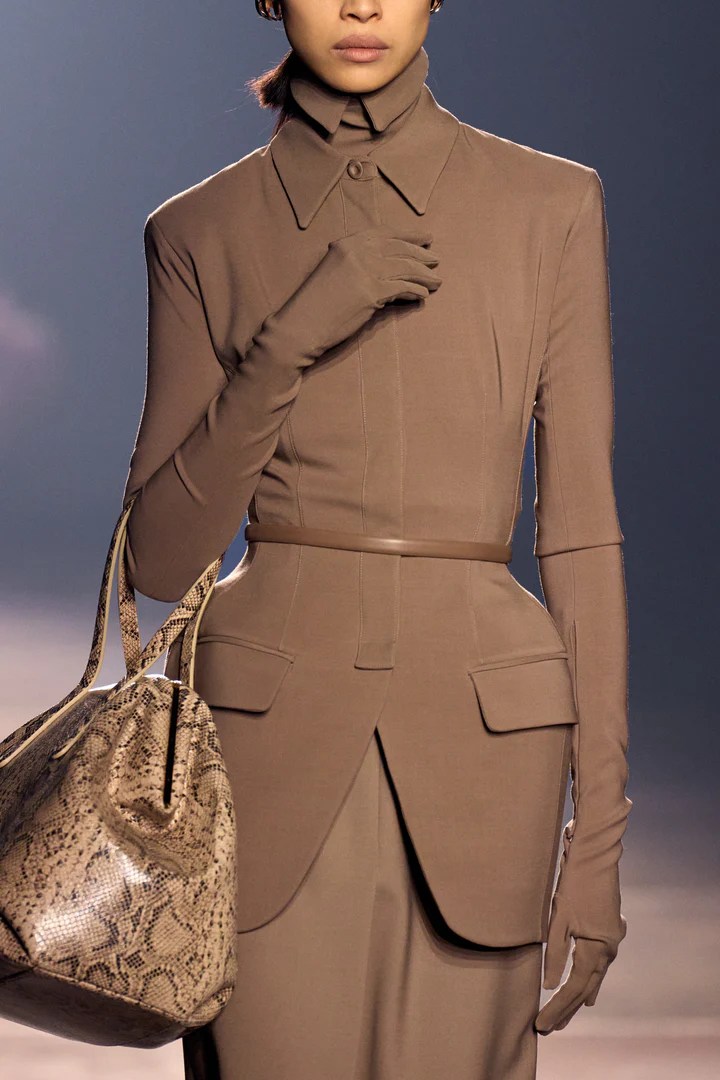
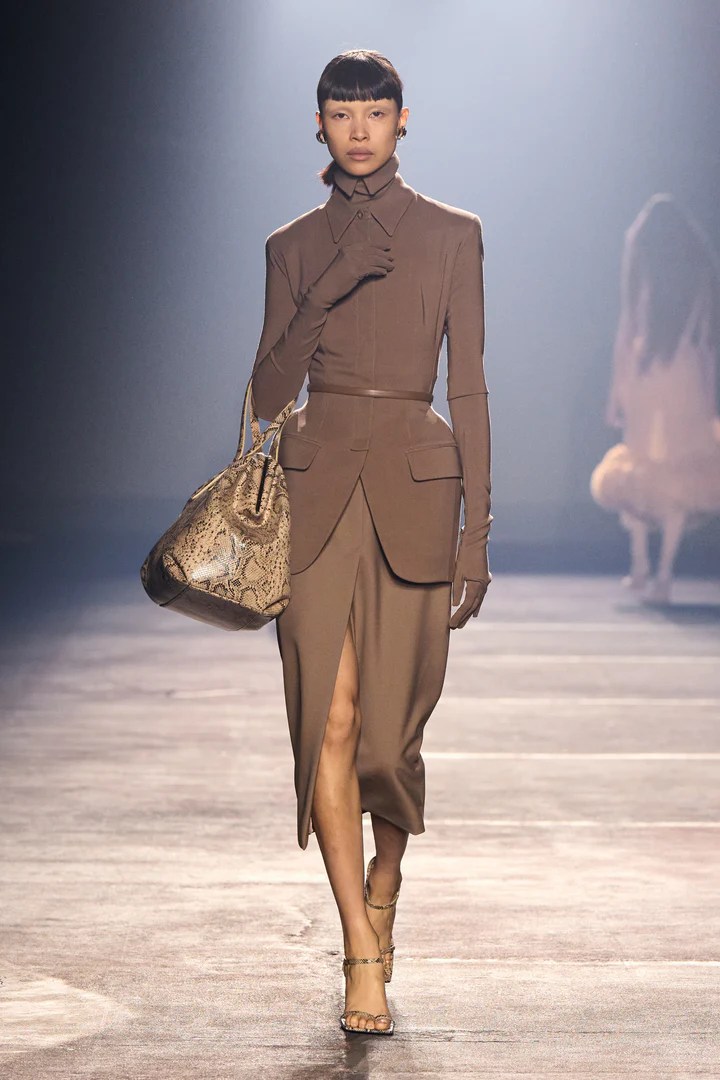
This tension extends beyond construction into mood. There is drama, but it is controlled. There is sensuality, but it is reframed. There is futurism, but it does not eclipse wearability. Instead, Castro Freitas positions the house at an intersection of architecture, craftsmanship and modernity. The work suggests an understanding that Mugler’s relevance lies not in replicating the past but in evolving its codes through clarity and precision.
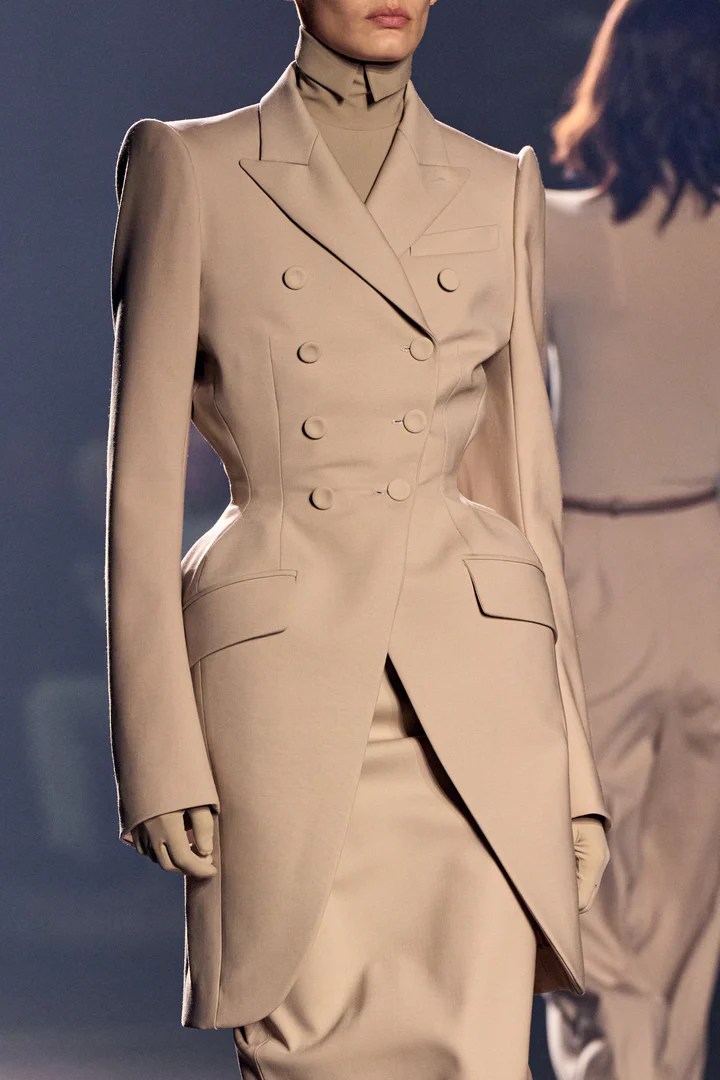
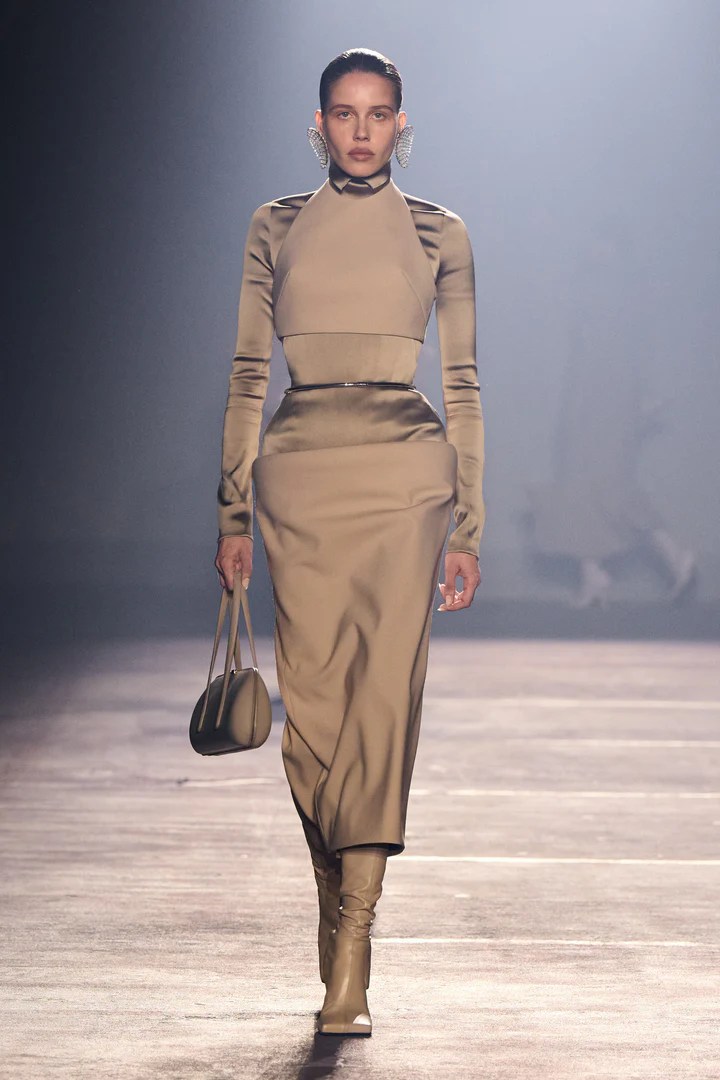
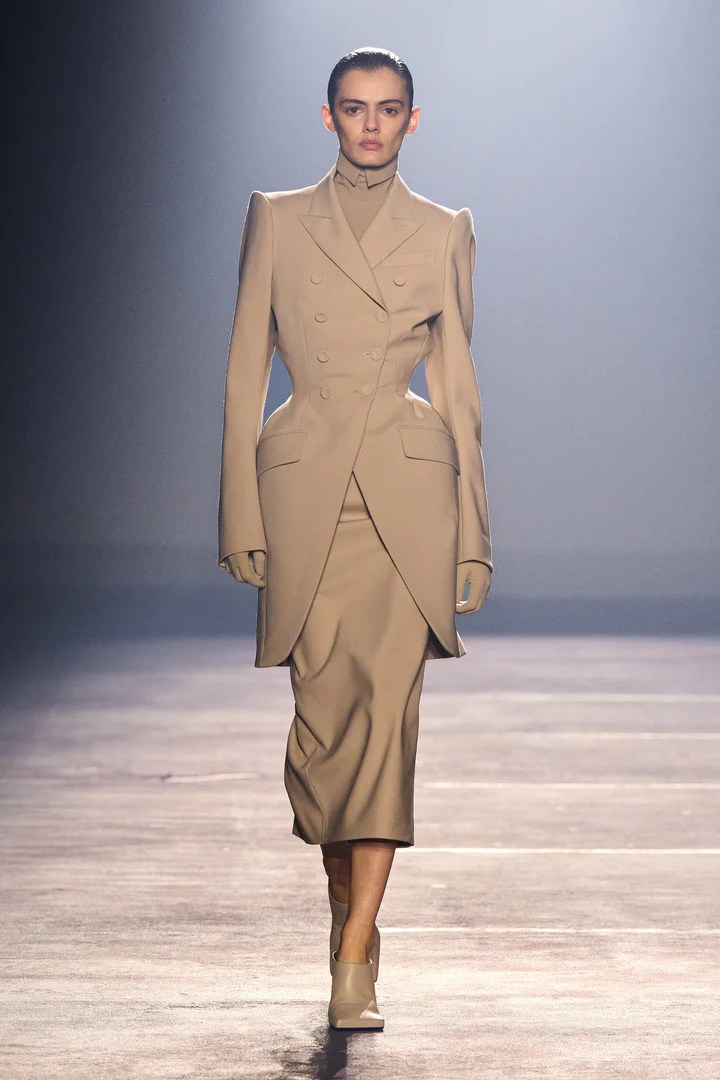
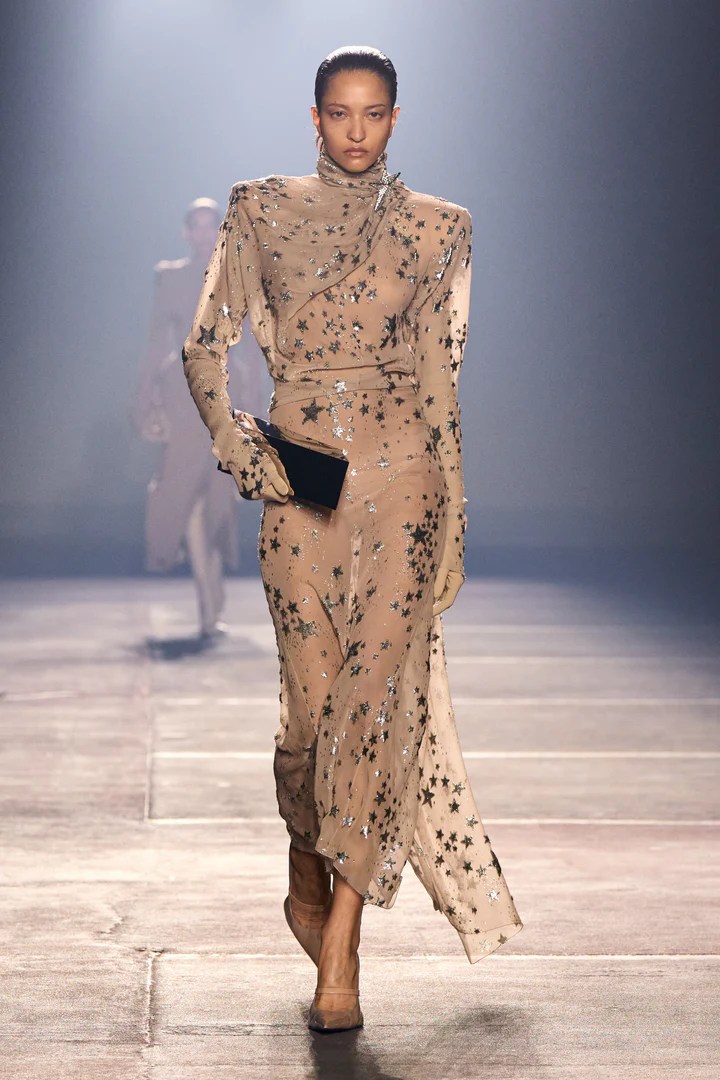
The designer’s first cut is not a rupture. It is a considered incision, made with the confidence of someone aware of the stakes but unwilling to yield to expectation. What emerges is a collection that invites attention quietly rather than demanding it. It rewards contemplation, not spectacle. And in doing so, it signals a future for Mugler built on the strength of tension, balance and intelligent design.
by Olga Barrale

