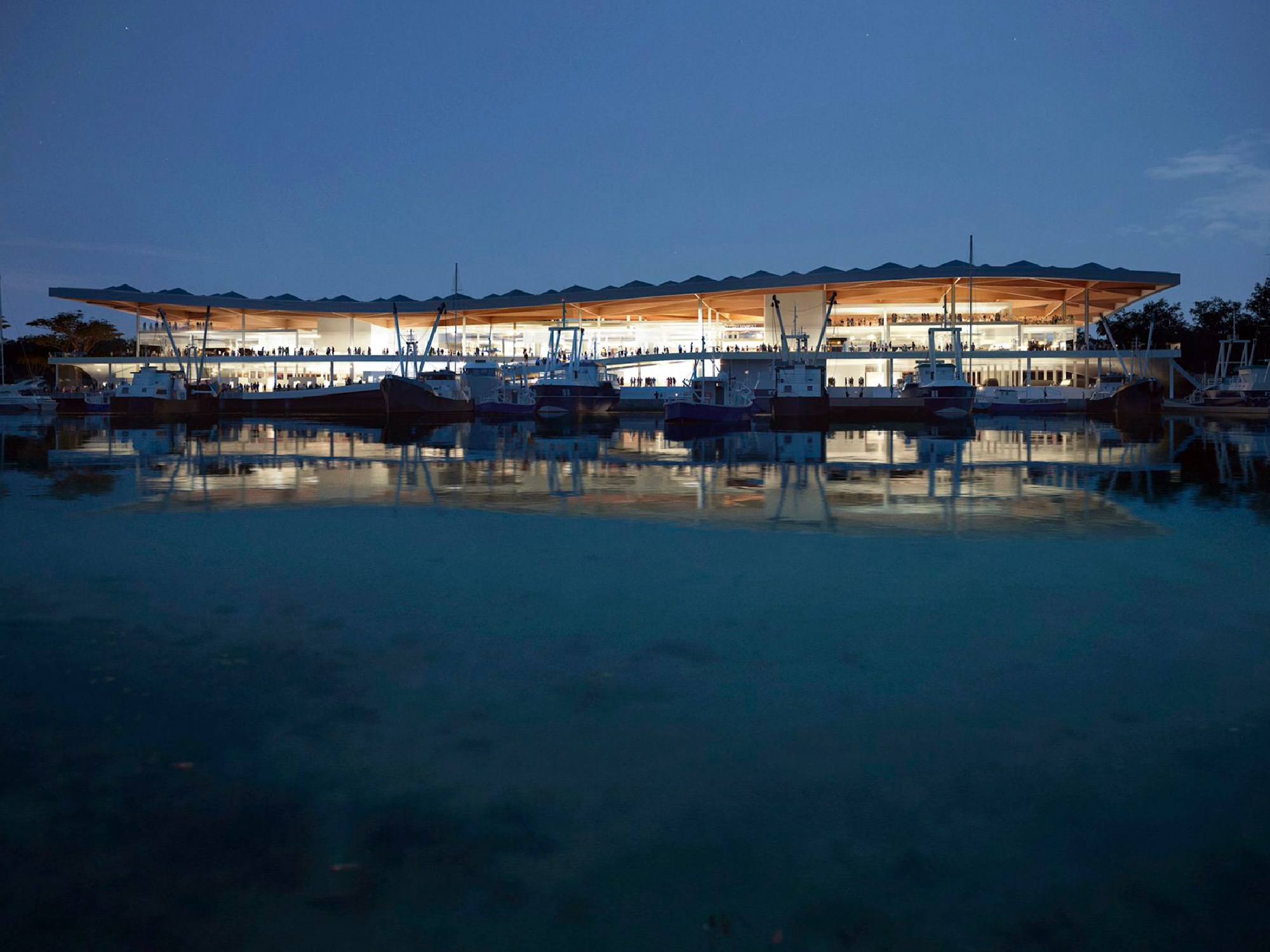
Architecture in Focus: Sydney Fish Market’s timber roof canopy
Rising along the edge of Blackwattle Bay, the new Sydney Fish Market introduces a powerful architectural gesture that prioritises material expression, public experience, and environmental performance. Rather than competing with the skyline through height or spectacle, the project makes its mark through a vast timber roof canopy that stretches across the waterfront like a protective landscape. Designed by 3XN in collaboration with BVN and Aspect Studios, the architecture places structure at the centre of its identity.
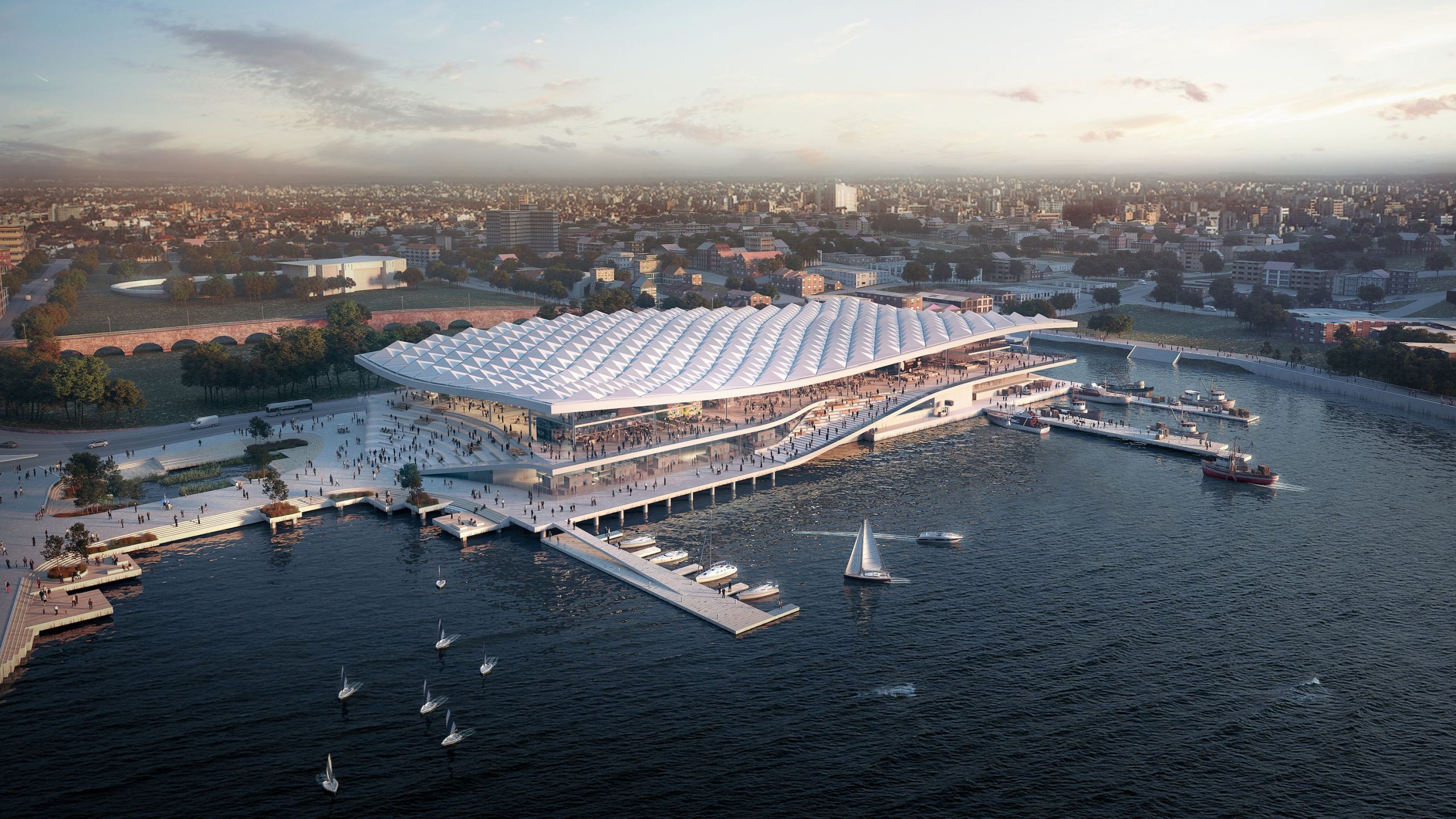
The most striking element of the building is its roof.
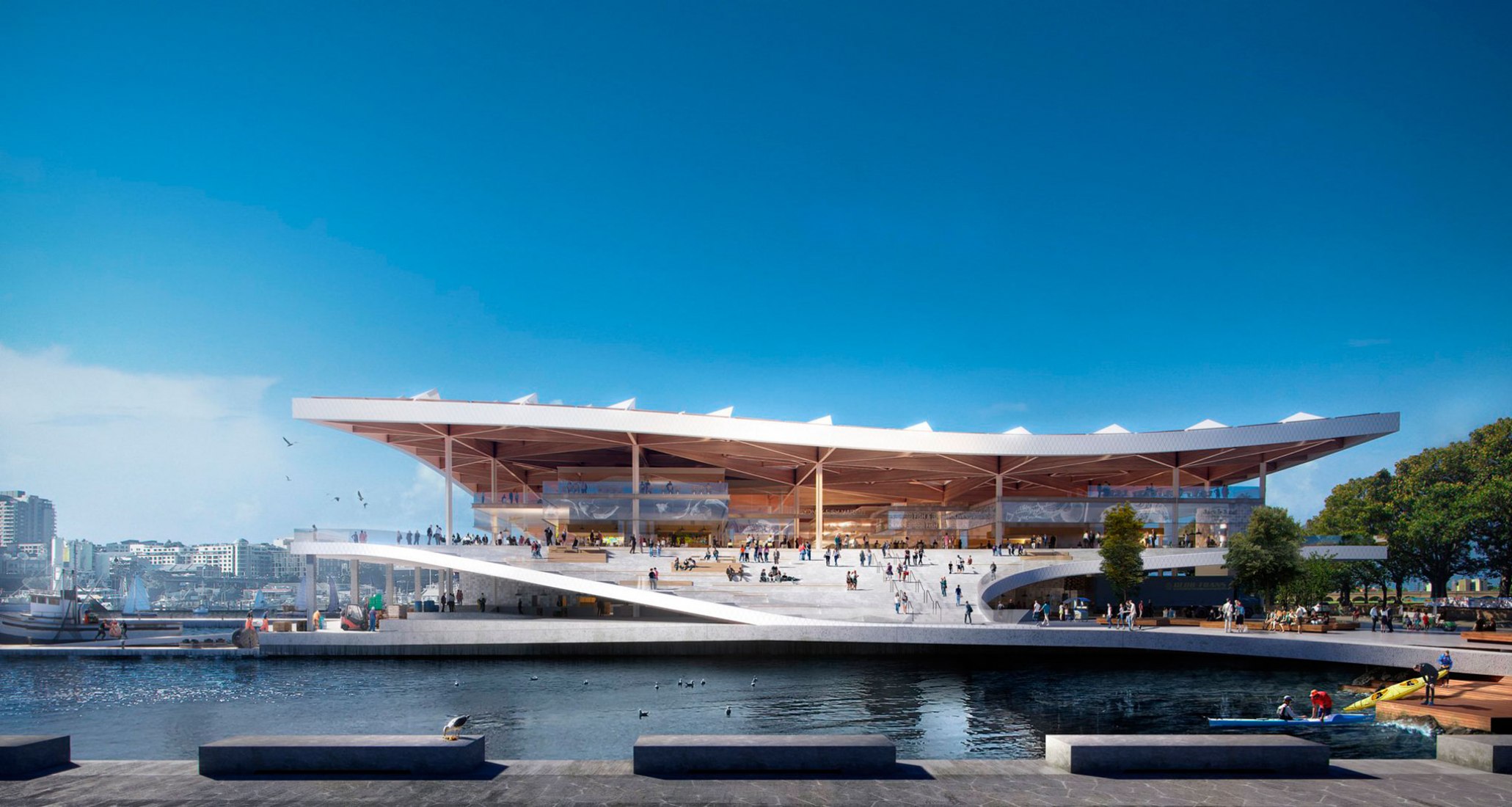
Extending approximately 200 metres along the harbour edge, the canopy functions as both shelter and symbol. Its gently undulating form references the movement of water, creating a visual dialogue between the building and the bay. The roof does not sit passively above the market below. Instead, it shapes how the building is perceived from land, water, and surrounding neighbourhoods, acting as a the Sydney Fish Market’s new horizontal landmark on the waterfront.
At the heart of the design is an ambitious use of engineered timber.
The roof structure is composed of hundreds of glue laminated timber beams that span large distances with minimal supports. Some beams reach lengths of more than 30m, allowing the canopy to hover above the market hall while maintaining an open and flexible interior. This structural approach enables a column free environment where circulation, vendor spaces, and public areas can flow without interruption.
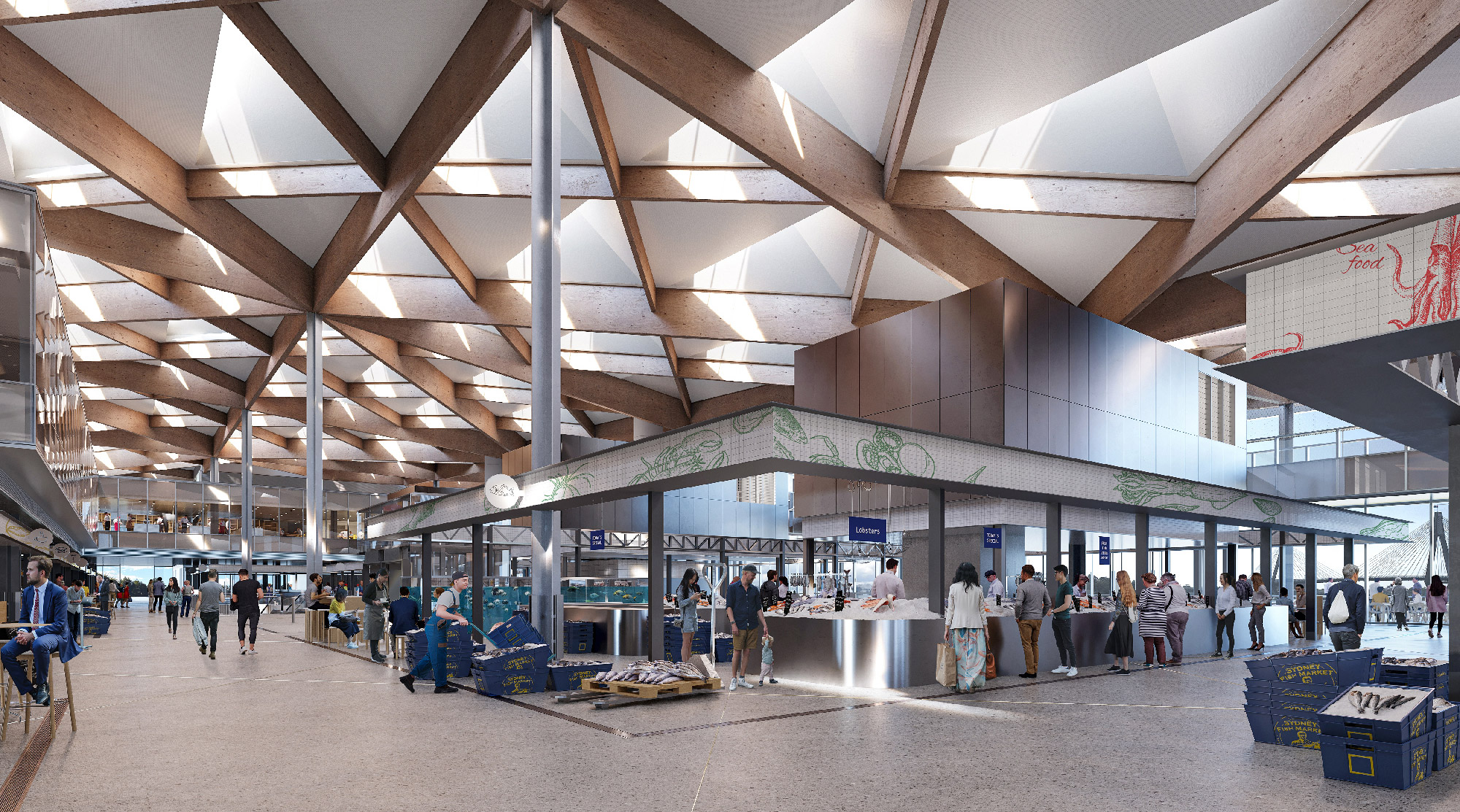
The choice of timber plays a crucial role in defining the building’s architectural language. Exposed timber beams create warmth and tactility, softening the scale of the structure despite its size. The material choice also offers a sense of legibility, allowing visitors to clearly read how the roof is constructed and supported. Connections, joints, and layers are not hidden. They become part of the visual experience, reinforcing the idea that Sydney Fish Market’s architecture can be both expressive and honest.
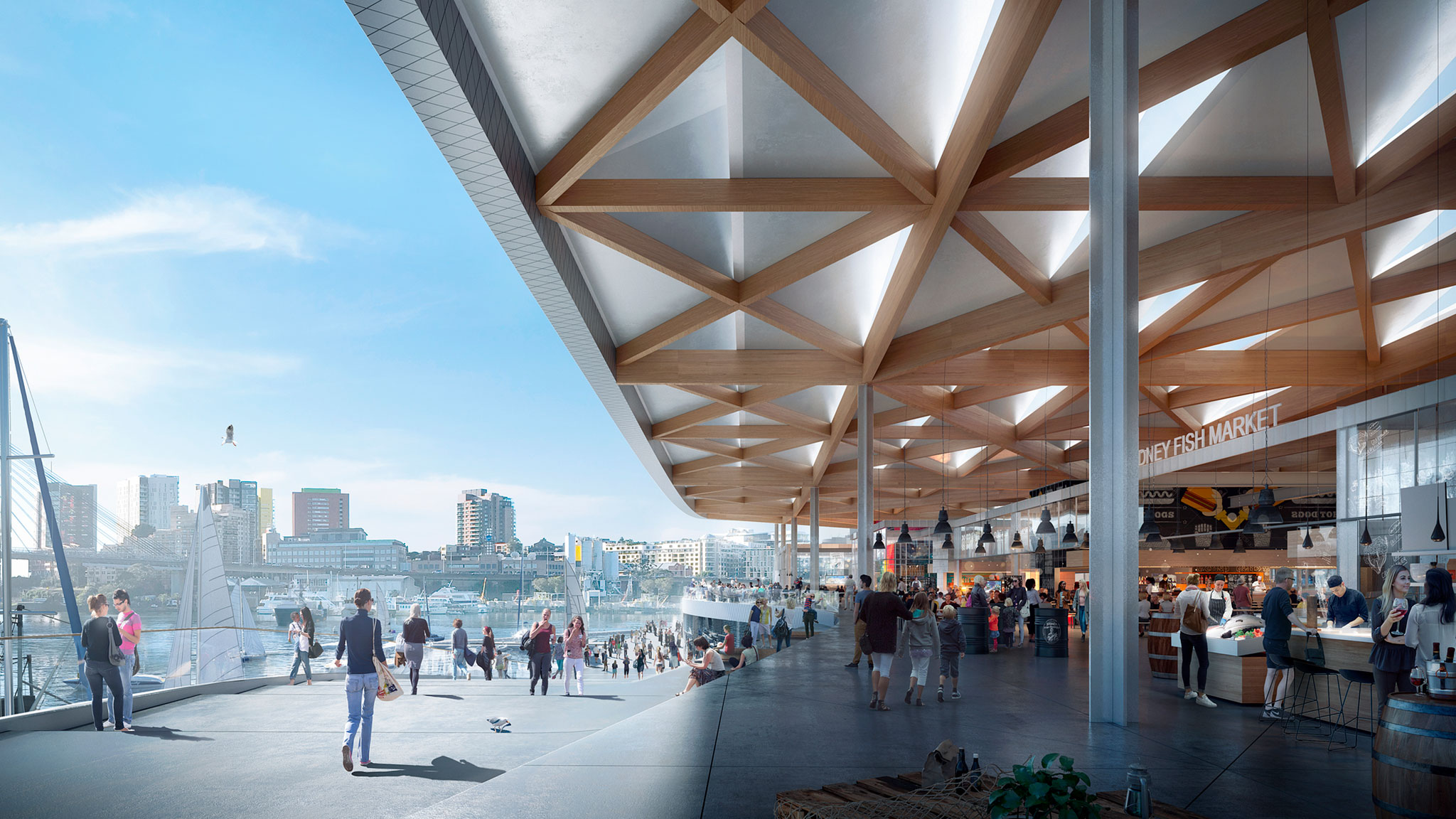
Above the beams, prefabricated roof cassettes form a rhythmic surface that unifies the canopy.
These modular elements contribute to structural efficiency while also performing environmental functions. The cassettes filter natural light into the market hall below, reducing glare while maintaining brightness. They also support integrated solar panels that contribute to the building’s energy generation, embedding sustainability directly into the architecture rather than treating it as an add on.
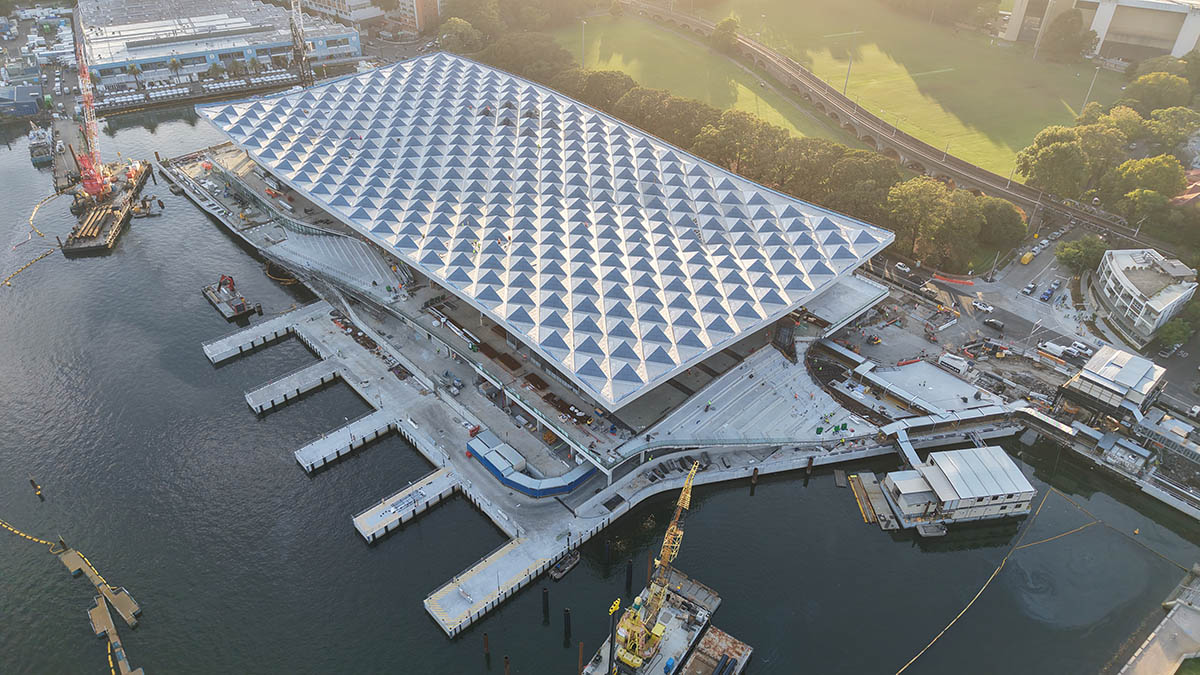
Environmental performance was clearly a guiding principle in the roof’s design.
The canopy encourages natural ventilation by allowing air to circulate freely through the open market hall. This reduces reliance on mechanical cooling systems and improves comfort for both workers and visitors. Rainwater harvesting systems are also integrated into the roof structure, supporting irrigation and other operational needs of the Sydney Fish Market.
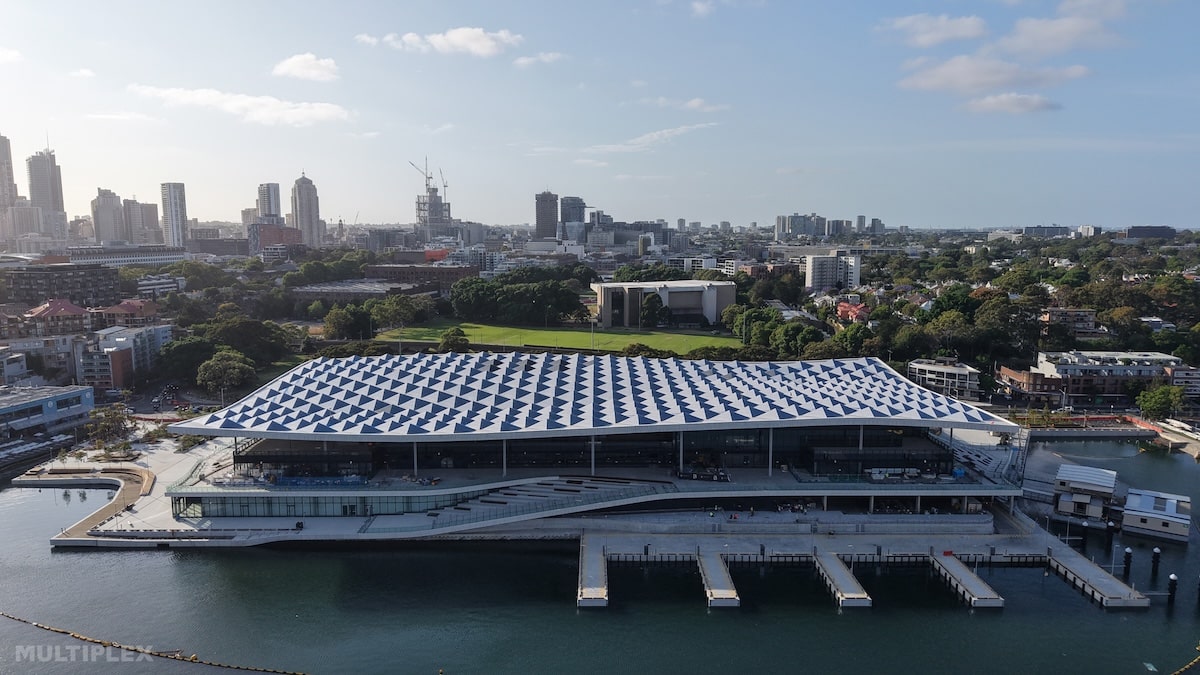
Beneath the canopy, the architecture of the Sydney Fish Market prioritises openness and connection. The market hall is conceived as a semi outdoor civic space rather than a sealed commercial interior. Daylight, views, and airflow create an environment that feels connected to its coastal setting. Sightlines stretch across vendor stalls, walkways, and public gathering zones, reinforcing the market’s role as a social destination as much as a place of trade.
Circulation is carefully choreographed through ramps, terraces, and stepped seating areas that guide visitors through the building while offering moments to pause and observe. These spatial transitions reflect a broader architectural ambition to create an experience rather than a single destination. The roof acts as a continuous element that ties these spaces together, providing visual coherence across the complex program.
Beyond the building itself, the Sydney Fish Market’s roof extends its influence into the surrounding public realm. Landscaped promenades and foreshore paths wrap around the market, encouraging movement along the waterfront. The canopy visually anchors these outdoor spaces, creating a sense of enclosure without isolation. It becomes a shared civic roof, sheltering not only commerce but also public life.
From an architectural perspective, the project reflects a growing confidence in large scale timber construction. While timber has long been associated with smaller buildings, the Sydney Fish Market demonstrates its viability for complex public infrastructure. The project showcases how engineered timber can deliver structural performance, durability, and expressive potential on a scale traditionally dominated by steel and concrete.
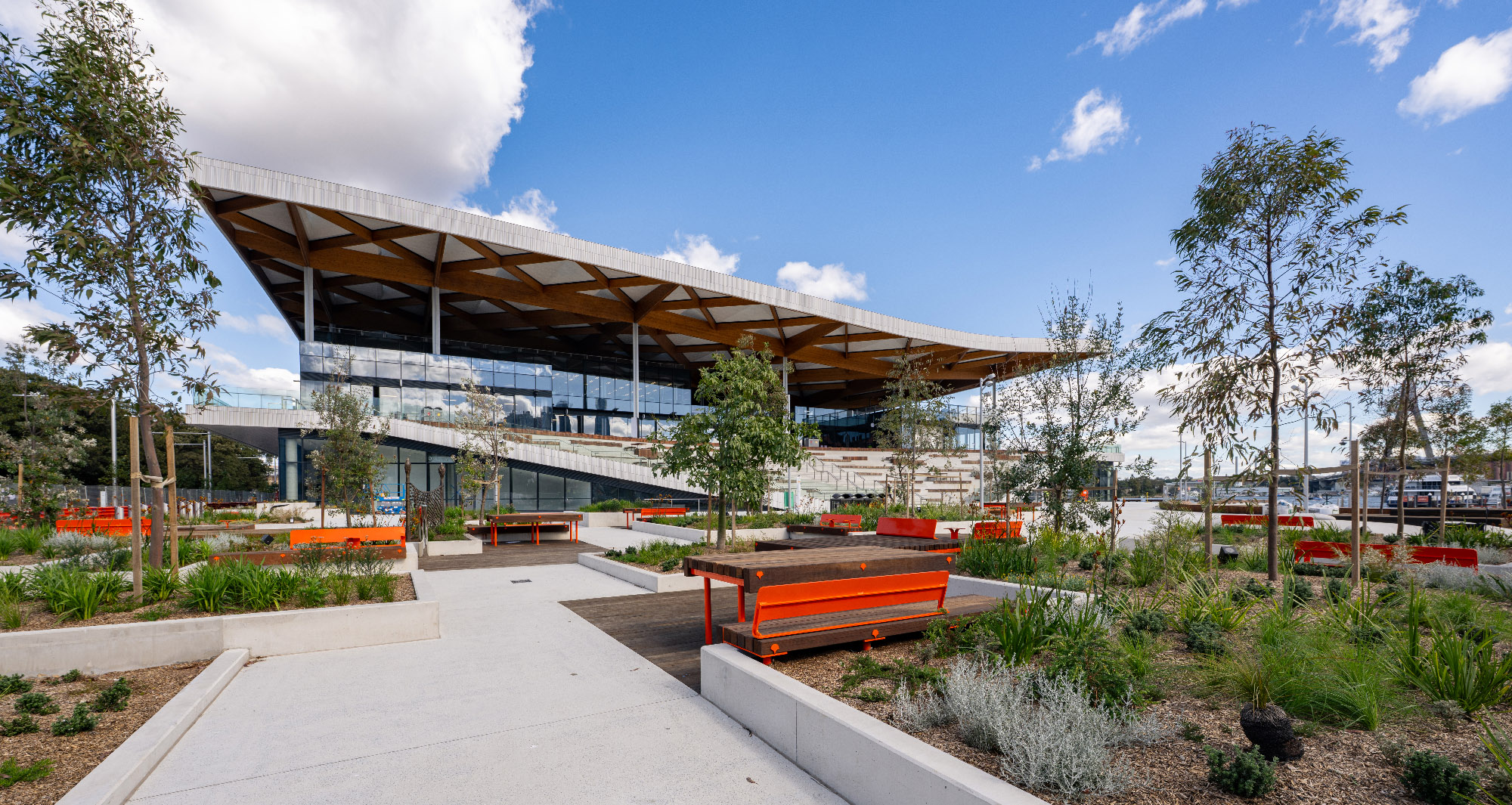
The collaboration between architects, engineers, and builders is evident in the precision of the structure. Digital modelling and prefabrication allowed complex geometries to be resolved efficiently, ensuring accuracy while reducing waste. This integration of advanced technology with traditional material speaks to a broader shift in contemporary architecture toward hybrid approaches that balance craft with innovation.
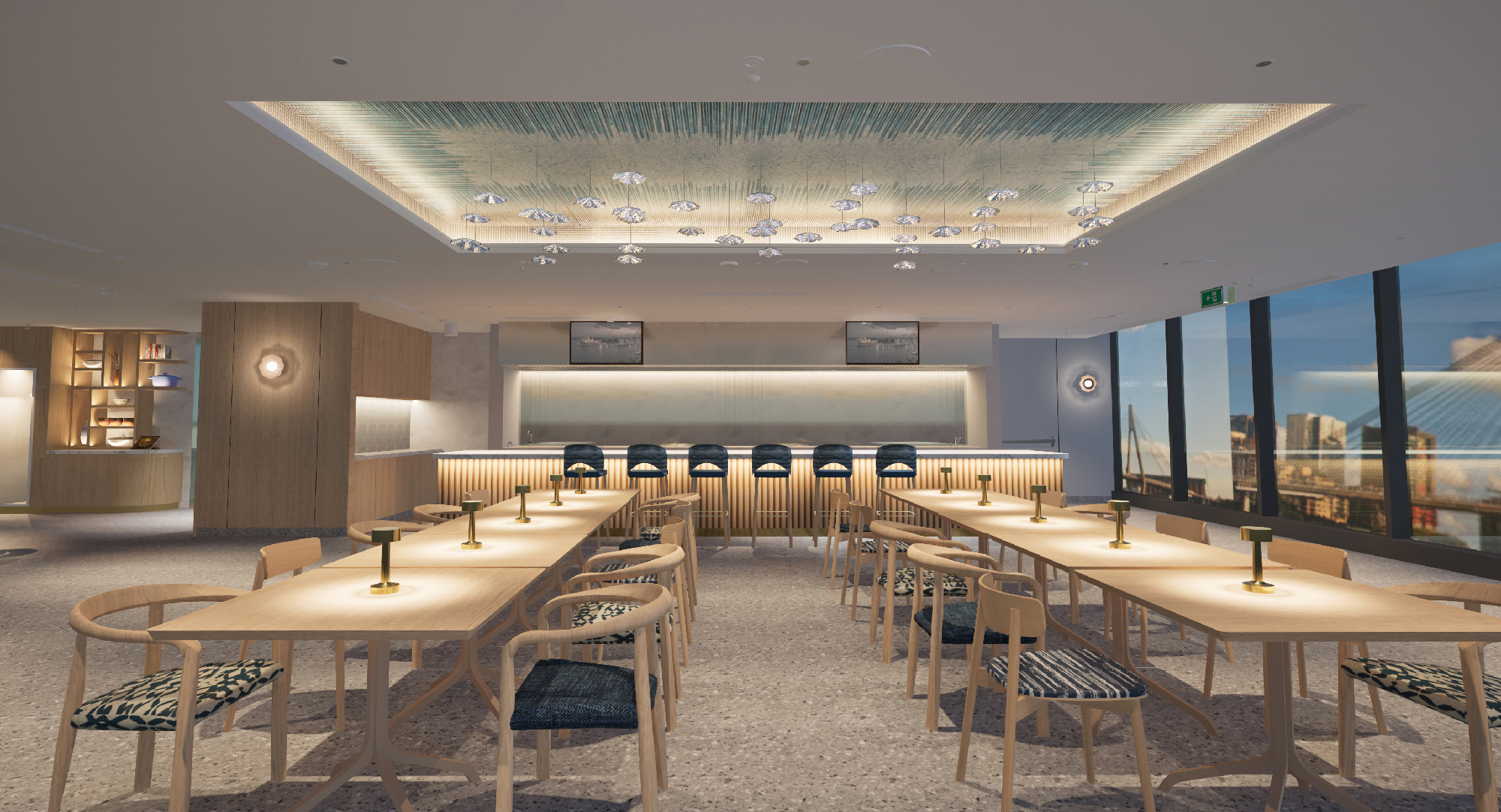
As the Sydney Fish Market prepares to open, the timber roof canopy already stands as its defining feature. It reframes expectations of what a civic building on Sydney Harbour can be, not through monumental height but through generosity of space, material clarity, and environmental responsibility. The architecture does not seek to dominate the waterfront. Instead, it extends an invitation, offering shade, shelter, and a new place for the city to gather by the water.

