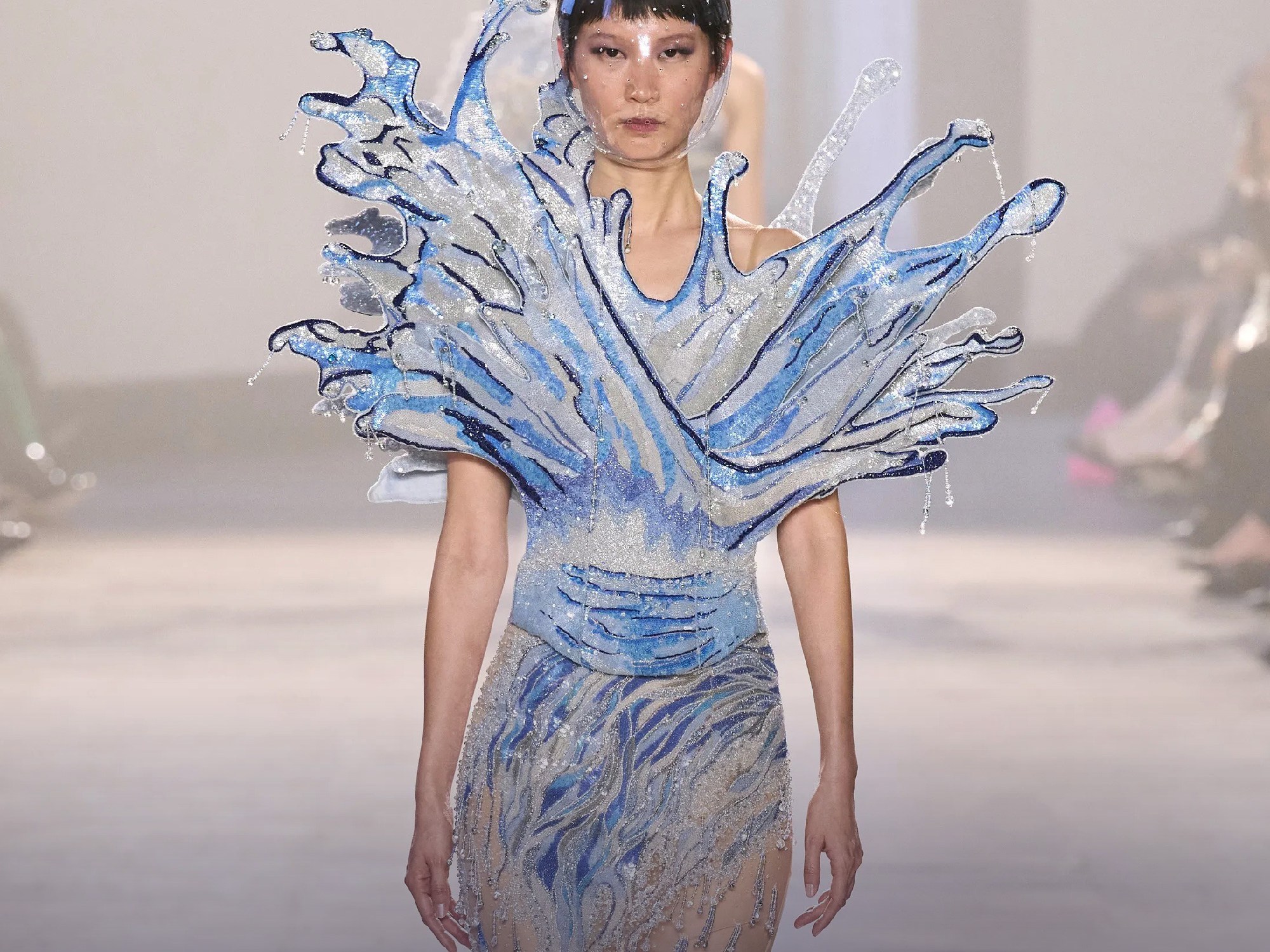
Rahul Mishra’s Alchemy arrives in Paris with the quiet confidence of a designer who no longer needs to prove his place within the haute couture calendar. Instead, this season reads as a considered evolution—one that moves beyond the expected language of embellishment and into something more introspective, almost philosophical in tone.
Presented during Haute Couture Week, the collection draws on the ancient concept of the five elements—earth, water, fire, air and ether—not as literal motifs, but as underlying forces shaping the garments themselves. Rahul Mishra’s strength has always been his ability to translate complex ideas into highly tactile surfaces, and here, that sensibility feels more refined than ever. There is a restraint to Alchemy that sets it apart from the more demonstrative couture presentations this season.
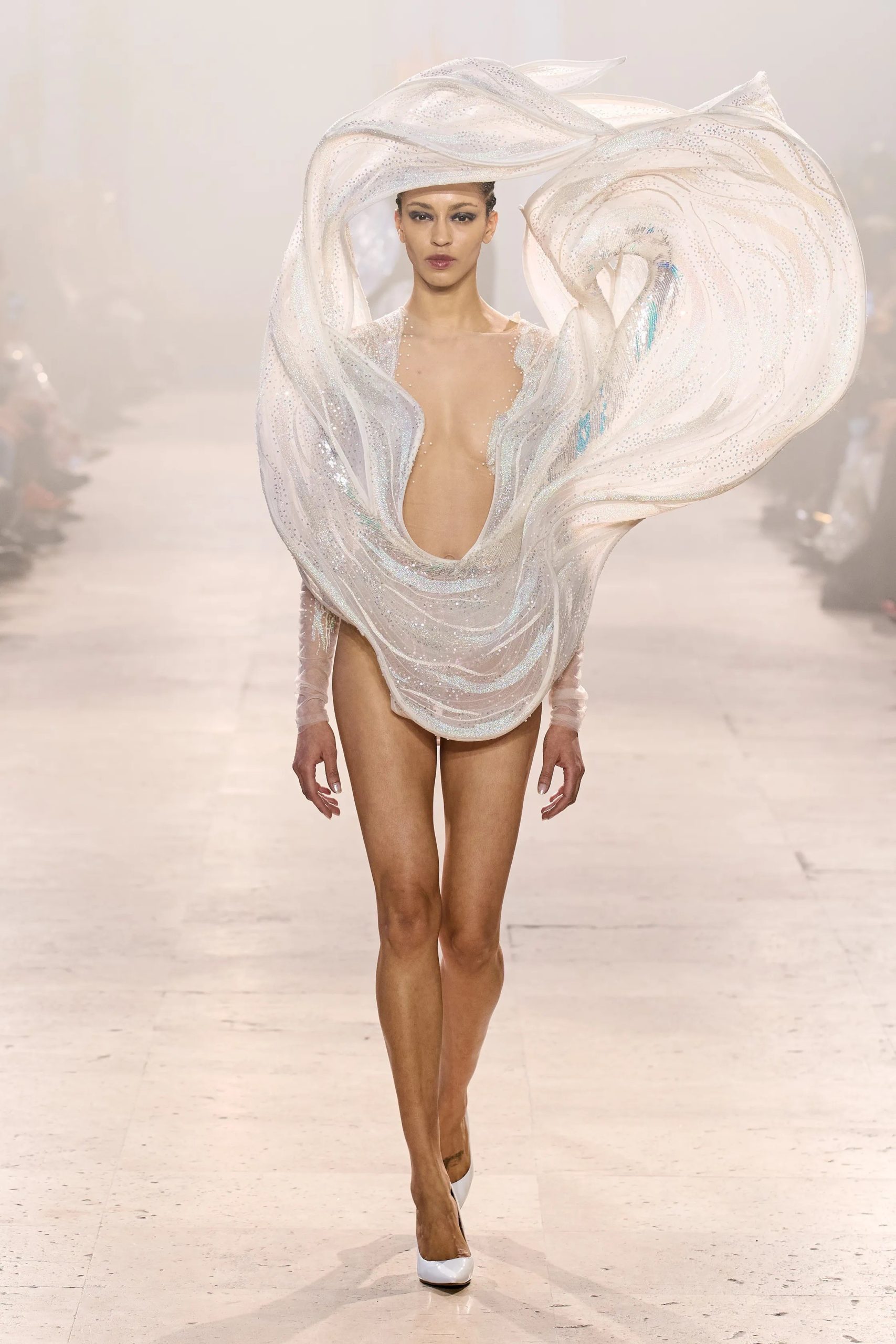
Alchemy: Rahul Mishra’s Couture Through the Lens of the Elements
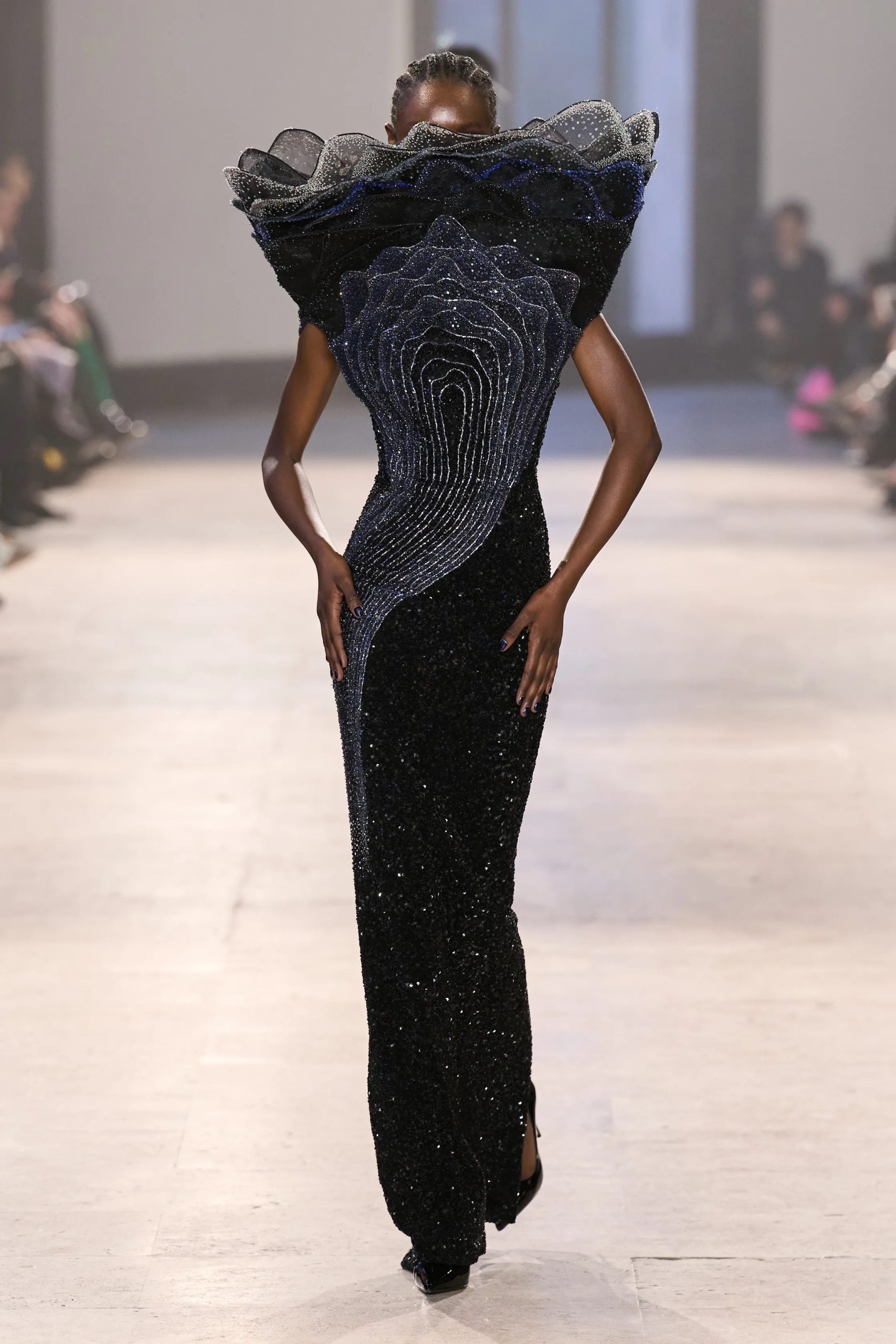
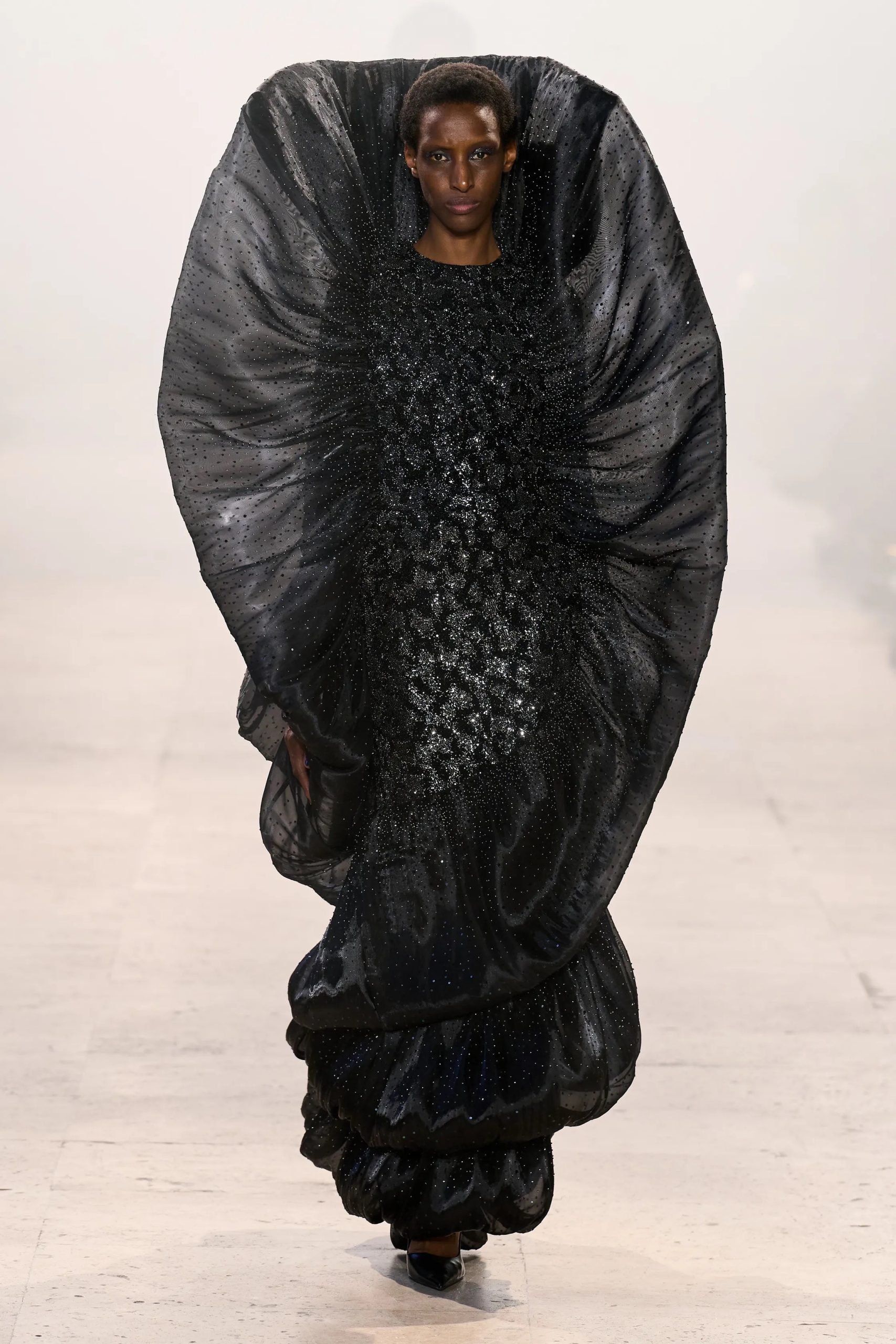
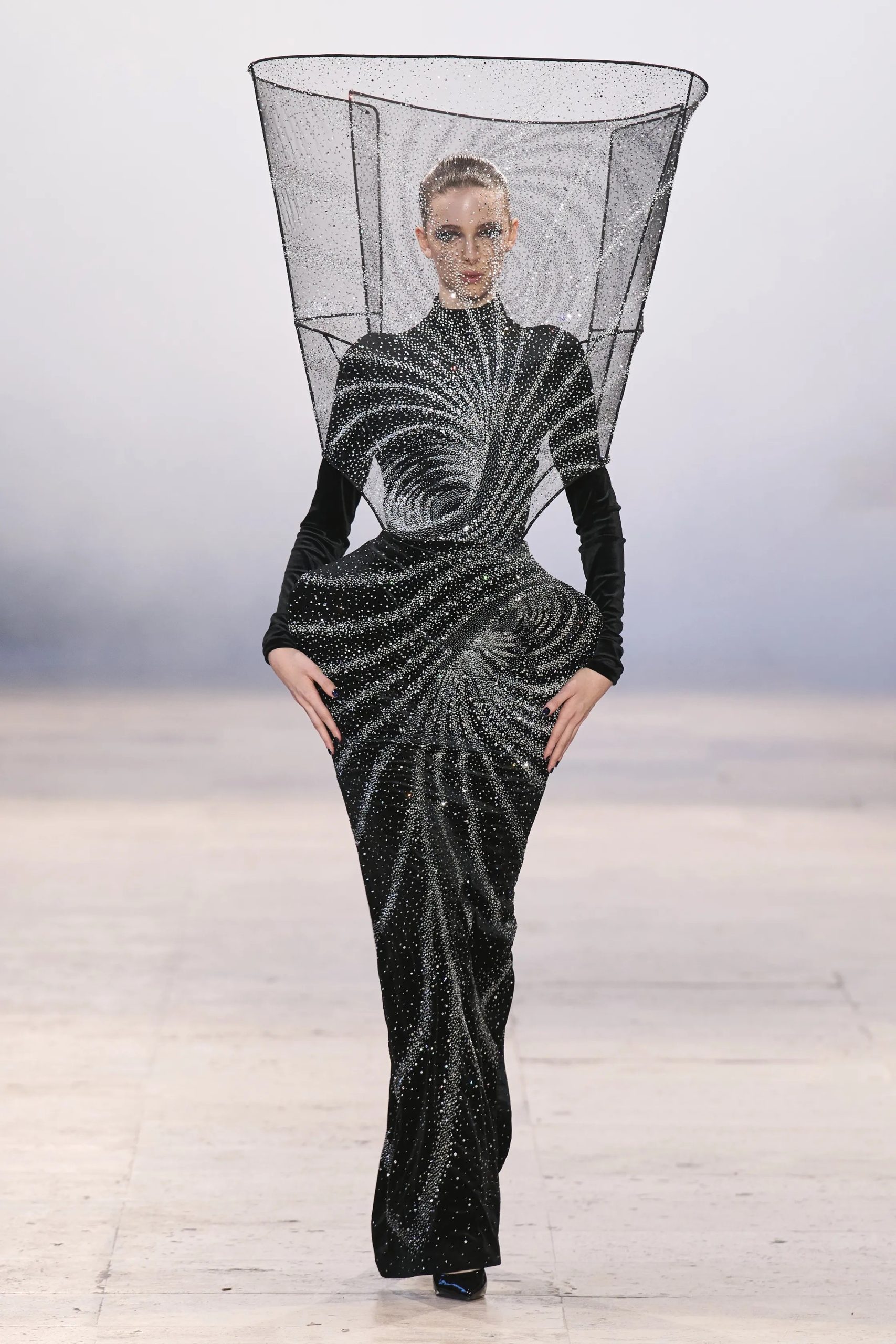
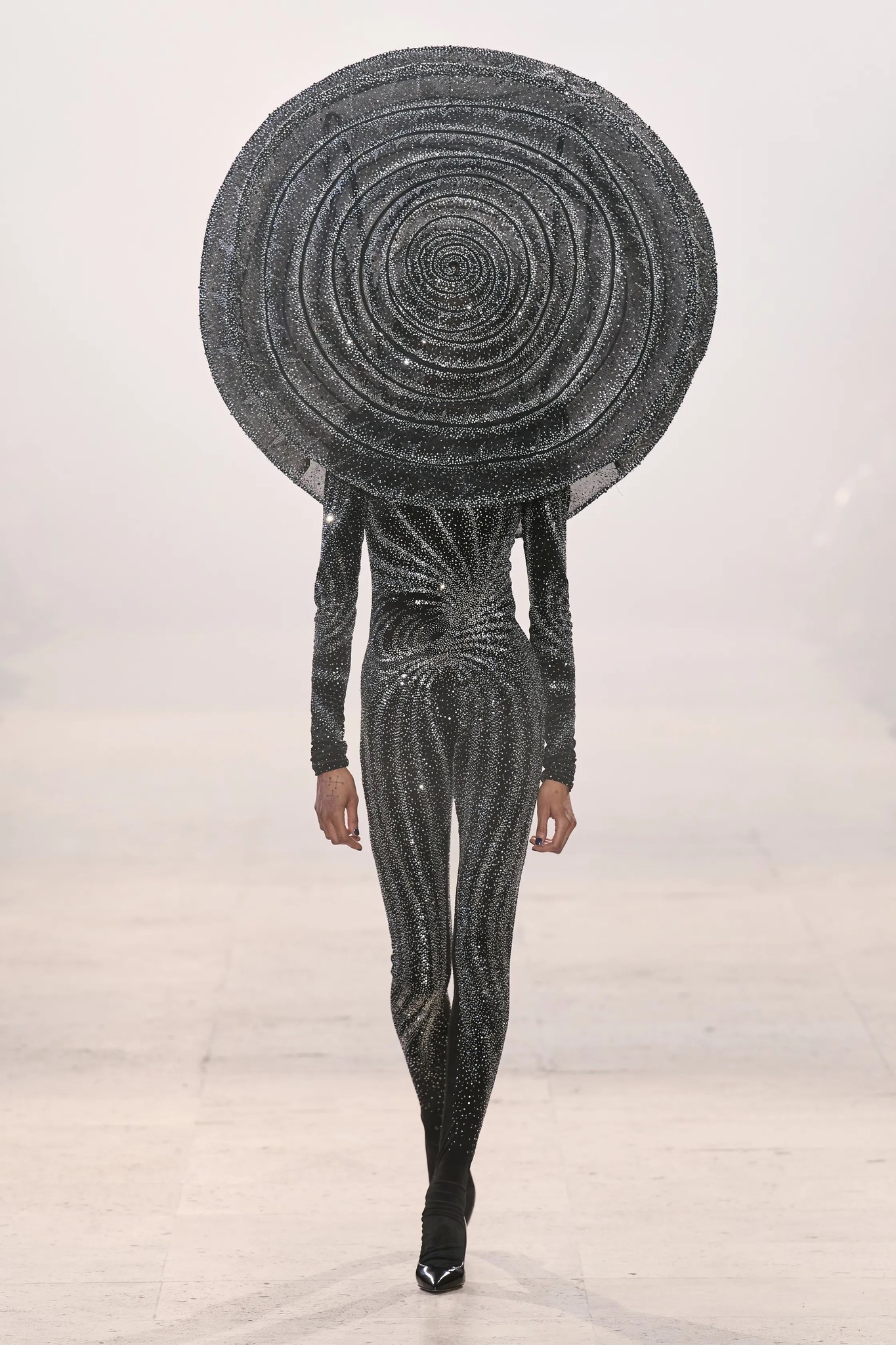
What stands out immediately is the handling of texture. Rather than relying on volume alone, Rahul Mishra builds his silhouettes through embroidery, layering and density. The result is a collection that feels almost alive — garments that shift in perception depending on light, movement and proximity. It is couture that invites you to look closer.
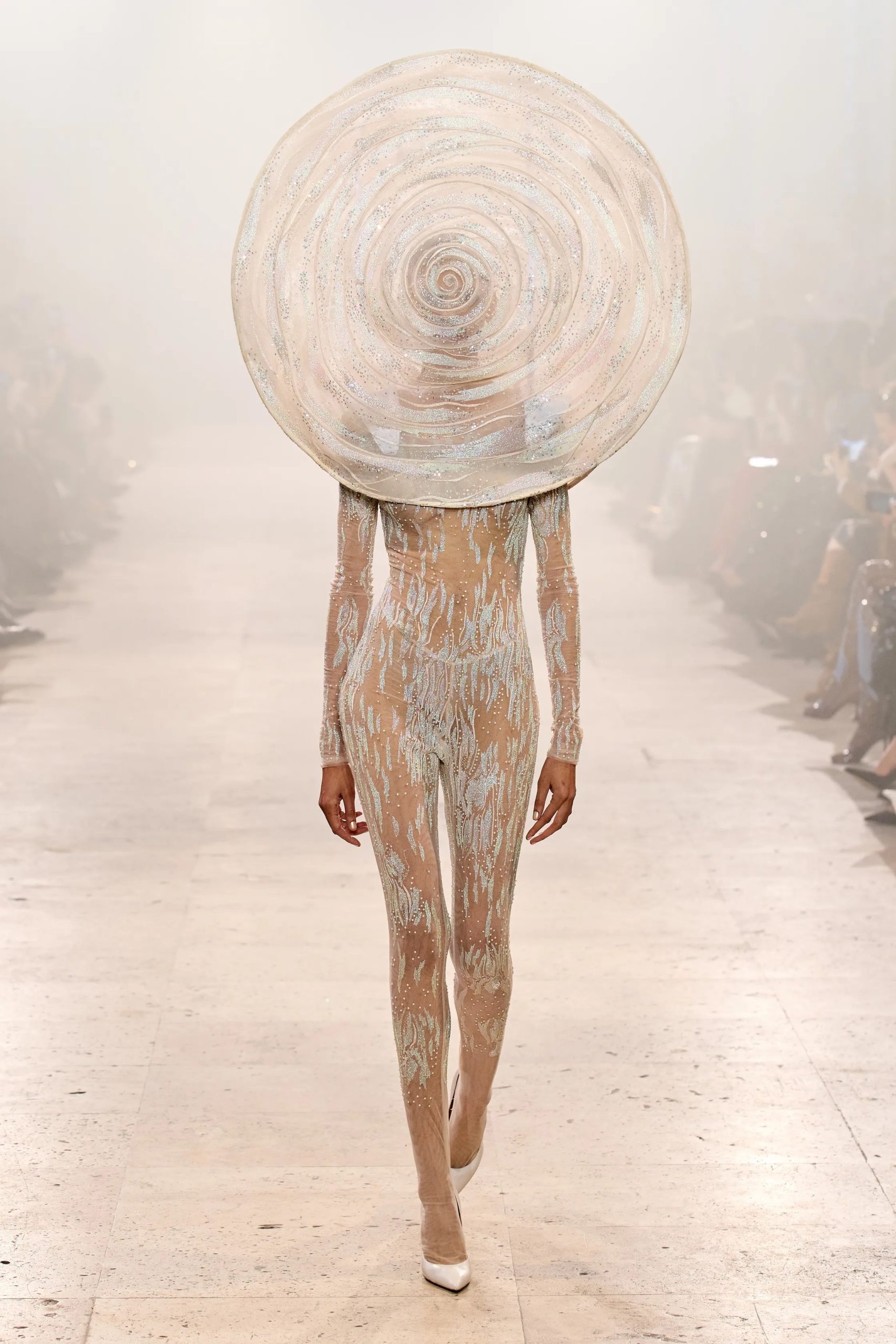
Among the most compelling Rahul Mishra looks is a series of black gowns that suggest the element of earth, though not in any conventional sense. These are not pastoral or organic interpretations, but something far more abstract: dense, mineral, almost cosmic. The embroidery forms swirling constellations across the body, giving the impression of depth rather than decoration. There is a certain gravity to these pieces, both visually and conceptually, that anchors the collection.
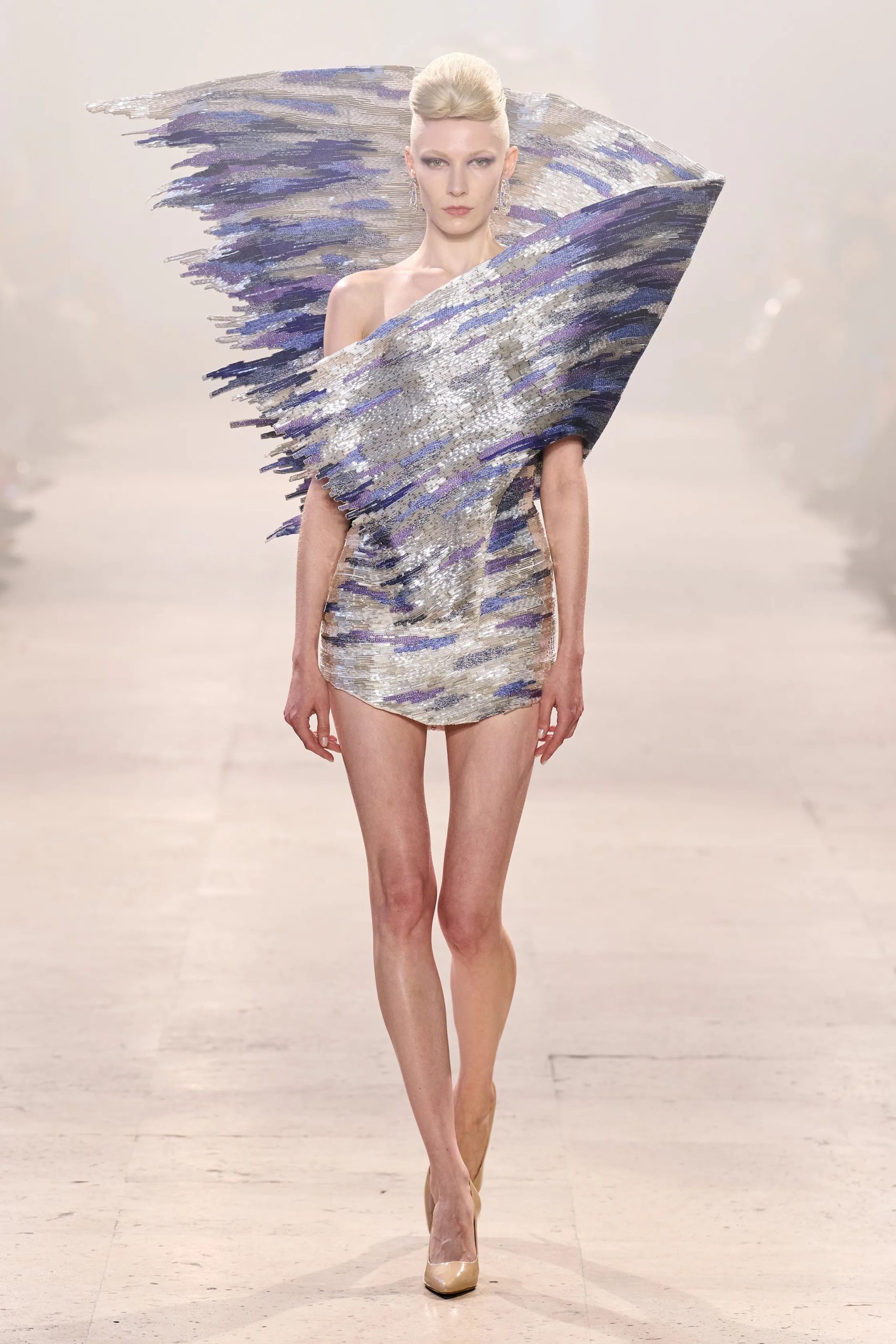
In contrast, the water-inspired looks offer a moment of lightness. Shorter silhouettes, rendered in liquid silver tones, are entirely covered in sequins and beadwork that catch the light with a fluid, reflective quality. These dresses feel instinctively modern, less ceremonial than traditional couture, and perhaps closest to how Rahul Mishra’s work translates into contemporary wardrobes. They move with ease, never losing their precision.
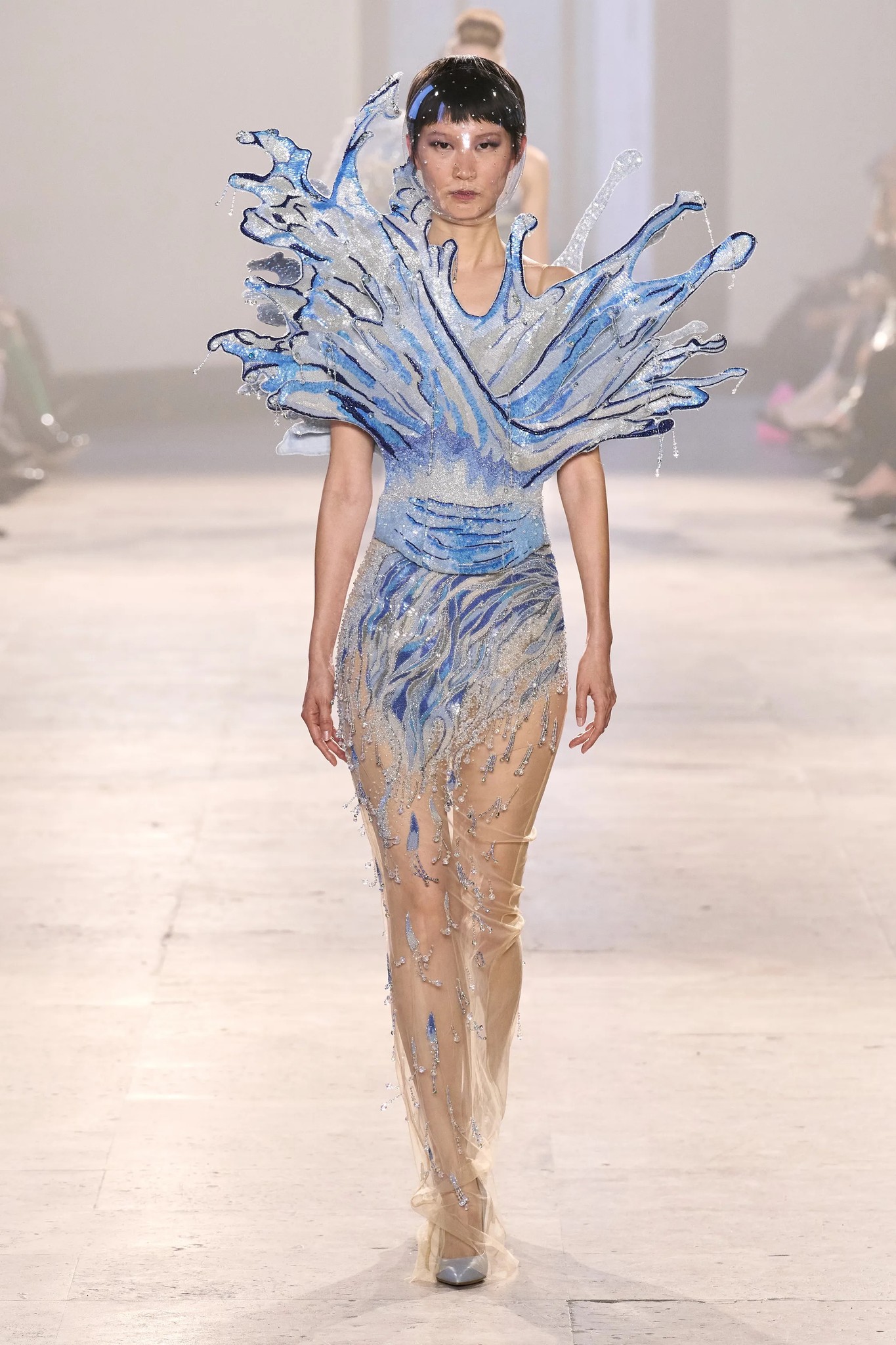
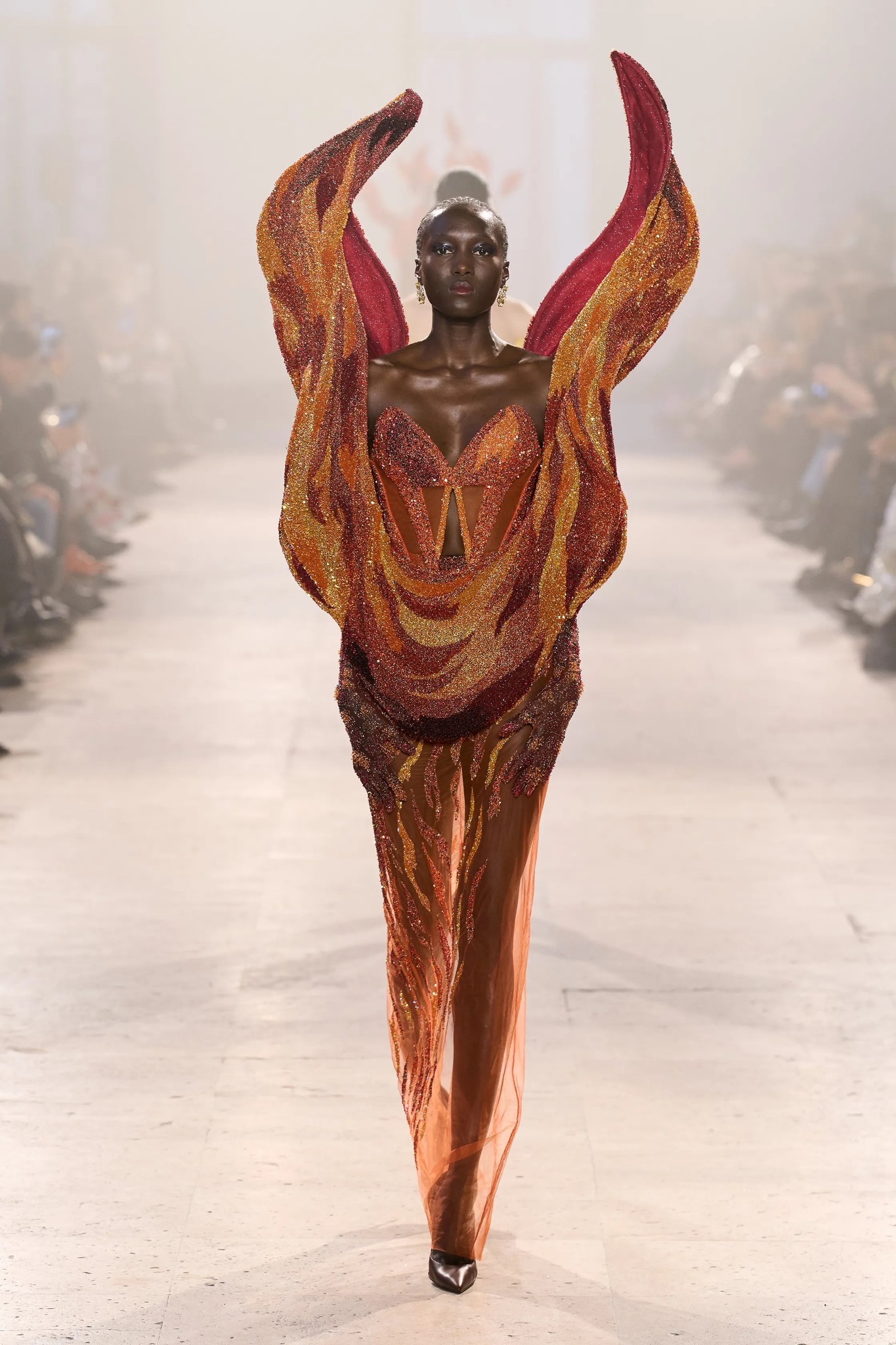
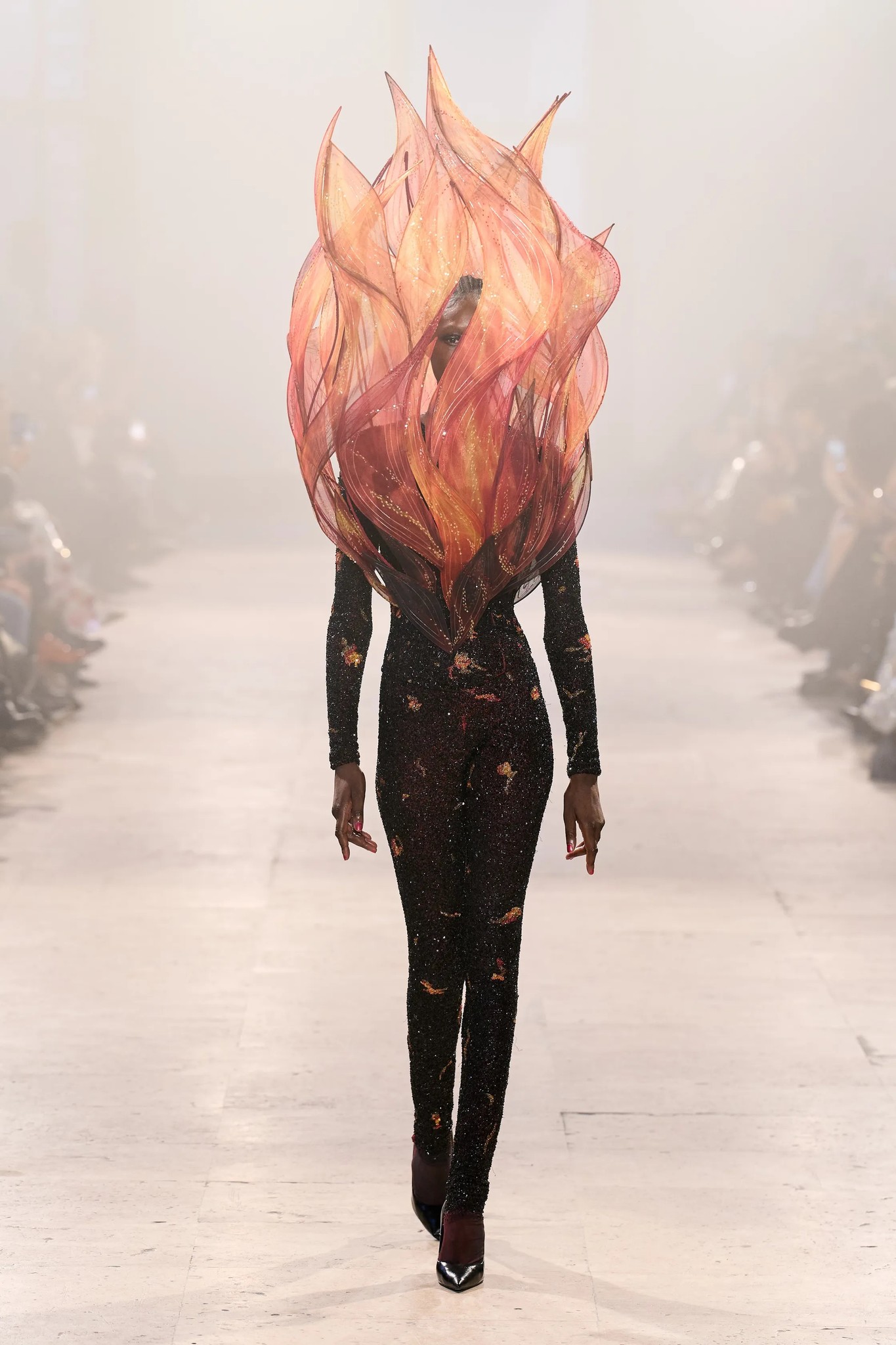
Fire, as expected, introduces a sharper tension. Here, embroidery becomes more directional, rising across corseted structures in flame-like patterns that feel controlled rather than chaotic. There is a discipline to these pieces that prevents them from becoming theatrical. Instead, they hold a quiet intensity—suggesting transformation without overstating it.
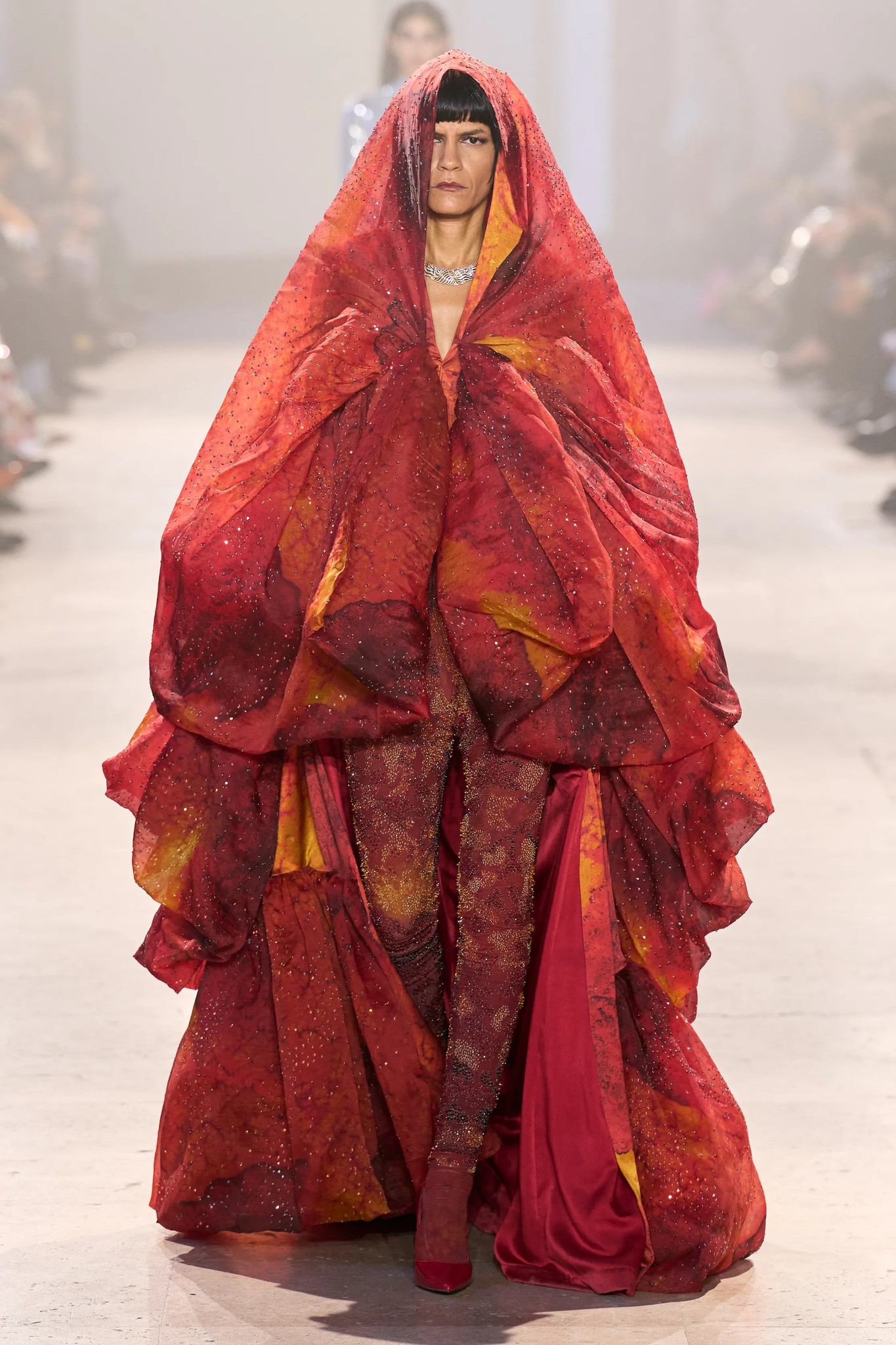
It is, however, in the lighter, more ethereal looks that the collection finds its most poetic expression. Sheer fabrics, delicately embroidered, create silhouettes that seem to dissolve into the air around them. These pieces are less about construction and more about atmosphere. They hover rather than occupy space, offering a subtle counterpoint to the density seen elsewhere in the Rahul Mishra’s collection.
Rahul Mishra’s work has always been rooted in craftsmanship, and Alchemy continues to reinforce this. Each garment is built through painstaking handwork, often over the course of several months, by artisans whose expertise forms the backbone of his atelier. Yet what is notable this season is that the craftsmanship never feels like the end point. It serves the narrative, rather than defining it.
There is also a noticeable shift in how the collection positions itself within the broader context of luxury.
Rather than pursuing spectacle, Rahul Mishra leans into a more contemplative approach. The references to nature, science and the cosmos are not overtly explained, but quietly embedded within the garments. This allows the collection to unfold gradually, revealing itself over time rather than demanding immediate attention.
As an Indian designer working within the Paris couture system, Rahul Mishra continues to occupy a distinctive space.
His work does not attempt to conform to traditional European codes of couture, nor does it rely on cultural signifiers in a superficial way. Instead, he brings a different intellectual framework—one that feels both personal and expansive. Alchemy reflects this balance, merging heritage craftsmanship with a global, almost universal narrative.
If there is a critique, it lies perhaps in the consistency of tone.
The collection maintains such a controlled, introspective mood that it occasionally risks feeling too contained. One wonders what might happen if Mishra allowed for a moment of disruption—a break in the rhythm that could heighten the emotional impact even further.
That said, Alchemy is not a collection designed for immediate gratification. It resists the rapid consumption that defines much of contemporary fashion, asking instead for attention and reflection. In doing so, it aligns itself with a slower, more deliberate vision of luxury—one that values meaning as much as material.
For those following couture with a more critical eye, this is where the collection finds its strength. It does not seek to impress through excess, but through coherence and intention. Mishra offers a body of work that feels complete, considered and, above all, sincere.
In a season often dominated by visual noise, Alchemy stands apart for its clarity. It is a reminder that couture, at its most compelling, is not only about what we see, but how we interpret it.

