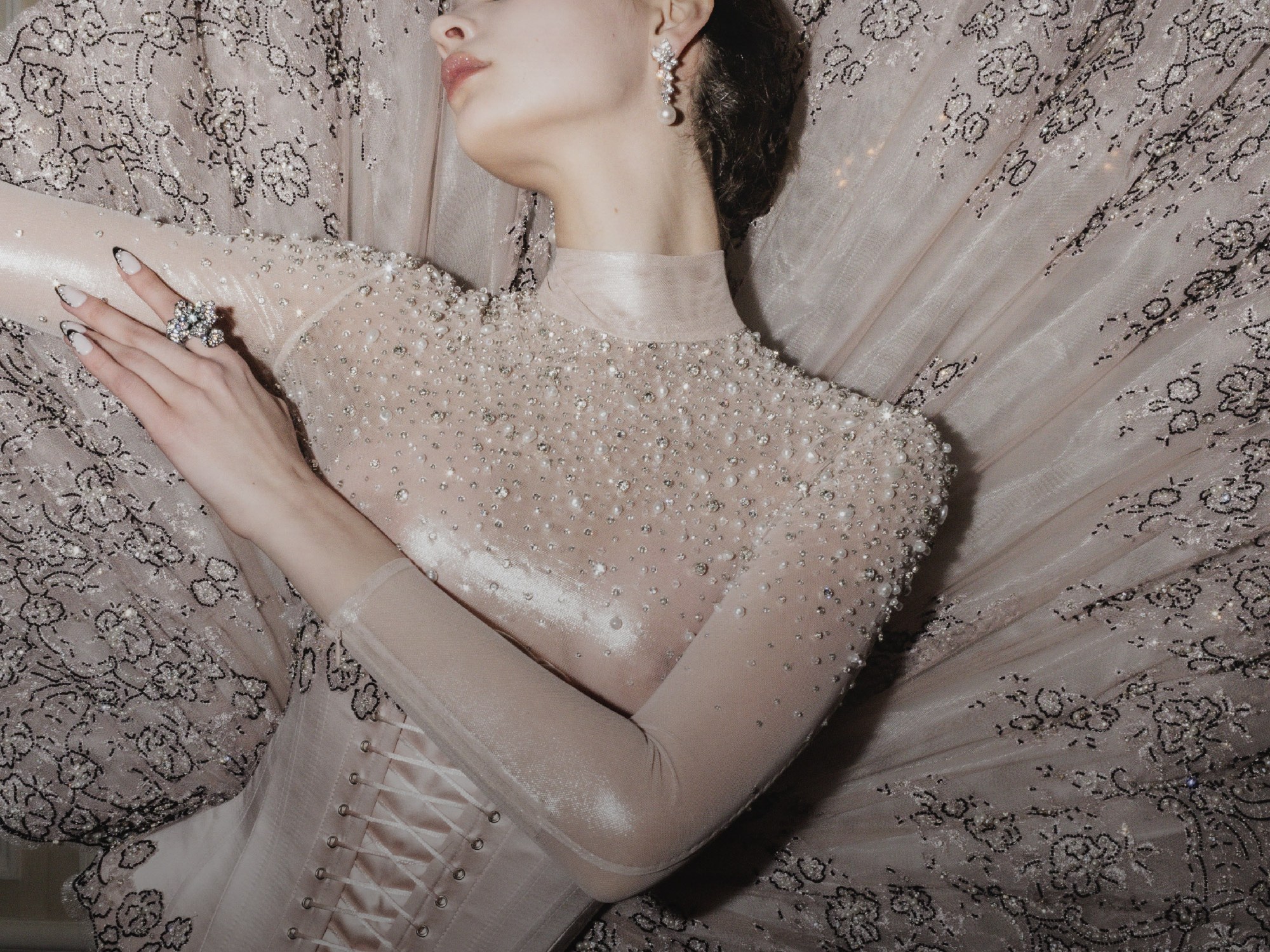
Miss Sohee’s Spring/Summer 2026 couture collection arrives at a moment when haute couture is increasingly defined by narrative, heritage, and material intelligence rather than spectacle alone.
Designed by Sohee Park, the collection continues her exploration of the body as both structure and storytelling device, while deepening her engagement with Korean cultural memory and artisanal tradition. This review examines the collection through the lens of craftsmanship, heritage, and conceptual execution, without defaulting to promotion.
Heritage as Structural Language
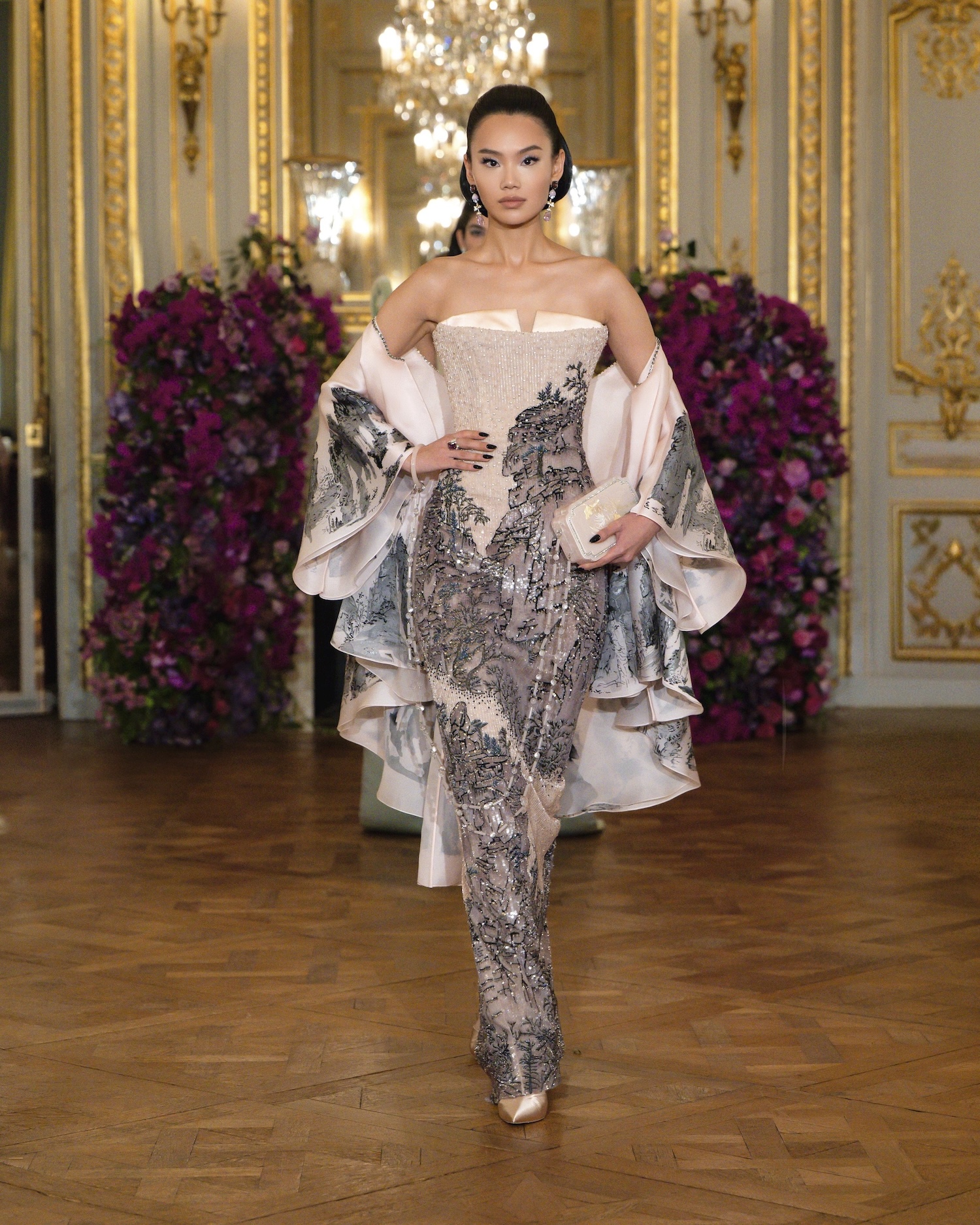
At the core of the Miss Sohee Spring/Summer 2026 couture collection lies a deliberate and sustained engagement with Korean heritage—not as surface decoration, but as a structural framework. Park’s upbringing in South Korea and early exposure to embroidery through her family inform a design methodology that prioritizes detail, symbolism, and narrative layering.
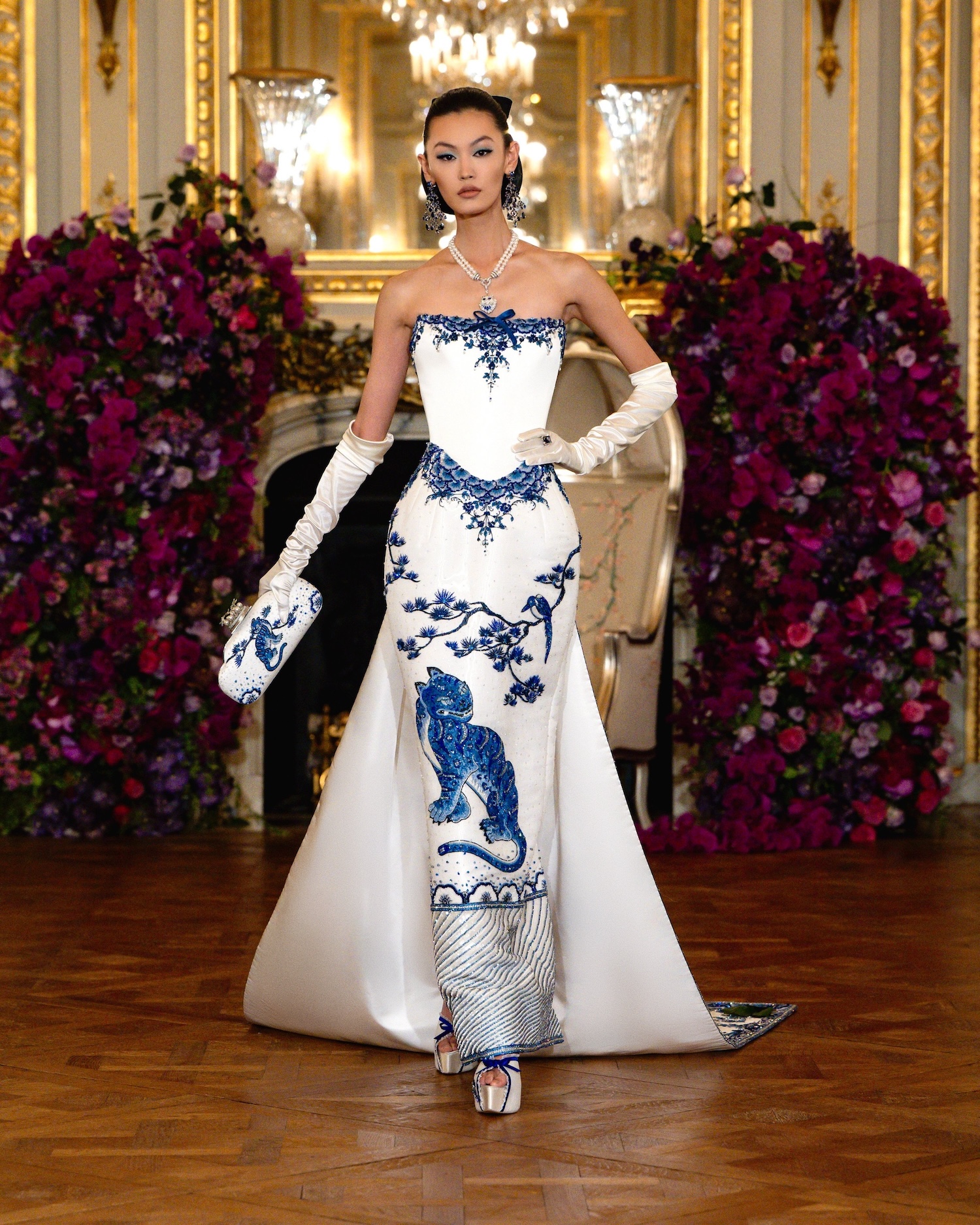
Miss Sohee collection draws explicitly from Korean landscapes and visual culture.
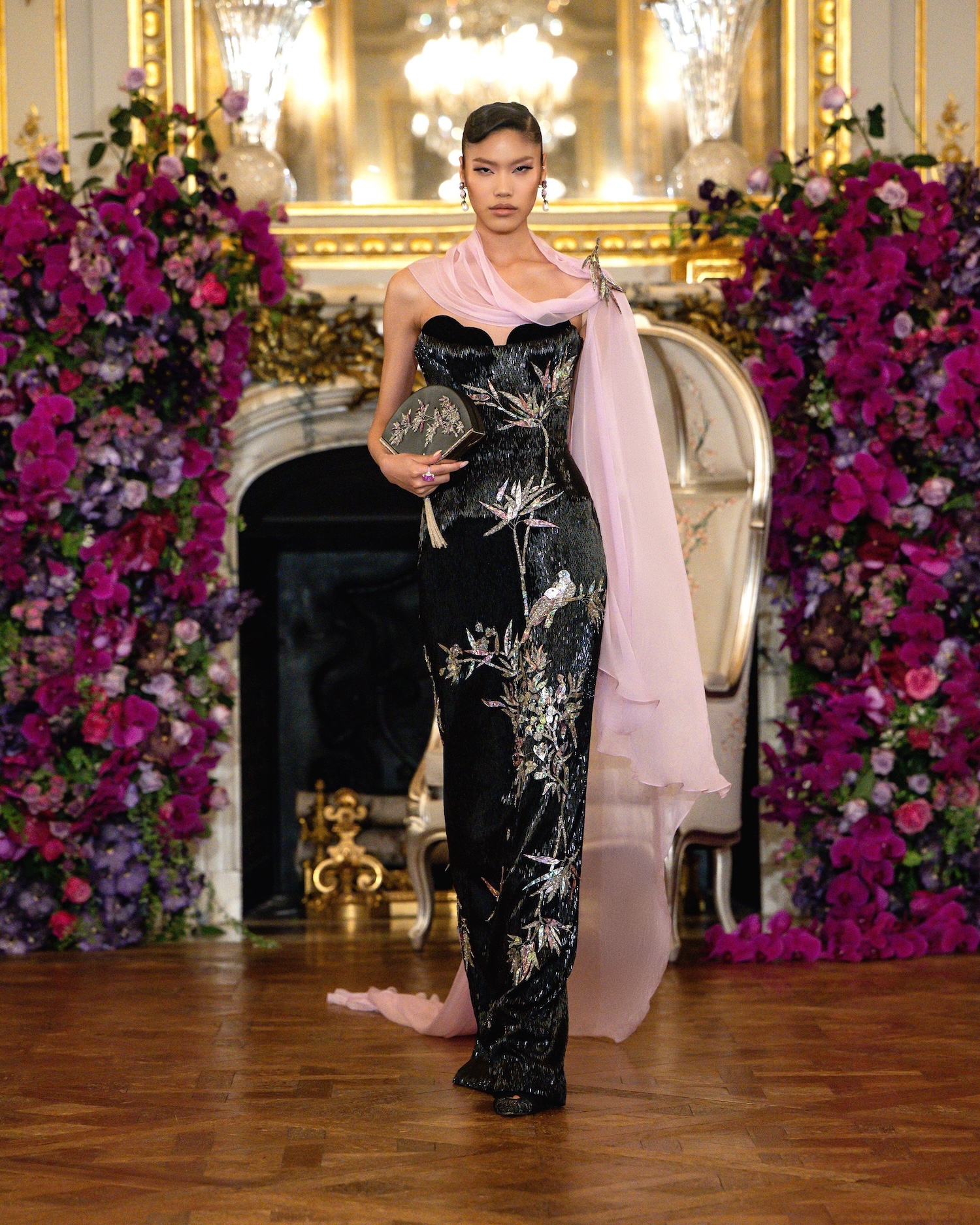
Motifs such as mountains, bamboo, wisteria, and mist are translated into embroidery, hand-painted textiles, and layered sheer fabrics. These references are not merely aesthetic—they function as spatial devices, transforming garments into topographical surfaces. Dresses become canvases where geography is mapped onto the body, collapsing the boundary between wearer and environment.
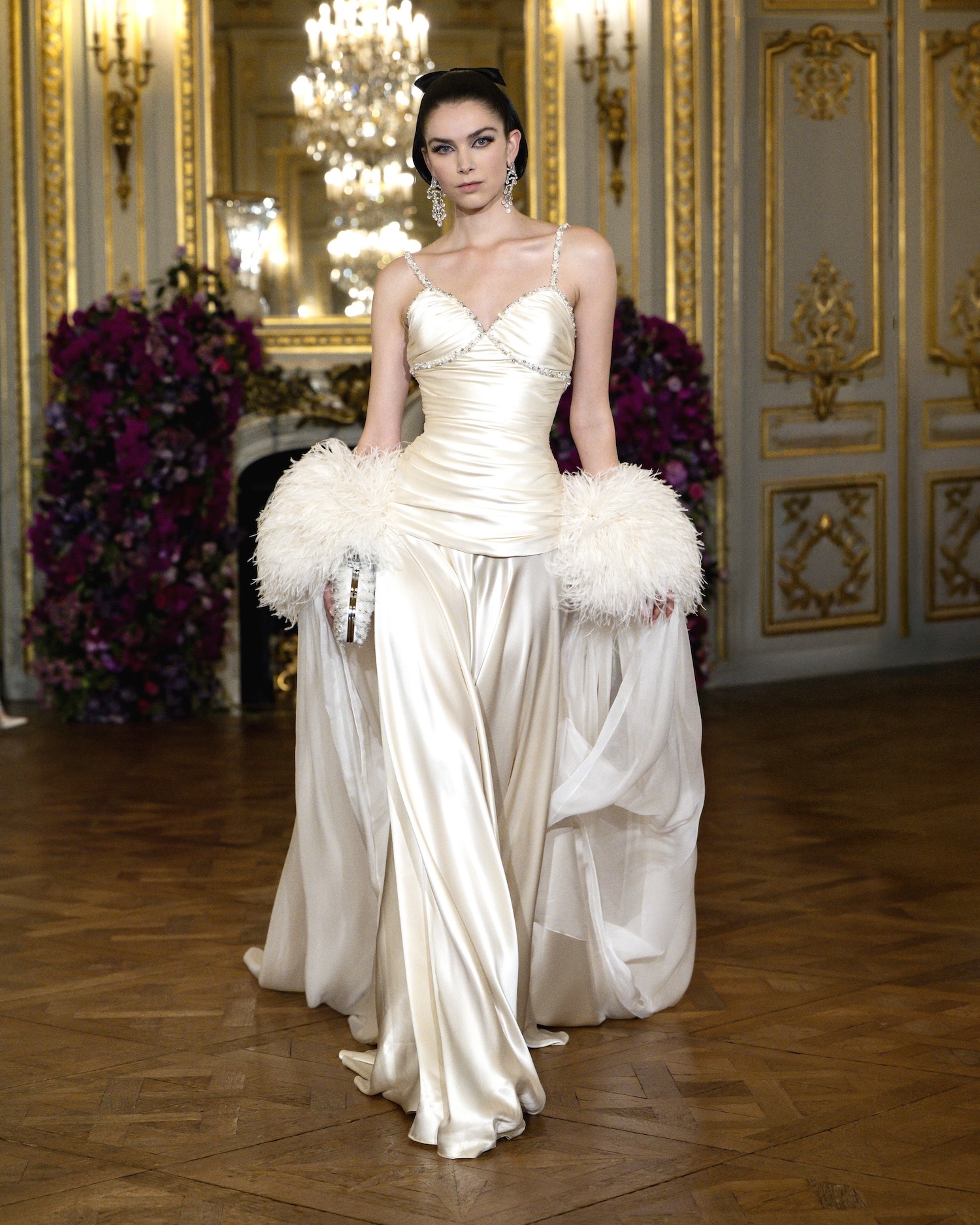
Importantly, Park avoids literal historicism. Rather than reproducing traditional garments like hanbok, she abstracts elements—volume, layering, and proportion—and recontextualizes them within a contemporary couture framework. This approach aligns with a broader shift in global fashion, where heritage is interpreted rather than replicated.
Inspiration: Memory, Landscape, and Emotional Cartography
The conceptual foundation of the collection is rooted in memory—specifically, Park’s recollections of Korean landscapes and personal environments. According to show notes and reviews, inspiration emerged from moments of observation, such as gazing through windows at natural scenery.
This emphasis on memory introduces an introspective dimension. The garments do not depict landscapes in a documentary sense; instead, they function as emotional reconstructions. Ombré dyeing techniques simulate atmospheric shifts, while layered organza creates depth analogous to mist or distance.
There is also a narrative thread drawn from Korean folklore, including references to traditional stories like the tiger and magpie motif. These elements expand the collection’s conceptual scope, embedding cultural storytelling within couture construction.
The result is what can be described as “emotional cartography”—a mapping of memory, place, and identity onto the female form. This is consistent with Park’s broader design philosophy, which treats couture as a medium for constructing alternate realities rather than simply dressing the body.
Silhouette and Construction: Sculpting the Body
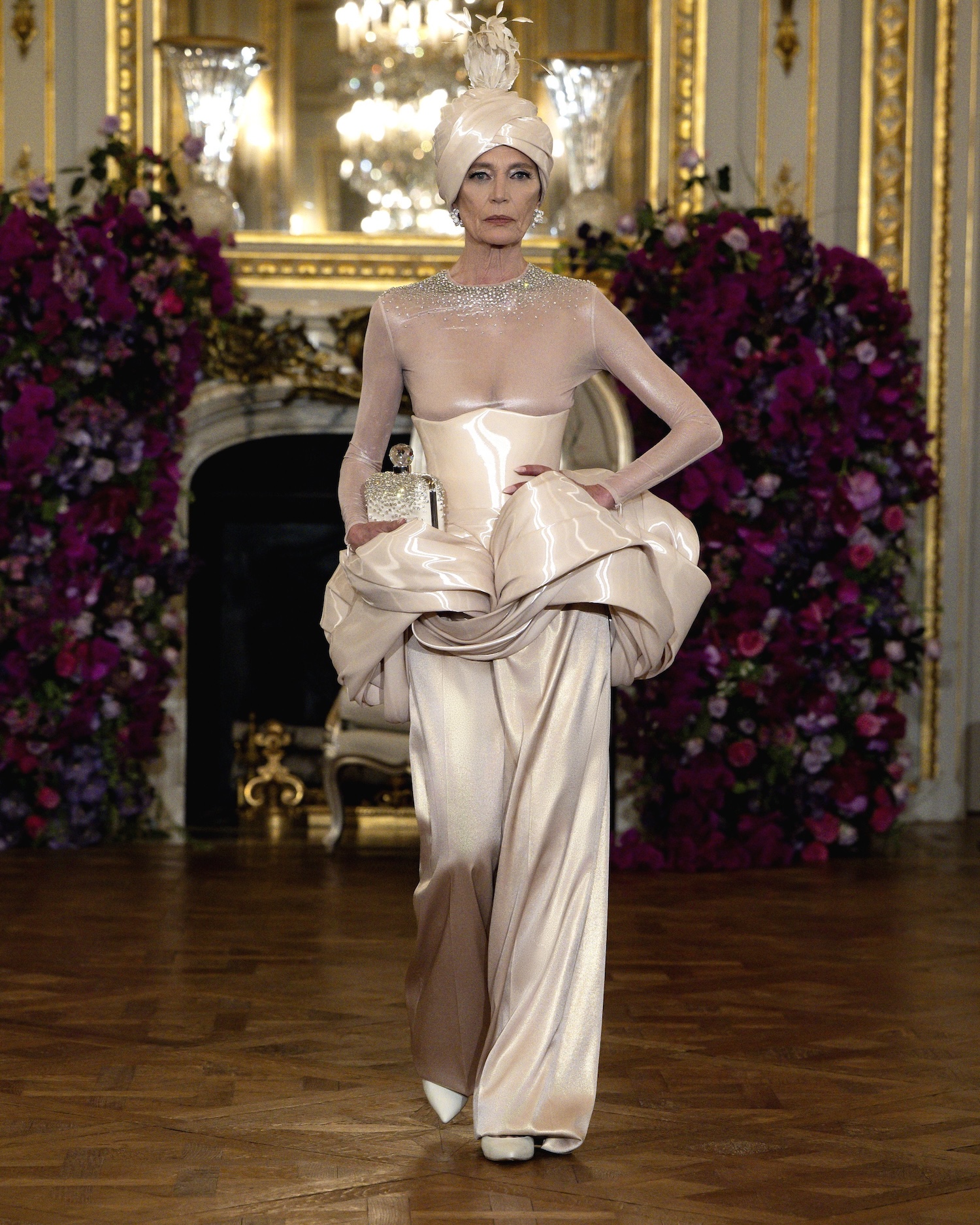
Technically, the collection reinforces Miss Sohee’s signature silhouette: corseted bodices paired with controlled volume. The hourglass form remains central, but is refined rather than exaggerated.
Garments are engineered with precision, demonstrating an acute understanding of balance—where to compress, where to release. This structural discipline ensures that even heavily embellished pieces retain clarity of form. As noted in critical reviews, Park’s work reflects a nuanced understanding of how garments interact with the body, prioritizing both visual impact and physical logic.
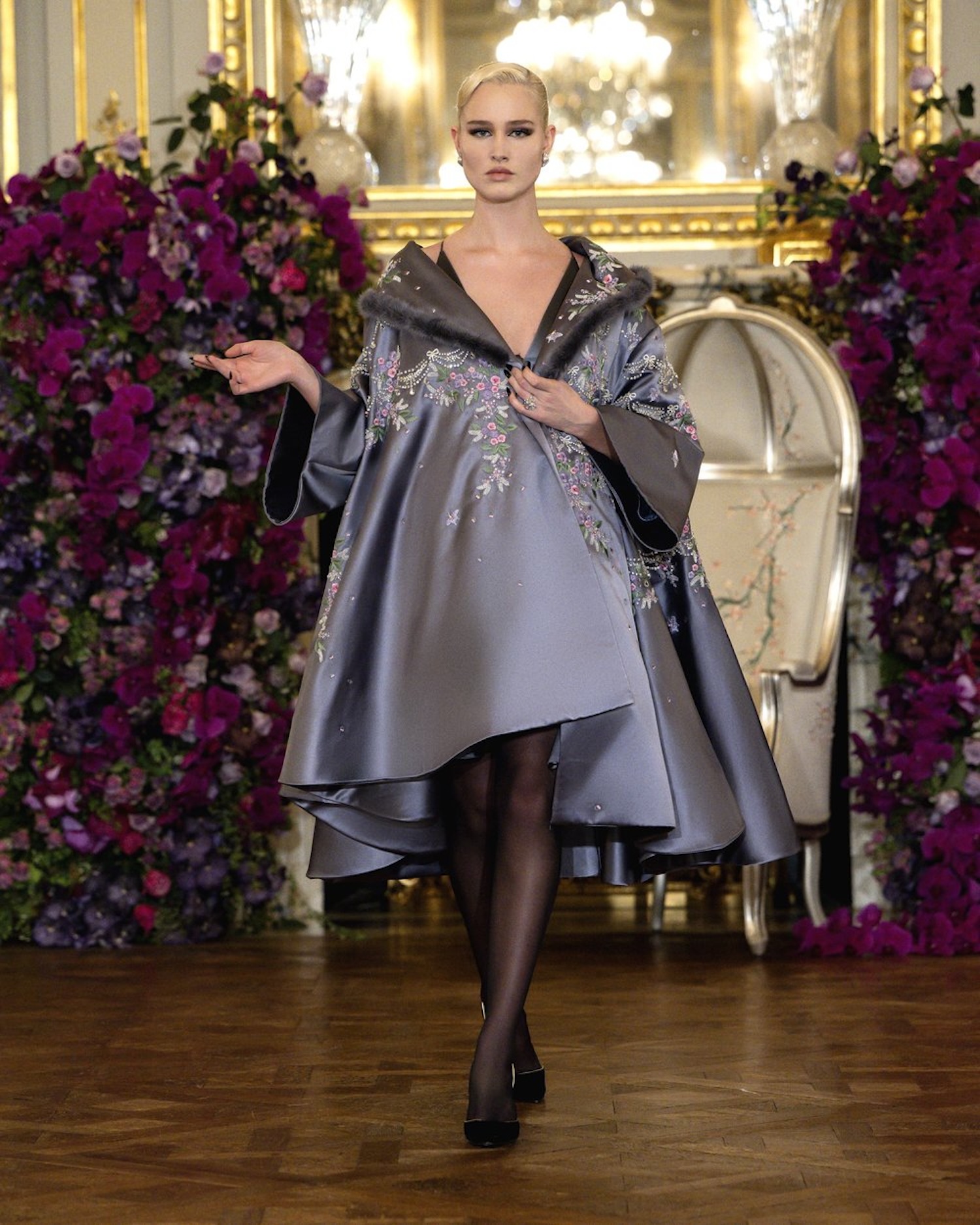
Materials play a key role in this construction. Silk, organza, and taffeta are layered to create translucency and movement, while embellishments—crystals, embroidery, and metallic elements—are integrated into the garment architecture rather than applied superficially. Over 37,000 crystals were reportedly used across the collection, emphasizing line and contour rather than excess.
However, this density of detail occasionally risks overwhelming the silhouette. Some looks verge on visual saturation, where ornament competes with structure instead of reinforcing it. This tension between decoration and discipline is one of the collection’s defining characteristics.
Craftsmanship and Material Complexity
Couture, by definition, is a discipline of labor-intensive craftsmanship, and Miss Sohee’s Spring/Summer 2026 offering adheres closely to this principle. Individual garments reportedly required thousands of hours of handwork, reflecting a commitment to artisanal production.
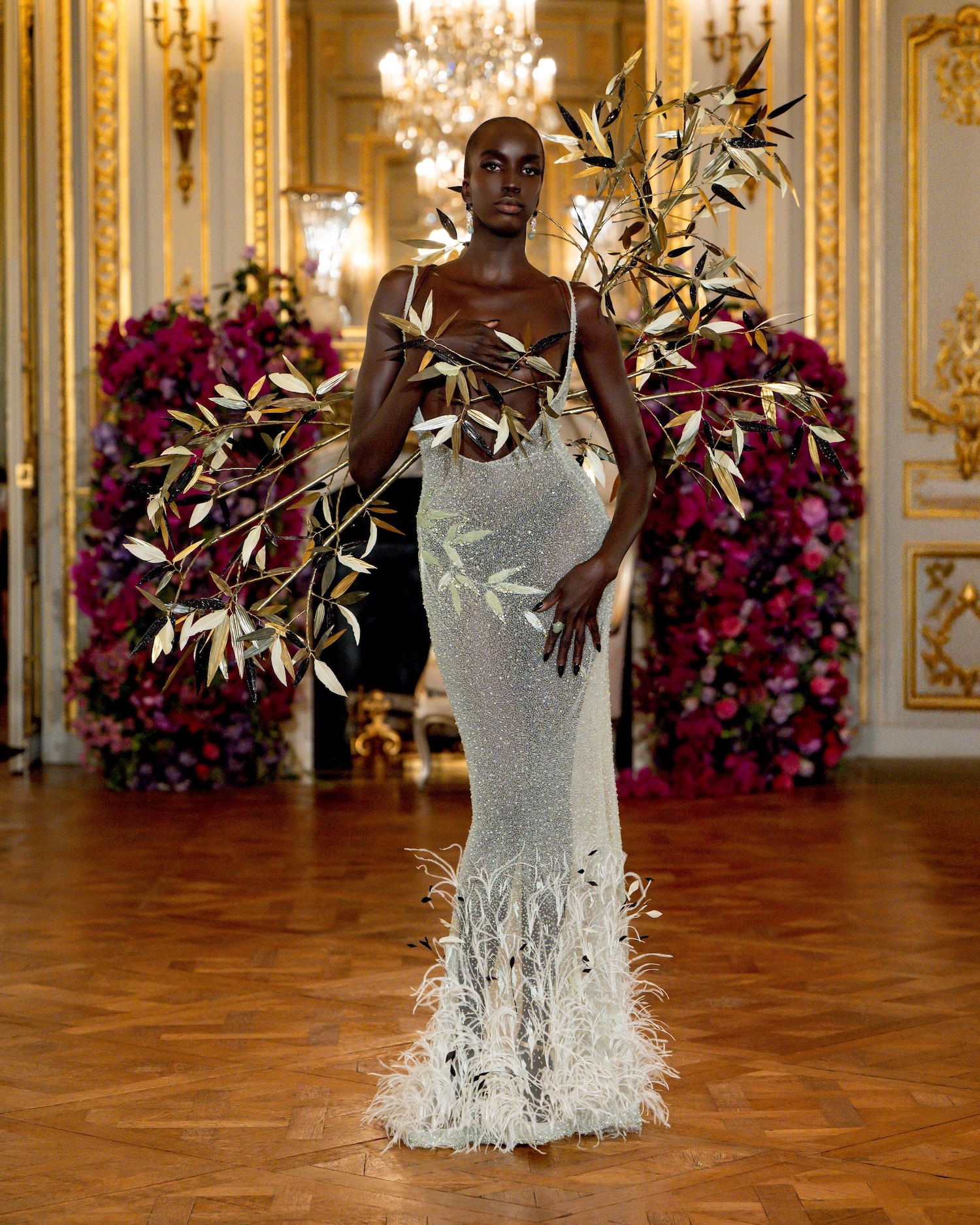
Notably, the use of brass elements and three-dimensional embellishments introduces a sculptural dimension, extending the garment beyond textile into object. This aligns with Park’s ongoing interest in sculpture as a conceptual reference point, positioning couture as a form of wearable art.
Yet, the question arises: does technical complexity translate into conceptual clarity? In some instances, the answer is ambiguous. While craftsmanship is undeniably rigorous, its narrative coherence varies across looks. Some pieces achieve a precise alignment between concept and execution; others feel more like demonstrations of technique.
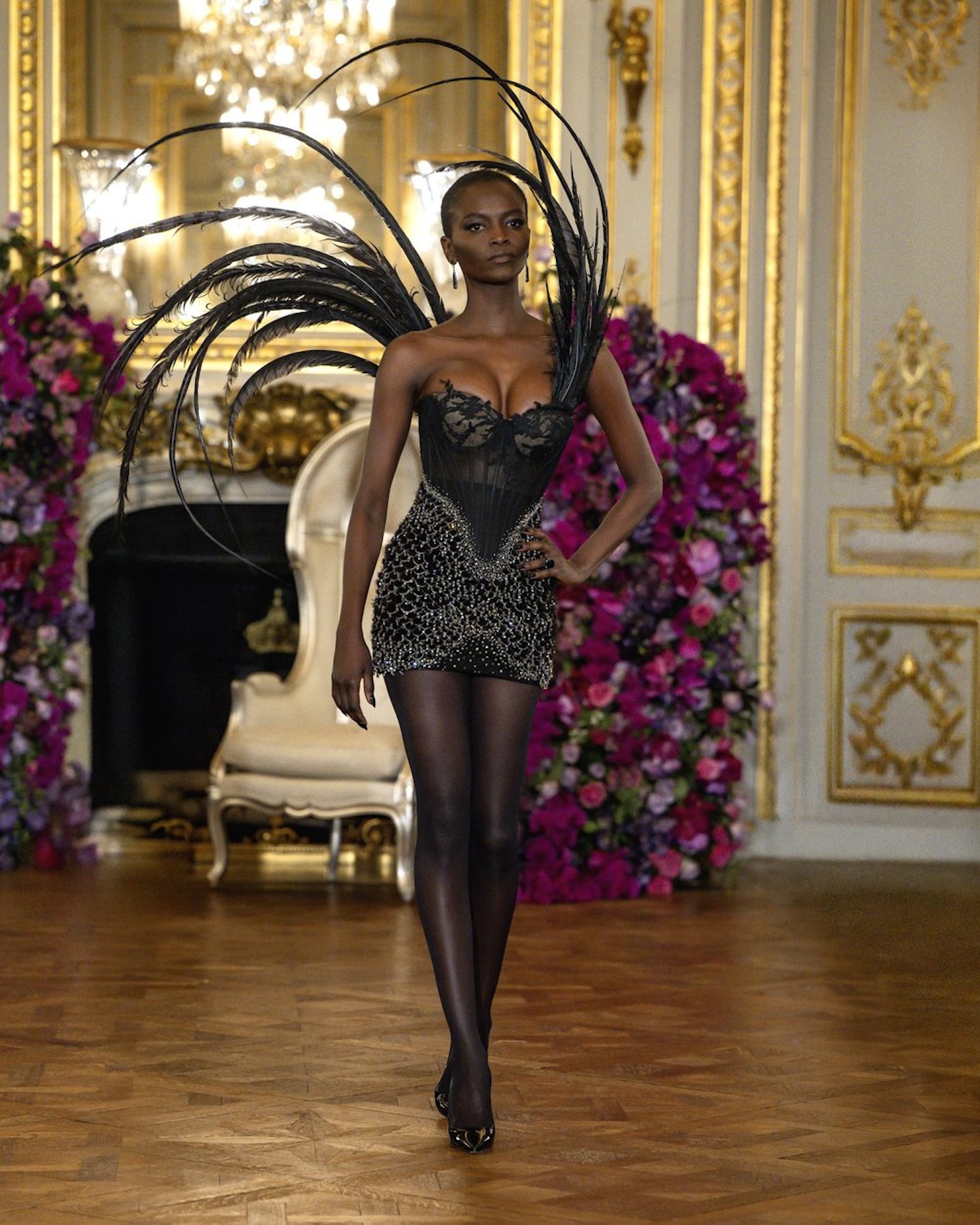
Femininity Reframed by Miss Sohee
A notable aspect of the collection is its treatment of femininity. Rather than relying on overt sensuality, Park constructs a vision of femininity grounded in presence and control.
Silhouettes emphasize structure over exposure, and garments are designed to command attention through proportion and balance rather than reveal. This approach resonates with a broader shift in couture, where power is articulated through form rather than ornament alone.
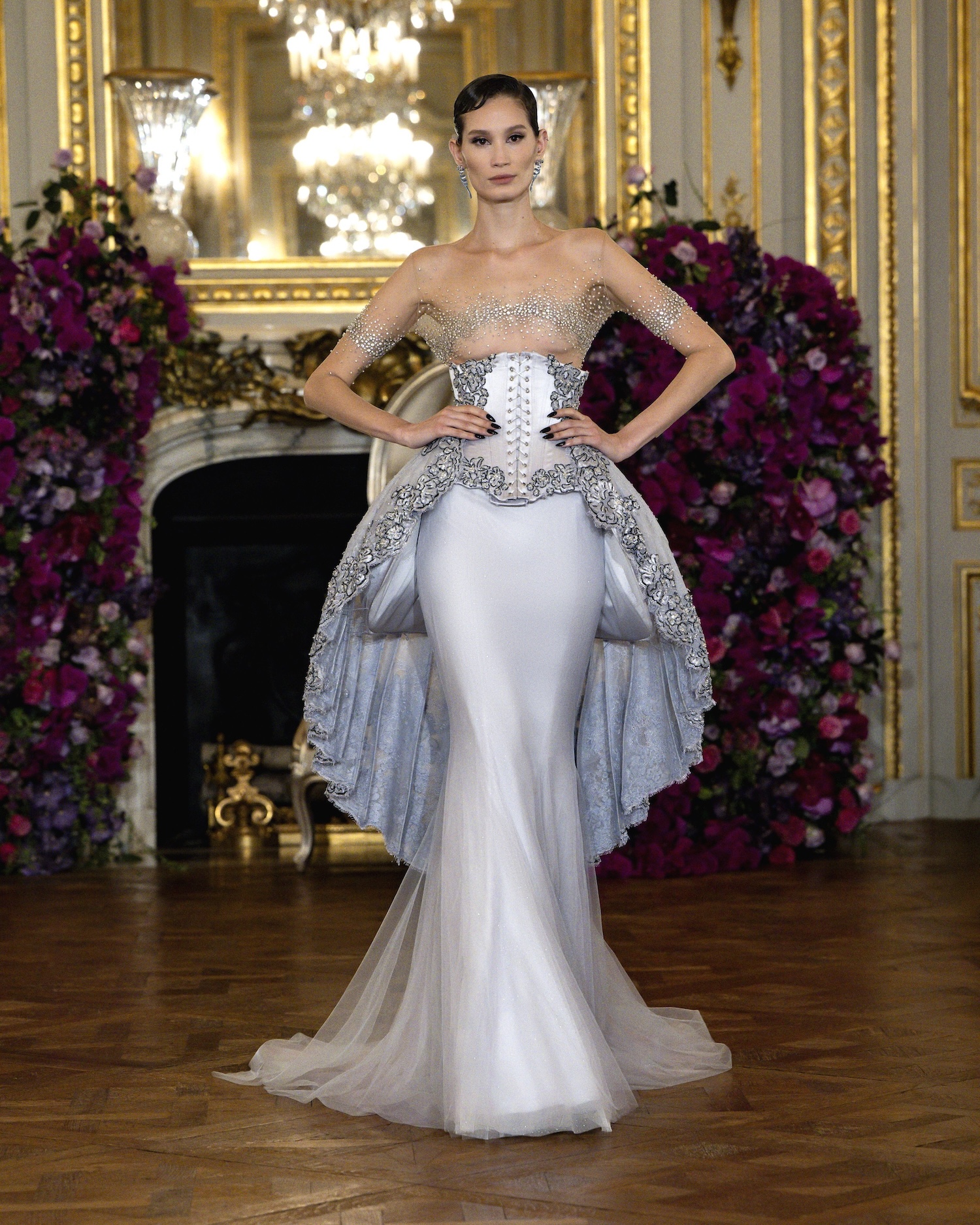
Bridalwear, a significant component of the collection, exemplifies this philosophy. The final look—a hooded gown with wave-like embroidery—draws from traditional Korean head coverings while maintaining a contemporary aesthetic. The result is a reinterpretation of bridal identity that prioritizes individuality over convention.
Miss Sohee’s Spring/Summer 2026 couture collection positions itself as a study in how heritage and memory can be translated into contemporary couture. By drawing on Korean cultural references and personal inspiration, Sohee Park constructs garments that function as both objects and narratives.
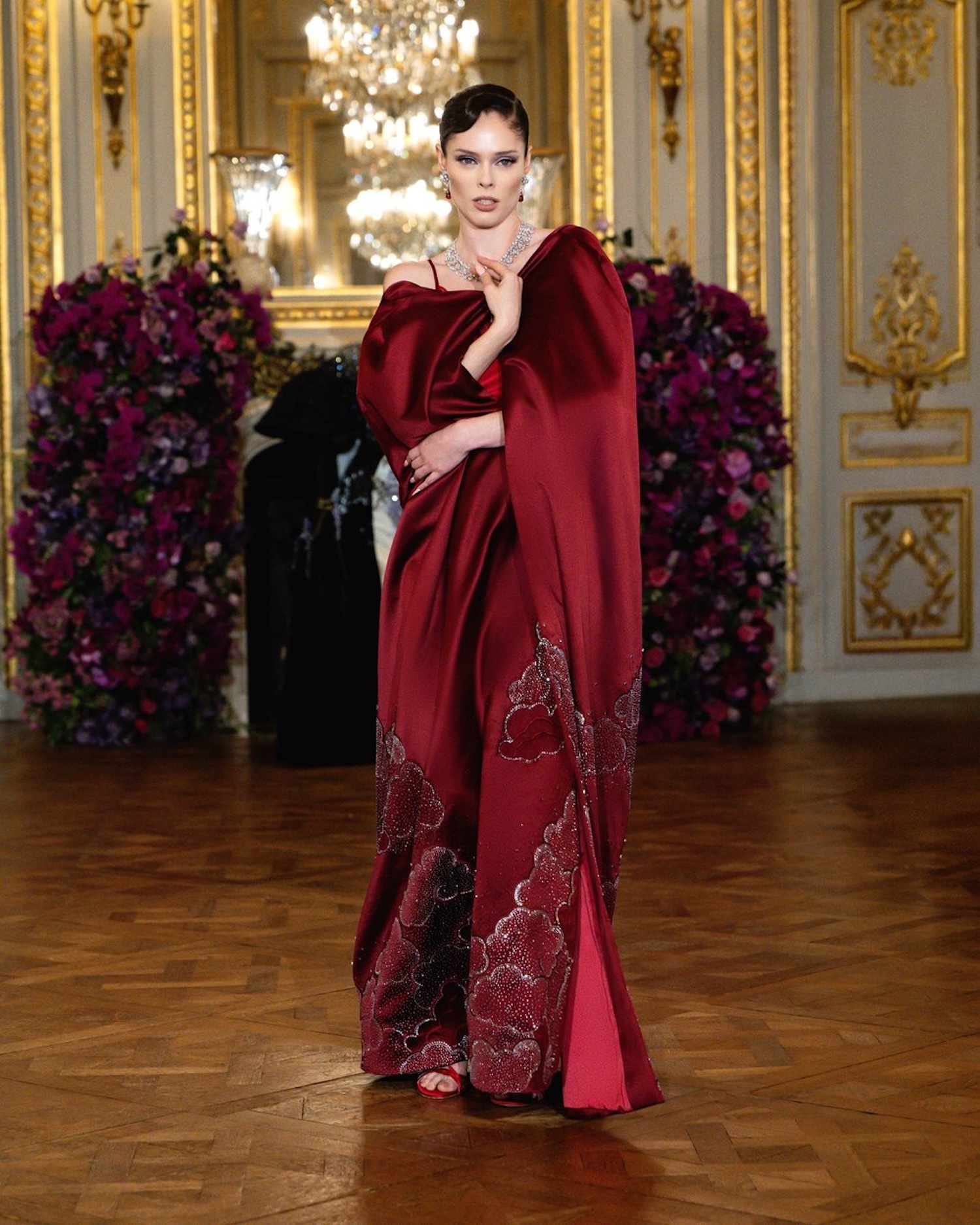
The collection ultimately underscores a broader evolution in couture: away from spectacle for its own sake, and toward a more introspective, materially grounded practice. While not every look achieves equilibrium between concept and execution, the collection as a whole demonstrates a rigorous engagement with craft, identity, and form.
In this sense, Miss Sohee’s work does not simply present clothing—it proposes a framework through which couture can operate as a medium of memory, structure, and cultural dialogue.

