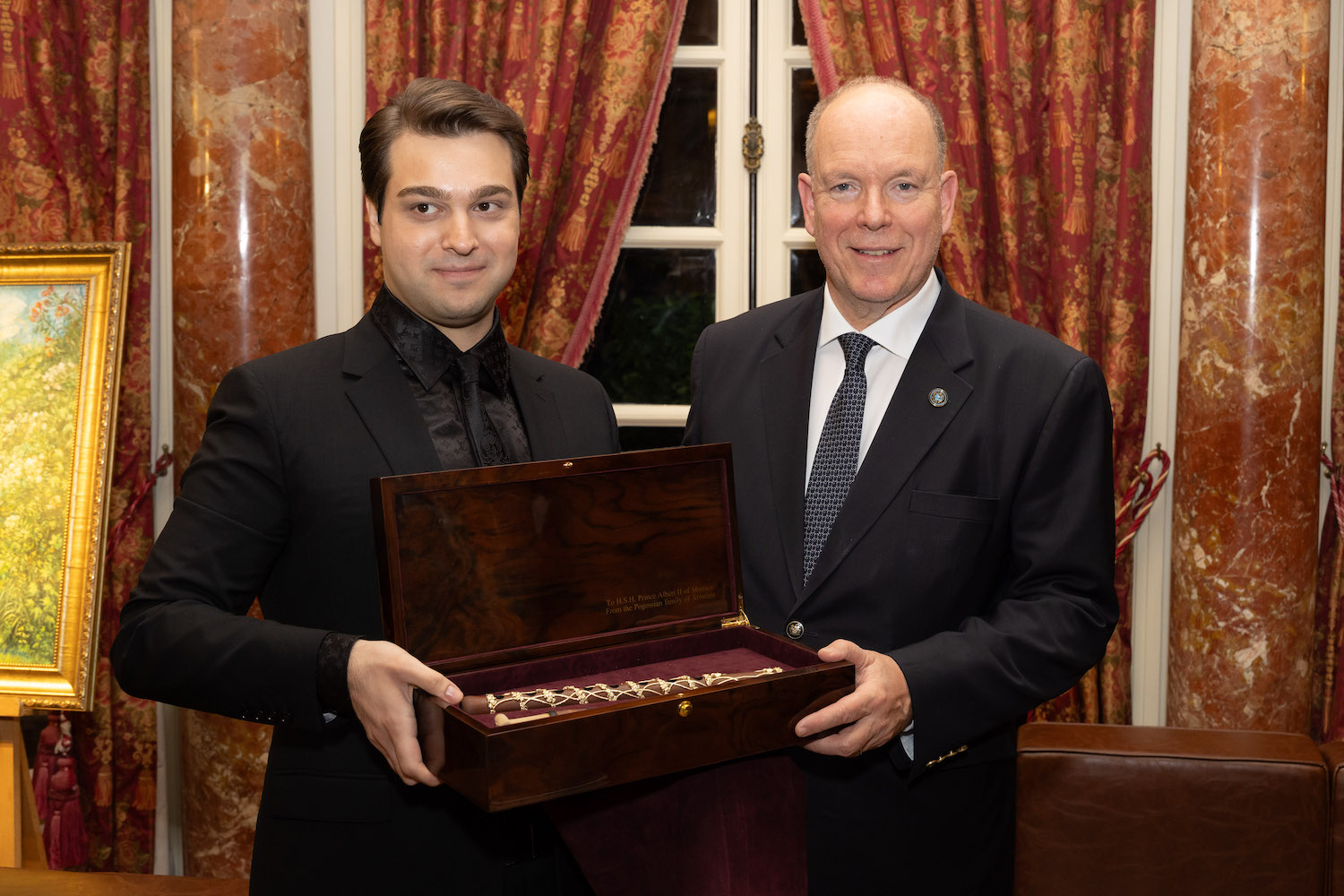
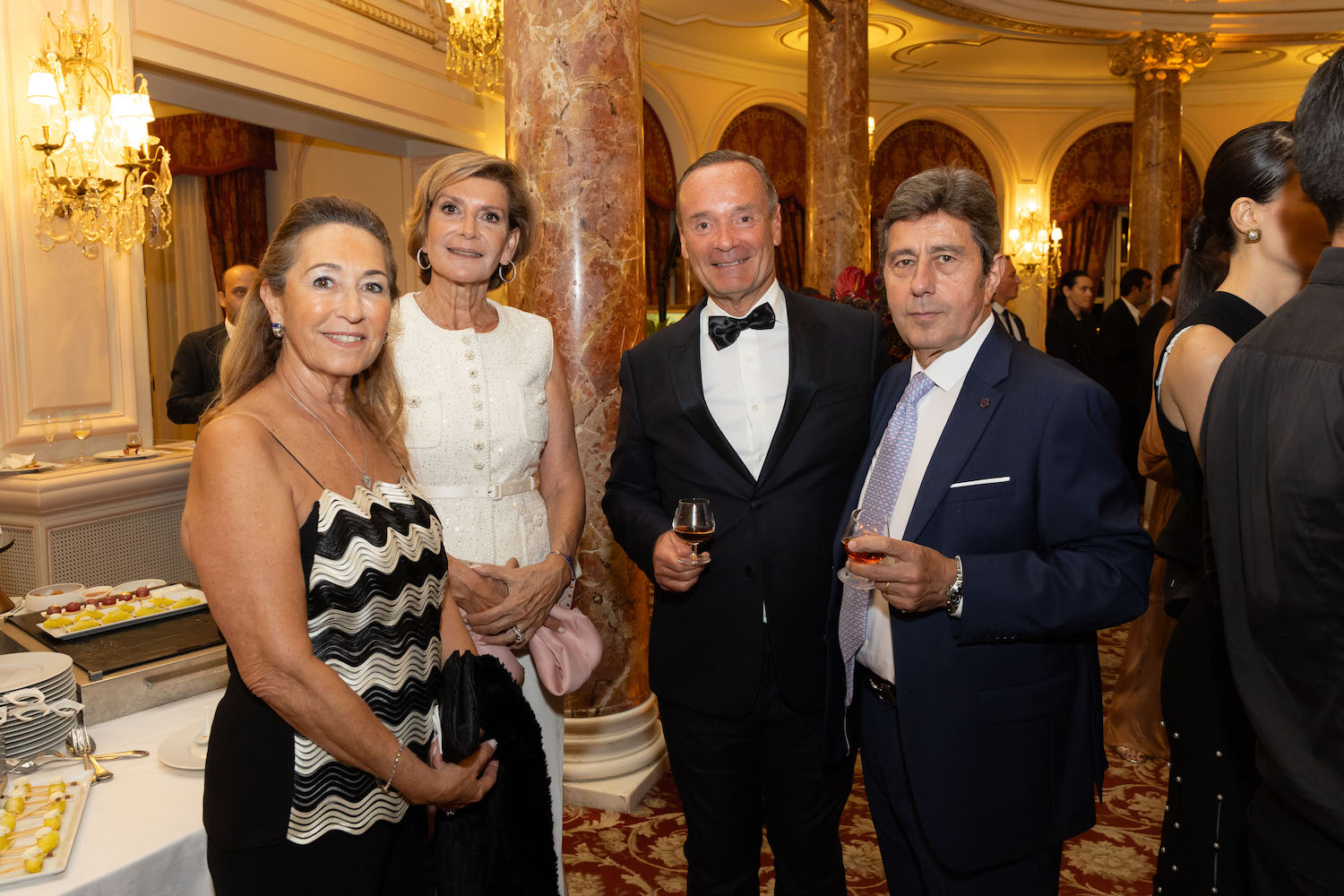
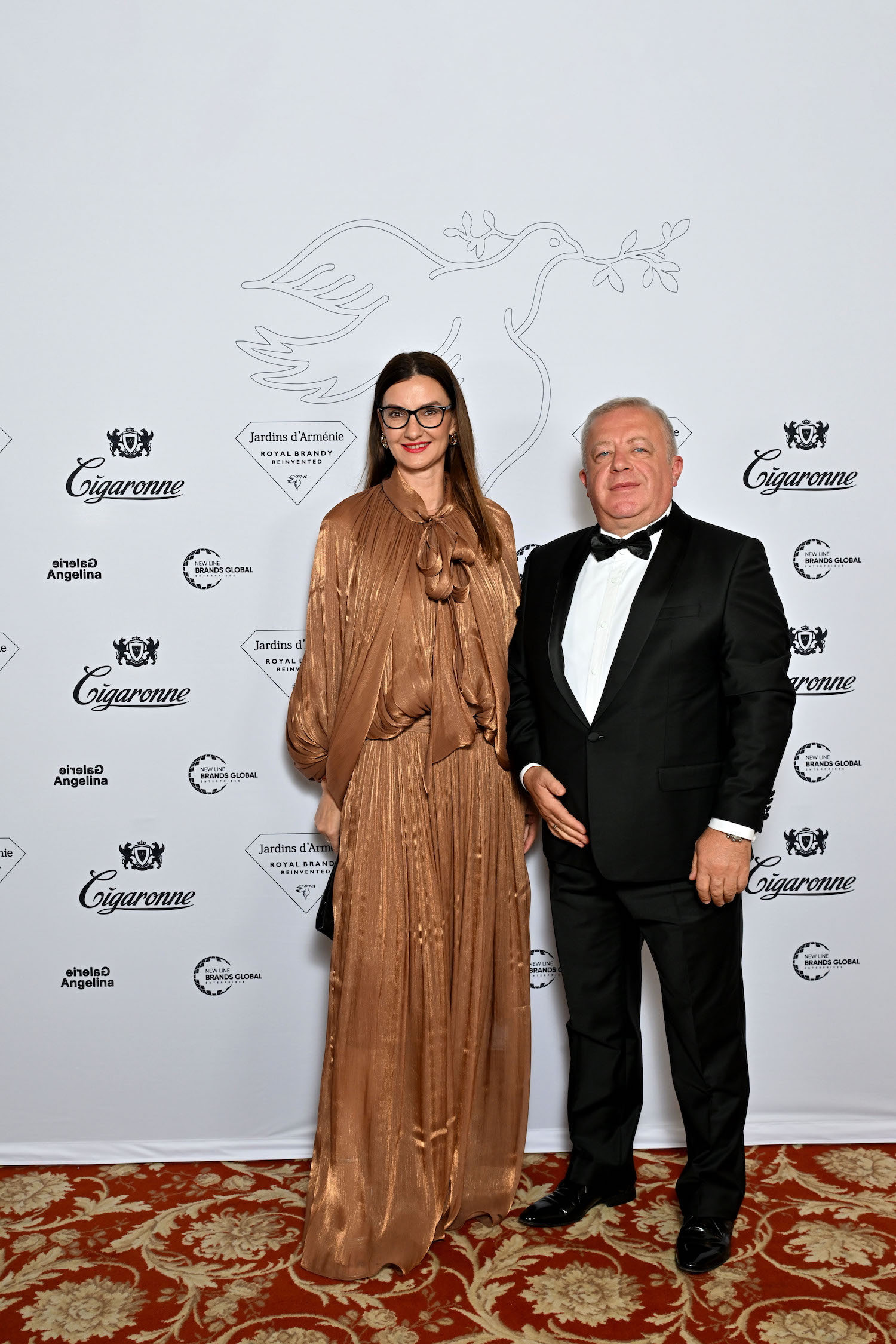
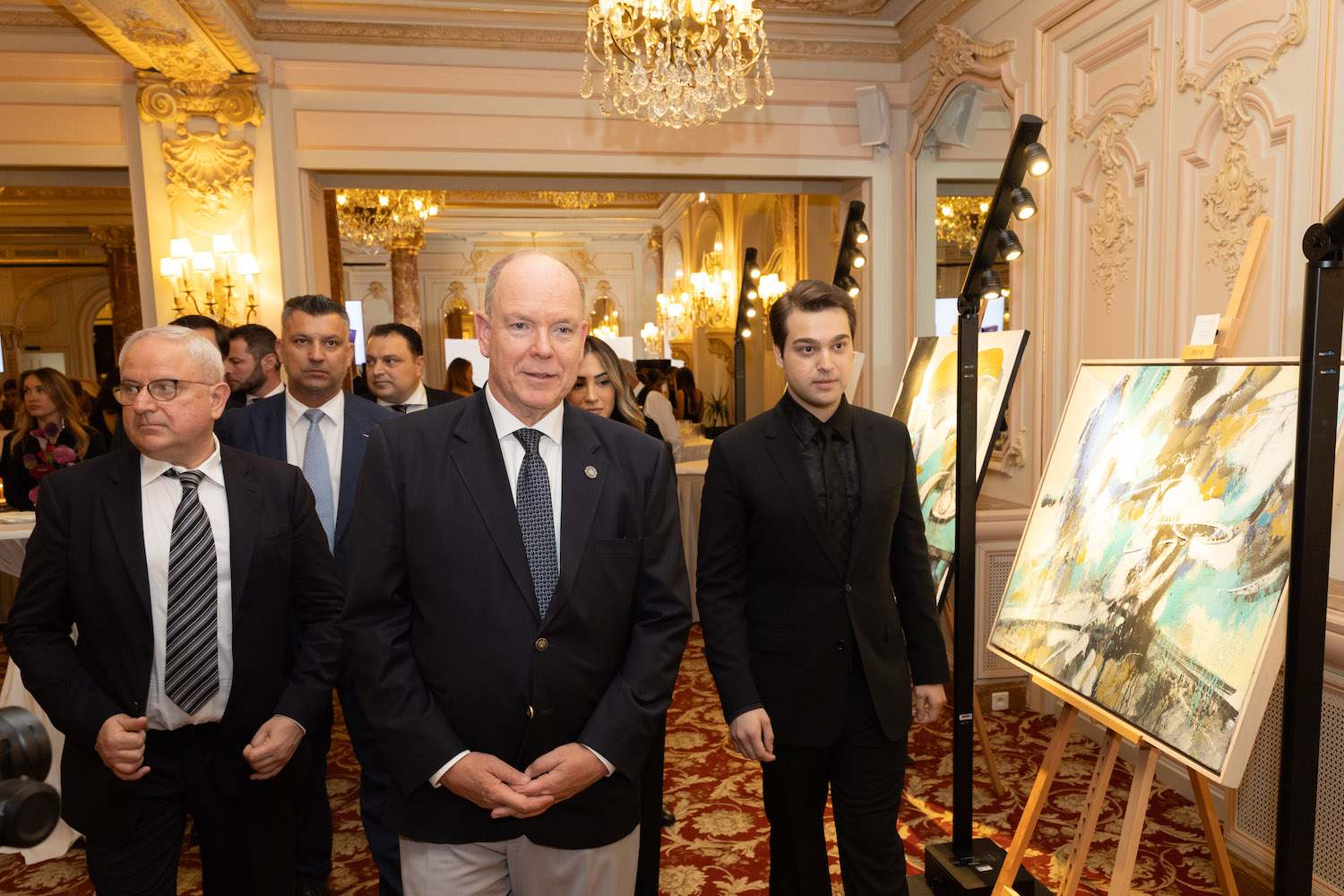
In the ornate Salle Belle Époque of the Hôtel Hermitage Monte-Carlo, Jardins d’Arménie Royal Brandy marked its global debut with a gathering that blended heritage and refinement. On 13 September, one hundred guests, among them H.S.H. Prince Albert II of Monaco and Arman Khachatryan, Armenia’s Ambassador to France, experienced an evening that unfolded as both cultural showcase and sensory journey. The event drew together fine gastronomy, traditional music, Armenian folk dances and an exhibition of artworks curated with Galerie Angelina and the Artists’ Union of Armenia, offering a multi-layered celebration of identity and craftsmanship.
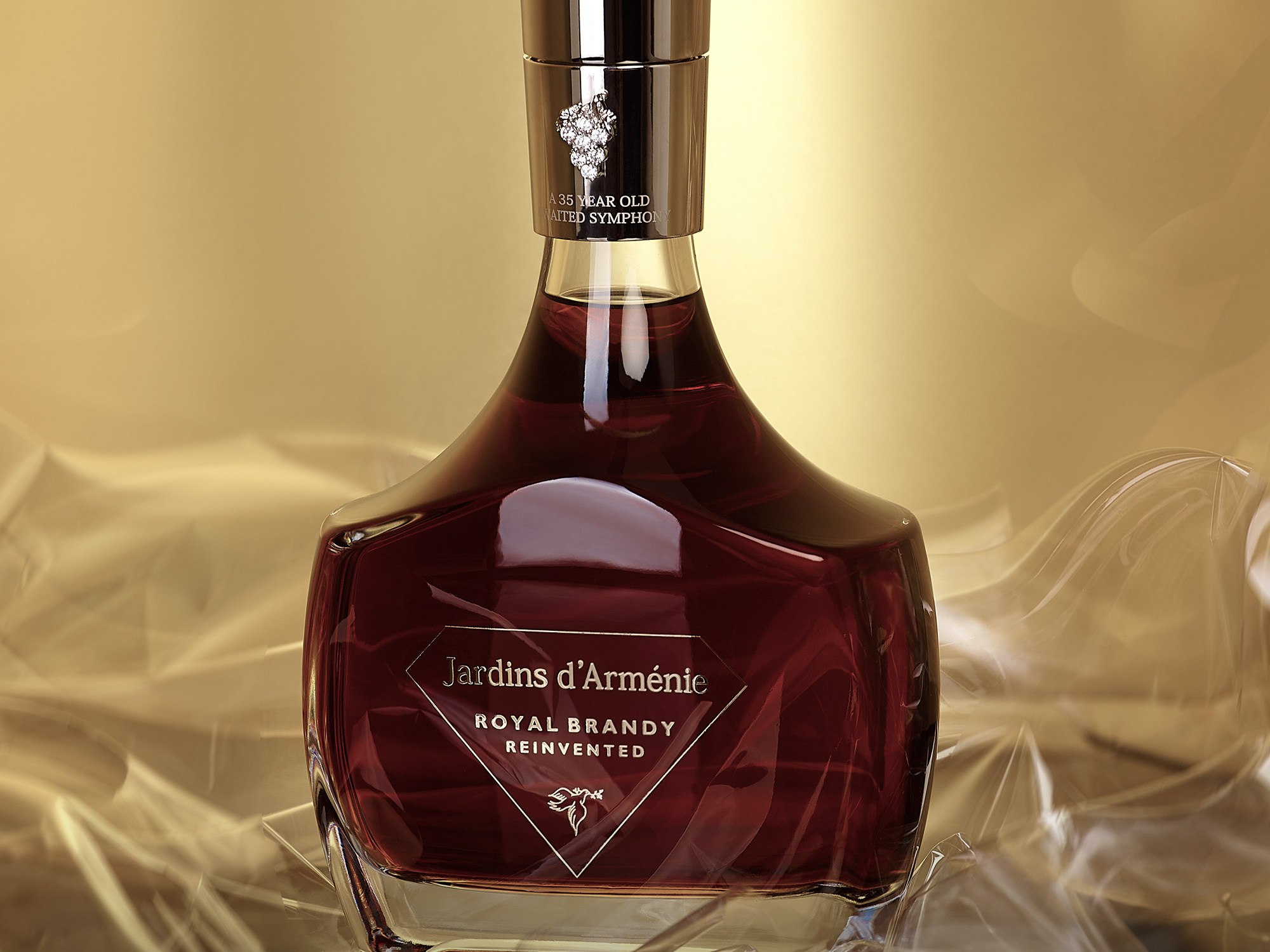
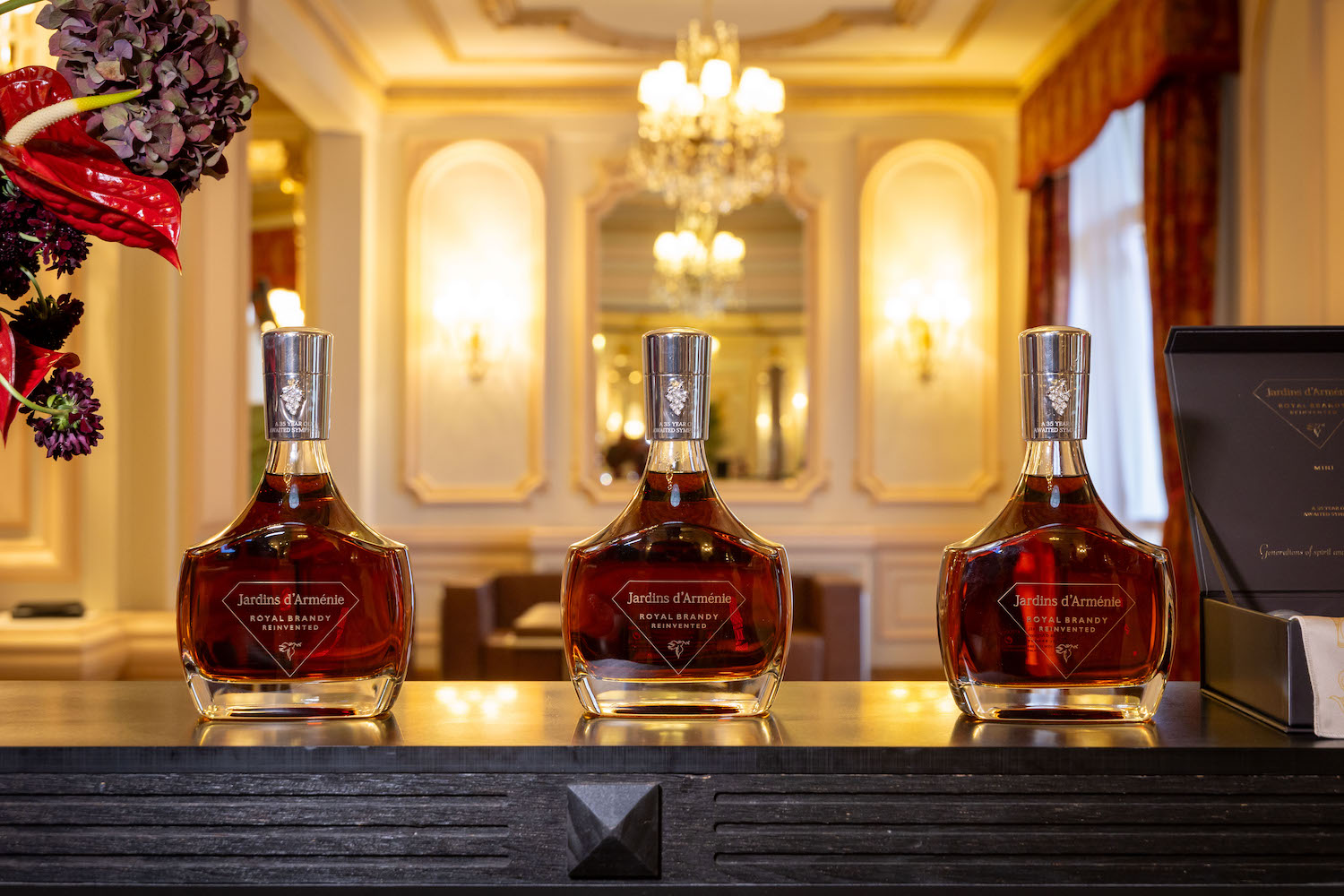
At the centre of the evening stood the unveiling of a spirit that seeks to redefine its category. Guided by Bruno Scavo, former head sommelier of Monte-Carlo Société des Bains de Mer, guests encountered the intricate profile of Jardins d’Arménie Royal Brandy. Notes of chocolate, vanilla, apricot and almond were revealed through a distinctive maturation process that sets this spirit apart. The brandy begins its evolution in oak casks, develops further complexity in apricot wood barrels, and returns to oak for final refinement, resulting in a structure of unusual elegance and length.
The launch of Jardins d’Arménie represents both continuity and innovation. At its origin is Simon Pogossian, founder of SPS Cigaronne and Newline Brands Global LLC, whose three decades in luxury craft established a reputation for precision and distinction. Today, that legacy has passed to his son Armen Pogossian, only 27 years old yet already positioning himself among the next generation of global entrepreneurs. For Pogossian, Royal Brandy is more than a commercial proposition; it is an articulation of Armenian heritage expressed through contemporary mastery. He describes the spirit as embodying the land’s strength, the finesse of craftsmanship and centuries of savoir-faire, now shared with Europe through its Monaco debut.
Two technical innovations accompany this launch. A hermetic cap, made of two interlocking components and currently patent-pending, ensures that the aromatic integrity of the brandy is preserved from cellar to glass. Alongside each bottle, a set of specially designed degustation cups offers connoisseurs an enriched tasting experience, heightening perception of the spirit’s aromatic layers. These details underscore a philosophy of precision and reinforce Jardins d’Arménie’s ambition to create a category that extends beyond traditional brandy.





The choice of Monaco for this first European presentation carries symbolic resonance. The principality, long associated with refinement and international exchange, provided a stage where cultural heritage and contemporary luxury could intersect. For Armenia, a country whose vinicultural history stretches back millennia, the launch marks a moment of renewed visibility on the global stage of fine spirits.
Jardins d’Arménie now enters the European market as the world’s first Royal Brandy, offering collectors and connoisseurs access to a spirit that combines ancestral methods with forward-looking design. It is at once a tribute to heritage and an invitation to discovery, reaffirming that luxury in the twenty-first century is defined not only by rarity but also by narrative depth and authenticity.
by Olga Barrale


2 thoughts on “Jardins d’Arménie Royal Brandy Debuts in Monaco”
Comments are closed.