Bugatti Tourbillon: A Technical Overview
The Bugatti Tourbillon represents a major shift in design and engineering philosophy for the French hypercar manufacturer. Introduced as a 2026 model to succeed the Bugatti Chiron, this vehicle is conceived as a hybrid hypercar with uniquely crafted mechanical and structural features.
Powertrain and Performance
At the heart of the Bugatti Tourbillon is a completely new 8.3-liter naturally aspirated V16 engine, engineered in collaboration with Cosworth, producing around 1 000 hp on its own. This V16 is combined with three electric motors—two at the front and one at the rear—adding approximately 800 hp on top of the combustion power. The total system output is approximately 1 800 hp. This hybrid configuration is paired with an 8-speed dual-clutch transmission and an all-wheel-drive system.
Acceleration figures reflect extreme performance potential: 0–100 km/h (0–62 mph) around 2 seconds, 0–200 km/h (0–124 mph) in under 5 seconds, 0–300 km/h (0–186 mph) in under 10 seconds, and 0–400 km/h (0–248 mph) in under 25 seconds. The electronically limited top speed is roughly 380 km/h, with a Speed Key unlocking up to around 445 km/h (276 mph). The hybrid powertrain includes a high-voltage 800 V battery system with around 24.8 kWh capacity, enabling a modest all-electric driving range, generally cited near 60 km on WLTP testing.
Chassis and Structure
Underpinning the Tourbillon is a fully revised monocoque constructed from lightweight T800 carbon composite, integrating structural elements such as the battery housing and front air ducts. This approach yields a strong yet light structure with targeted stiffness and weight savings relative to traditional designs. The suspension system, moving away from the Chiron’s traditional setup, uses multi-link aluminum components—many parts shaped through advanced methods like 3D printing—to lower weight and enhance responsiveness.
Exterior Design
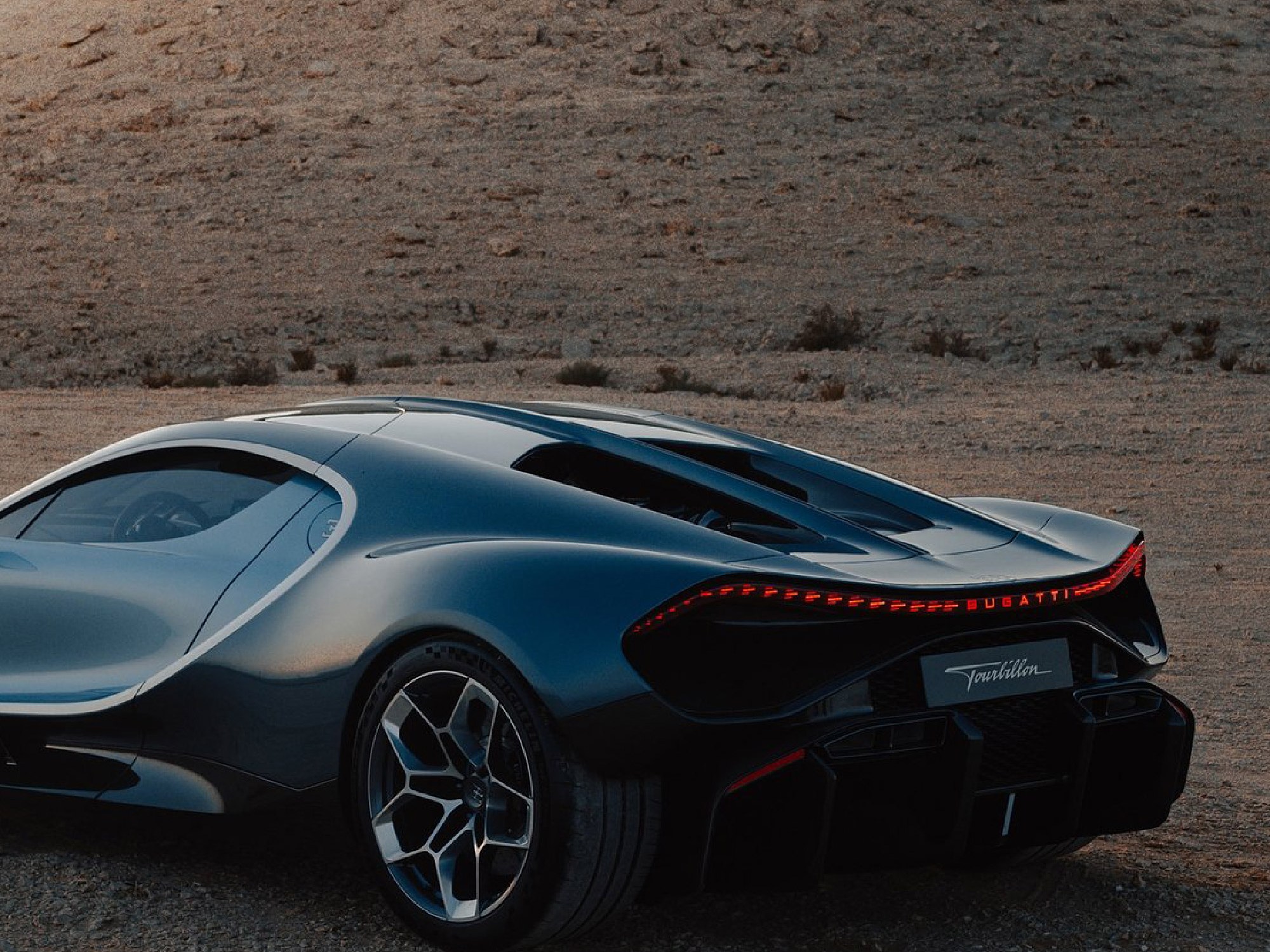
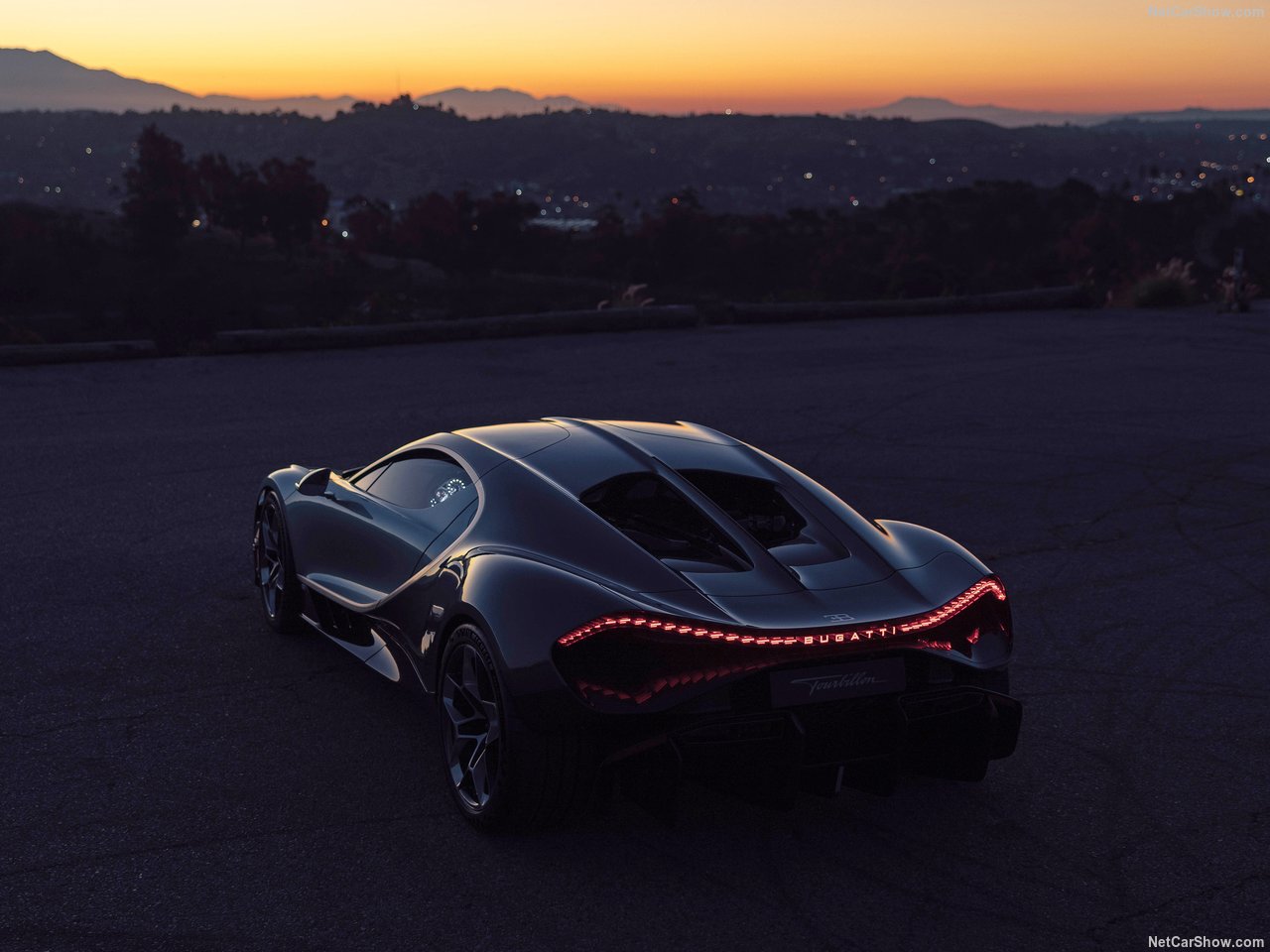
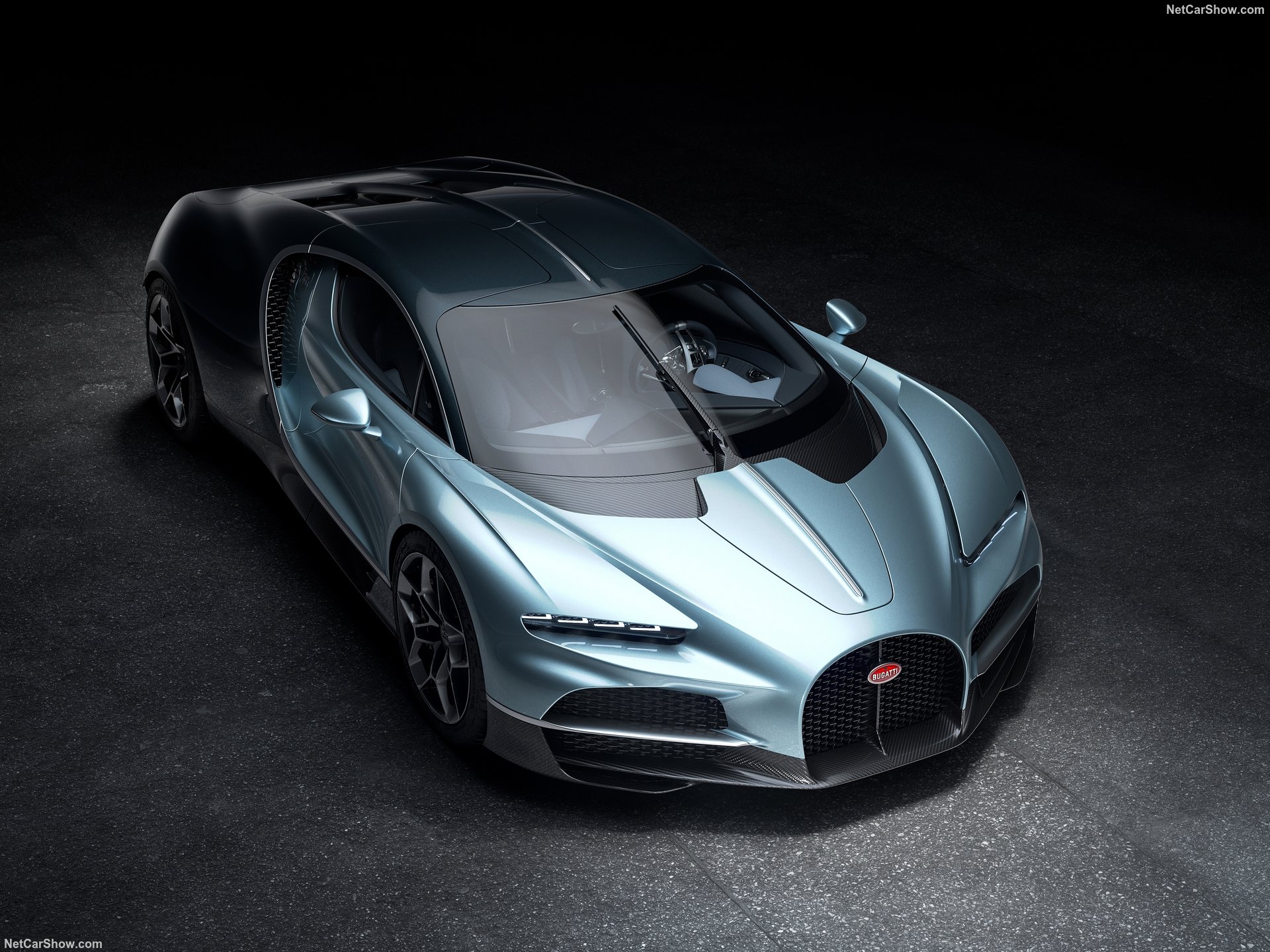
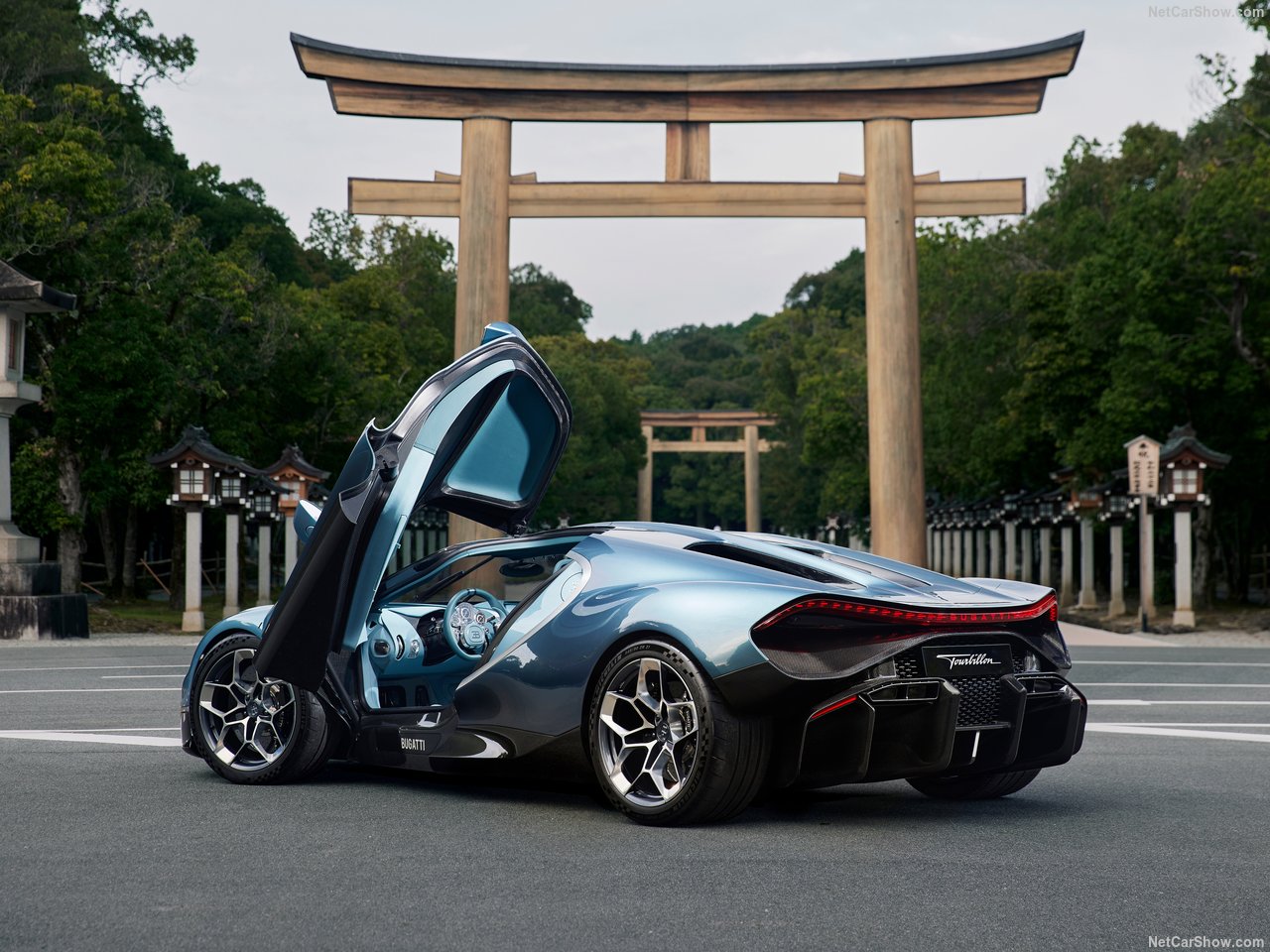
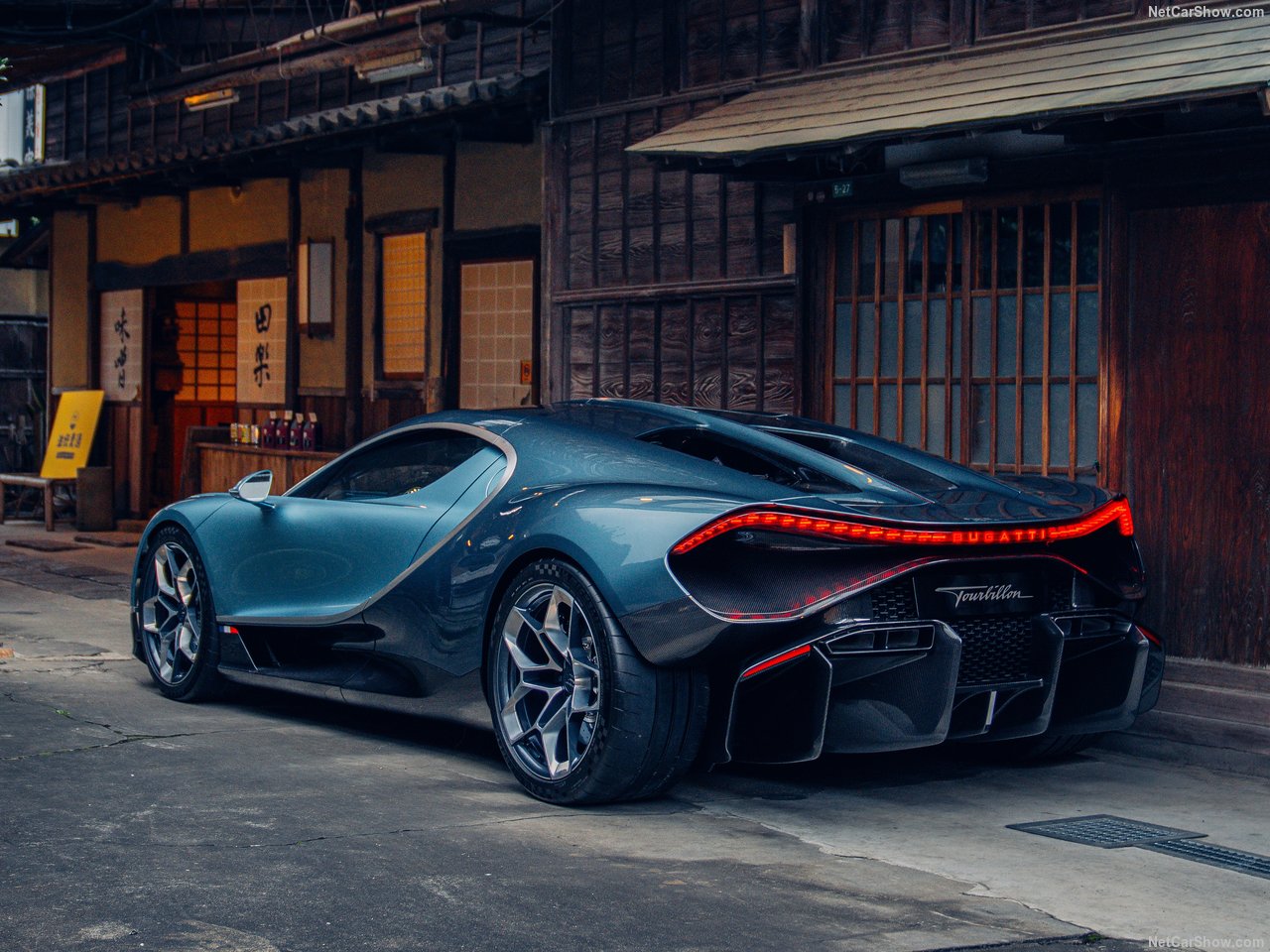
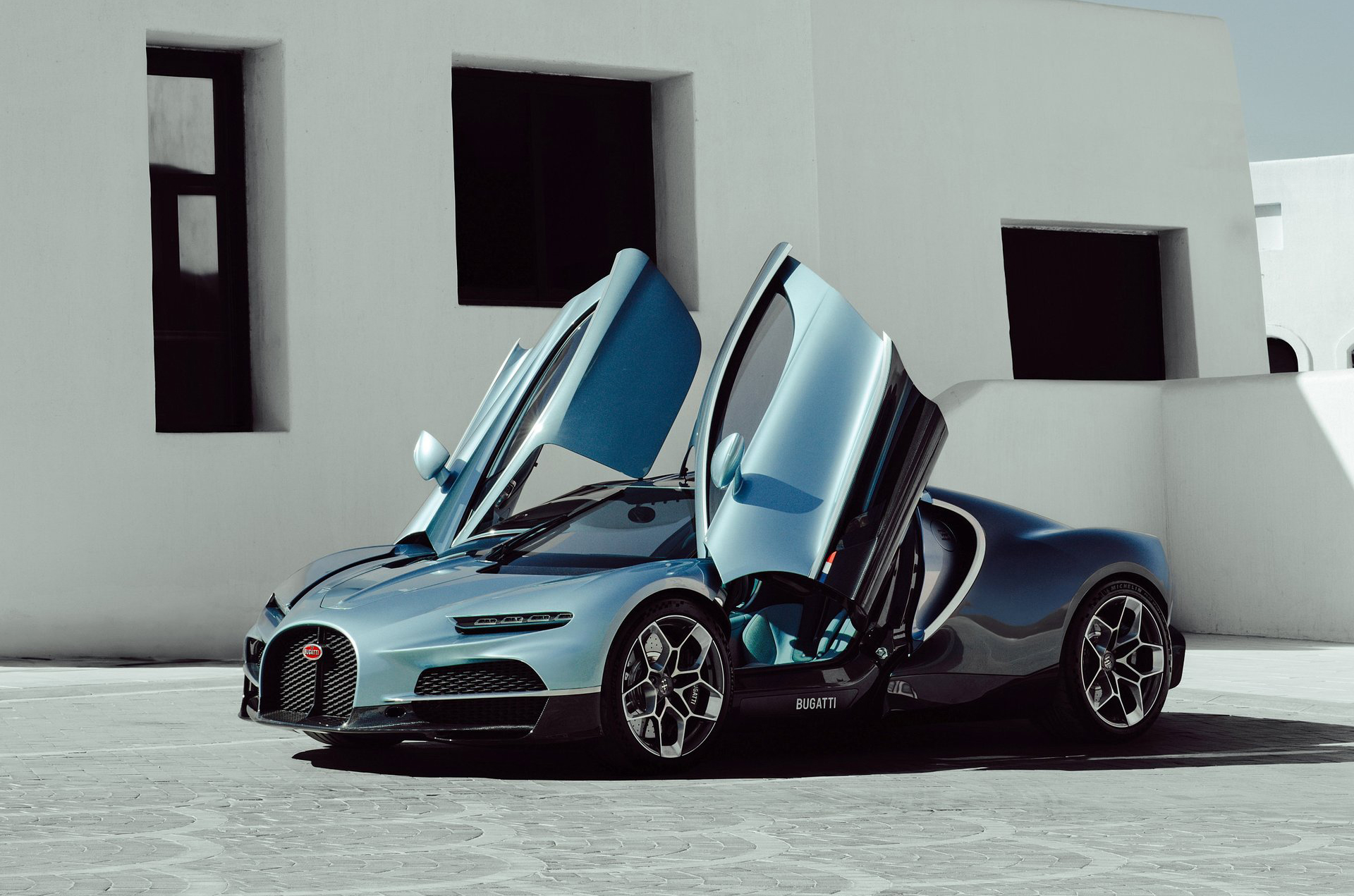
Externally, the Tourbillon evolves Bugatti’s signature design language with aerodynamic refinement. The body maintains classic hypercar proportions—low roofline, wide stance, and pronounced aerodynamics tuned for high-speed stability. The car’s mechanical integration, from underbody cooling to rear diffusor, supports both performance and controlled airflow. Distinctive features include dihedral doors and design cues that evoke Bugatti heritage without mere replication. The Tourbillon’s name itself is drawn from a complex mechanical watch mechanism, signaling Bugatti’s blend of precision engineering and tradition.

Interior and Driver Experience
Inside, the Bugatti Tourbillon departs from modern digital interiors in favor of mechanical detail and driver focus. A Swiss-crafted analog instrument cluster places emphasis on tactile interaction, often compared to fine watchmaking. Materials include machined crystal, titanium, and brushed metal surfaces, reflecting a restrained aesthetic that prioritizes engagement and clarity over digital overlays. The steering wheel is designed so that only the outer rim rotates, keeping the gauge cluster unobscured, and a retractable touchscreen is integrated discreetly for connectivity functions.
Production and Context
Production of the Bugatti Tourbillon is strictly limited, with 250 units slated for manufacture. Built by Bugatti in Molsheim, France, these cars are positioned at the pinnacle of the brand’s lineup and are expected to be among the most exclusive high-performance vehicles of their era. The Tourbillon’s hybrid V16 setup marks a departure from Bugatti’s previous turbocharged W16 architecture, introducing a naturally aspirated layout that emphasizes engine responsiveness and acoustic character, while supplementing performance with electrification.
Driving Dynamics and Engineering Focus
Engineering attention extends beyond raw power. Full torque vectoring, optimized aerodynamics, and lightweight construction contribute to a performance envelope that remains usable across a variety of driving conditions. The system balance between internal combustion power and electric torque delivery is tuned for both acceleration and stability, supporting the Tourbillon’s dual character as a rapid hypercar and a refined driving machine.
Broader Industry Perspective
The Bugatti Tourbillon’s hybrid approach reflects wider trends in high-performance vehicle design where electrification complements large displacement engines to achieve power, efficiency, and emission objectives without compromising dynamic engagement. In Bugatti’s case, this hybridization also draws on technologies familiar from electric performance brands that have recently collaborated with or influenced Bugatti Tourbillon’s engineering direction.
Summary
In summary, the Bugatti Tourbillon is an engineered convergence of a new high-revving V16 engine and advanced hybrid systems integrated into a lightweight and aerodynamically optimized structure. It prioritizes nuanced driver interaction through analog elements and focused design choices. Limited production ensures that the vehicle stands as a distinct milestone in Bugatti’s evolution toward performance that coexists with refined craft and engineering depth.


One thought on “Bugatti Tourbillon: V16 Defining a New Hypercar Standard”
Comments are closed.